Tile Grout Comparison: Cementitious, Epoxy, and Sealing Options
A thorough tile grout comparison across cementitious, epoxy, and sealing options to help homeowners choose durable, easy-to-clean grout for showers, kitchens, and floors.


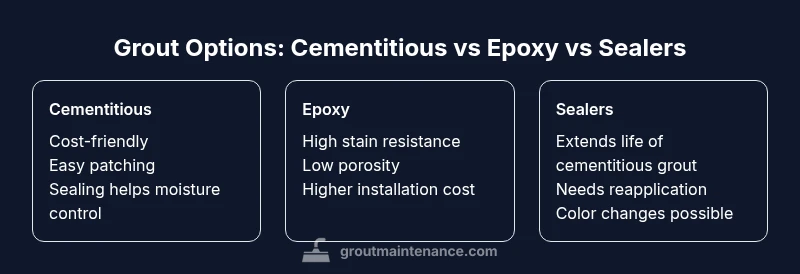
Tile grout comparison centers on three main pathways: standard cementitious grout, epoxy grout, and sealing-based maintenance. Each option offers different durability, stain resistance, and maintenance needs, making it essential to map your space, moisture exposure, and cleaning habits to the best fit. This comparison helps homeowners choose a grout strategy that balances cost, performance, and ease of care, with practical guidance from Grout Maintenance.
Tile grout comparison: Why it matters in everyday homes
The choice of grout and subsequent maintenance strategy influences how clean, durable, and visually consistent your tiled spaces look for years. Tile grout comparison helps homeowners distinguish between standard cementitious grout, epoxy grout, and sealing-based maintenance plans. In practice, the decision affects cleaning routines, repair frequency, and overall project cost. According to Grout Maintenance, the best outcomes come from aligning grout type and care with the space's use, moisture exposure, and cleaning habits. In showers and backsplashes, for example, the differences are more noticeable due to constant moisture; in dry areas, the maintenance picture shifts toward simplicity and cost savings. This article presents a structured comparison, grounded in practical experience and the latest industry guidance, to help you map your priorities to a concrete plan. By understanding the trade-offs among durability, stain resistance, ease of repair, and long-term cost, you can choose a route that minimizes headaches and maximizes grout life. The emphasis is on actionable guidance for homeowners and DIY enthusiasts who want reliable results without tearing out tile unnecessarily.
What distinguishes grout types at a glance
Three grout pathways dominate residential projects: cementitious grout (the traditional option), epoxy grout (a premium synthetic alternative), and sealing-backed maintenance strategies that rely on penetrating sealers plus routine cleaning. Cementitious grout is widely used because it's affordable and forgiving during installation; epoxy grout is more chemical resistant and less prone to staining but requires specialized tooling and can be costlier. Sealing-focused approaches aim to extend life by reducing moisture penetration and surface staining without replacing grout itself. The choice hinges on environment: bathrooms with heavy splashes and hard water, kitchens with oil-based stains, or outdoor spaces exposed to weather. In Grout Maintenance's experience, the best long-term results come from matching the grout's properties to the space's moisture levels, traffic, and cleaning regime. Common missteps include ignoring sealant requirements for porous cementitious grout, underestimating epoxy grout's installation challenges, and assuming that a more expensive grout automatically solves all problems. A clear framework helps prioritize: resilience to moisture, ease of repair, maintenance cost, and total lifecycle cost. Next, we'll compare the core properties of each path so you can decide which route fits your project.
Cementitious grout: maintenance, sealing, and practical tips
Cementitious grout is the workhorse of most DIY tilers. It consists of cement and fine aggregate, offering easy patch repair, broad color options, and forgiving installation. The main caveat is porosity: standard Portland-cement grout readily absorbs moisture and stains, especially in kitchens and showers with hard water. Practical tips begin with proper surface preparation: ensure full cure, remove excess grout from tile faces, and avoid washing with acidic cleaners that can erode grout integrity. Sealing is not a one-and-done fix; penetrating sealers form a barrier that slows moisture ingress but require reapplication every few years depending on use. In high-traffic wet areas, many pros apply two thin coats for better penetration. When choosing a sealant, look for products labeled penetrating and breathable; surface sealers can alter the color and sheen, sometimes undesirably. Maintenance routines matter: adopt a regular cleaning schedule with pH-balanced cleaners, promptly address mold or mildew in joints, and schedule resealing after deep cleaning. Maintenance emphasis from Grout Maintenance centers on a practical plan that keeps grout looking good without overcomplicating routine care.
Epoxy grout: performance, durability, and caveats
Epoxy grout is a polymer-based alternative that resists water absorption and staining far better than most cementitious varieties. Its low porosity makes it ideal for kitchens, bathrooms, and outdoor spaces exposed to moisture and chemical cleaners. The initial cost is higher, and installation is less forgiving, requiring precise mixing, longer curing times, and careful tooling to avoid smearing and gaps. For DIYers, epoxy grout products exist in premixed formats, but many installations benefit from professional handling due to the tighter tolerances. Long-term durability is a standout advantage: epoxy resists cracking, shrinking, and typical household stains from coffee, wine, and curry sauces. The drawback is that repair is more involved; if an epoxy joint becomes damaged, you may need to replace larger sections rather than patching. Compatibility is another factor: some substrates and tile types require specific epoxy formulations. Epoxy grout shines in moisture-rich zones, commercial settings, and projects where long-term cleanliness matters. When evaluating epoxy, balance the durability gains with labor costs, potential for color inconsistency, and the availability of compatible sealers for maintenance.
Sealers and penetrating sealants: how they fit into tile grout care
Penetrating sealers designed for cementitious grout slow moisture and stain uptake without altering the grout color significantly. They work best when the grout is in good condition, color-matched, and fully cured. Surface sealers add a protective film but can change the grout's appearance and require reapplication more often. A well-planned sealing strategy complements the chosen grout type: cementitious grout benefits most from periodic sealing, epoxy grout may not require sealing, and unsanded or dense grout finishes can be more permeable without proper sealers. Application technique matters: apply to a clean, dry surface, follow the product's cure times, and avoid oversaturation that could cause whitening or haze. In practice, it pairs well with routine cleaning and a dedicated maintenance schedule to minimize mildew growth and keep joints looking fresh. Grout Maintenance notes that aligning the sealing schedule with bathroom or kitchen usage dramatically reduces mildew growth and keeps grout joints resilient against wear and chemical cleaners.
Cleaning strategies that preserve grout life across options
Cleaning is where theory meets daily life. A one-size-fits-all approach fails because different grout types react differently to cleaners. For cementitious grout, choose pH-balanced cleaners, avoid harsh acids, and wipe spills promptly to limit staining. Epoxy grout is more forgiving with common kitchen and bathroom cleaners but still benefits from avoiding overly abrasive scrubs that could dull color. Regardless of grout type, dry brushing and removing standing water are essential in high-humidity spaces. For porous grout, frequent cleaning with gentle methods helps prevent mold and mildew from taking hold. In showers, consider using a daily spray after uses to minimize soap scum and mineral buildup. Deep cleaning with grout-safe brushes and non-acid cleaners should occur every 6-12 months, depending on traffic. Record-keeping of cleaning cycles helps plan resealing intervals and anticipate when maintenance may drift from the ideal schedule. By applying science-informed cleaning protocols and adjusting for your space, you can extend grout life and maintain a uniform appearance across tile runs.
Regrouting vs full replacement: decision framework
When grout joints deteriorate beyond patch repair, homeowners face a choice: regrout (replace only the grout) or full tile replacement. Regrouting preserves existing tiles and is often the least invasive option, but it may expose underlying substrate issues if the substrate was compromised. Full replacement delivers a like-new tile surface and can address large cracks, movement, or widespread discoloration, but it is more disruptive and costly. The decision should consider joint width, tile condition, and the presence of water damage behind the grout. In many cases, specialists start with a moisture assessment to rule out hidden leaks; if the substrate is sound and the tiles are still securely set, regrouting with epoxy or cementitious grout can restore aesthetics and function. If the tile is damaged, loose, or outdated in a way that affects structural integrity, replacement becomes more sensible. Grout Maintenance emphasizes staged planning: document the scope, obtain a few quotes, and ask about warranty coverage, care requirements, and potential color matching challenges when regrouting.
Environment-based decision making: showers, kitchens, exterior spaces
Environment drives grout choice more than aesthetics alone. Showers and steam-heavy bathrooms demand higher moisture resistance and easier mildew control; epoxy grout or sealed cementitious grout with frequent maintenance are common choices. Kitchens prioritize stain resistance from oils, sauces, and red wine; epoxy grout often stands up well, while cementitious grout benefits from strong sealers and easy patching. Outdoor areas face temperature fluctuations, UV exposure, and dirt; cementitious grout with a robust seal coat can handle weather better when properly installed, while epoxy offers superior stain resistance but may require UV-stable formulations. In all cases, substrate preparation, proper mixing ratios, and curing times are non-negotiable for longevity. Grout Maintenance recommends mapping environmental factors—moisture, temperature, cleaning frequency—to the expected service life and maintenance schedule, then selecting a grout type that aligns with these realities rather than cosmetic preferences alone.
Cost, value, and long-term planning for tile grout projects
Cost considerations go beyond the initial price per square foot. Cementitious grout is typically cheaper upfront, but sealing, frequent cleaning, and potential patch repairs add to total cost. Epoxy grout has a higher material and labor cost, yet its longer life and high resistance to stains can reduce maintenance frequency and restore time. When calculating value, consider not just upfront cost but long-term performance, repairability, and the impact on tile life. When using cementitious grout, plan for resealing and regular deep clean to maximize lifespan. Epoxy grout may require professional installation for best results but can reduce ongoing maintenance requirements. Grout maintenance plans that include scheduled sealing and routine cleaning can keep grout joints looking fresh for longer, reducing the likelihood of early replacement. The goal is to balance lower upfront costs with predictable, manageable maintenance milestones over the life of the tiled surface.
Implementation checklist: turning comparison into action
To translate tile grout comparison into a concrete plan, use a step-by-step checklist. Start with space profiling: identify moisture level, traffic, and staining risk. Choose a grout type that matches those conditions, then outline a maintenance calendar: cleaning frequency, sealer reapplication, and inspection intervals. If you choose cementitious grout, document your sealing schedule and testing plan to verify sealer performance. If epoxy is your choice, plan for specialized installation, tool access, and curing times within the project timeline. For both, set up a routine cleaning protocol using pH-balanced cleaners and non-abrasive tools. Finally, establish a monitoring system—photos, notes, and a simple repair kit storage—to catch early signs of wear, color fade, or cracking. Grout Maintenance emphasizes that a well-documented plan reduces surprises and extends grout life by aligning expectations with actual performance in your home.
Final note: ongoing conversation about tile grout comparison
Tile grout choice is not a one-time decision; it evolves with space use, wear, and cleaning habits. Revisit your plan after major renovations, appliance upgrades, or when you notice changes in color, texture, or mildew growth. A small investment in maintenance now can prevent larger repairs later, so stay proactive with inspections and resealing schedules.
Feature Comparison
| Feature | Standard cementitious grout | Epoxy grout | Sealant-based maintenance with penetrating sealer |
|---|---|---|---|
| Water resistance | Moderate | High | Moderate to High |
| Stain resistance | Moderate | High | Moderate |
| Repairability | Relatively easy in small areas | Challenging; often requires larger replacement | Depends on sealers and patching capability |
| Maintenance frequency | More frequent cleaning/sealing | Less frequent cleaning; occasional resealing if needed | Periodic sealing plus routine cleaning |
| Best For | Budget-conscious projects | High-traffic, moisture-prone areas | Balanced maintenance with better stain control |
Pros
- Lower upfront cost with cementitious grout
- Easy patch repair in small areas
- High stain resistance with epoxy grout in some blends
- Sealing extends life and reduces maintenance for cementitious grout
- Durable surface options in busy bathrooms
What's Bad
- More frequent maintenance with cementitious grout
- Higher upfront cost and installation complexity with epoxy grout
- Epoxy repairs can be invasive if damaged
- Sealing requires ongoing reapplication in some environments
- Color matching can be challenging across grout types
Epoxy grout often delivers the strongest, long-term performance in stain resistance and durability; cementitious grout with a solid sealing plan remains a practical, cost-effective alternative for many homes.
Epoxy grout provides excellent durability and stain resistance, especially in moisture-prone areas. Cementitious grout, when properly sealed and maintained, offers a lower initial cost and easier repairs. Your choice should hinge on space usage, maintenance willingness, and budget.
Got Questions?
What is tile grout comparison?
Tile grout comparison evaluates common grout types and care plans to determine which option best suits a given space, budget, and maintenance style. It weighs durability, stain resistance, repairability, and lifecycle costs.
Tile grout comparison helps you pick the right grout type for your space by weighing durability, stain resistance, and maintenance needs.
Is epoxy grout worth the extra cost?
Epoxy grout tends to offer superior durability and stain resistance, which can justify higher upfront costs in busy kitchens and showers. Consider installation complexity and long-term maintenance when deciding.
Epoxy grout is usually worth it in high-traffic, wet areas where stain resistance is crucial.
How often should grout be sealed?
Sealing frequency depends on grout type and space use. Cementitious grout typically benefits from periodic sealing, while epoxy grout often requires little to no sealing. Monitor wear and re-seal as needed.
Seal grout as recommended for your product and space; check yearly and reseal when you notice dryness or staining.
Can I regrout without removing tiles?
In many cases, you can regrout without removing tiles, especially if the existing tiles are sound and joints are reachable. Severe substrate damage or widespread tile failure may require replacement.
Yes, you can often regrout without removing tiles, but assess tile condition first.
Will sealing darken porous grout?
Some sealers can slightly alter color or sheen, especially on white or light grout. Test a small area first and choose a breathable, color-safe formula.
Sealants can sometimes darken grout a bit, so test first before applying to the whole area.
What maintenance schedule works best for showers?
Shower maintenance benefits from a routine cleaning schedule with a pH-balanced cleaner and a quick daily rinse. Deep cleaning and resealing (if using cementitious grout) should be planned annually or as needed based on wear.
Showers do best with regular, gentle cleaning and periodic deep cleaning; reseal cementitious grout as recommended.
The Essentials
- Match grout choice to space moisture and traffic
- Epoxy offers durability but higher upfront cost
- Sealants can extend life but require maintenance
- Plan maintenance around your cleaning schedule
- Regrouting vs replacement depends on tile integrity and substrate