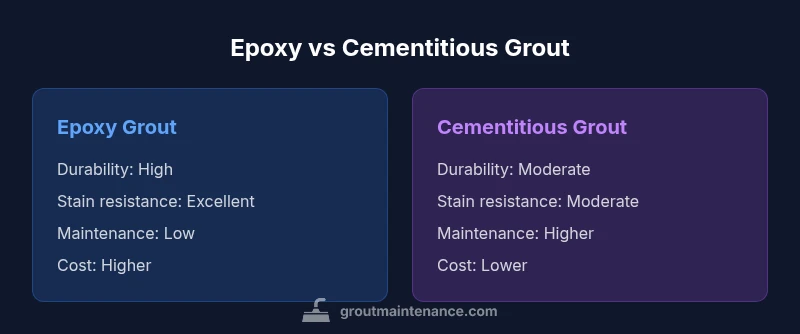
Epoxy vs Cementitious Grout: A Practical, Analytical Comparison
A data-driven comparison of epoxy grout and traditional cementitious grout, covering durability, stain resistance, cost, and maintenance to answer what is better than grout for your tile spaces.


Epoxy grout generally offers superior durability and stain resistance compared to traditional cementitious grout, making it the better default for bathrooms, kitchens, and high-traffic floors. However, cementitious grout remains cheaper and easier to repair, which still makes it a sensible option for DIY projects or budget-conscious renovations. In short, choice depends on space, budget, and maintenance goals.
The central question: what is better than grout?
In tile projects, the question what is better than grout doesn't have a universal, one-size-fits-all answer. It hinges on space, moisture exposure, traffic, and budget. The two most common options today are epoxy grout and traditional cementitious grout. Epoxy grout offers superior durability and stain resistance, while cementitious grout is typically cheaper and easier to repair. According to Grout Maintenance, the best choice depends on your space, cleaning routines, and willingness to perform routine maintenance. Framing the decision this way helps homeowners focus on long-term outcomes rather than upfront costs alone.
From a practical standpoint, what is better than grout often boils down to performance in wet zones, resistance to staining, and how much time you’re willing to invest in sealing and upkeep.
Core properties that drive the decision
Before diving into the comparative performance of epoxy vs cementitious grout, it helps to map out the core properties that drive outcomes: durability, stain resistance, moisture handling, ease of cleaning, installation difficulty, and lifecycle cost. Epoxy grout tends to be less porous and more resistant to stains and chemical cleaners, making it a strong performer in showers, kitchens, and backsplashes. Cementitious grout, by contrast, is cheaper upfront, easier to install for beginners, and typically easier to touch up or reseal in small areas. The right choice hinges on room type, cleaning frequency, and your maintenance discipline. Throughout this analysis we keep the guiding question in mind: what is better than grout, balancing performance with practicality.
Epoxy grout: benefits and trade-offs
Epoxy grout is a resin-based material that cures to a hard, water-resistant matrix. The benefits include excellent stain resistance, high durability under foot traffic, and strong chemical resistance—making it especially suitable for moisture-prone environments like showers and kitchens. Maintenance is often simpler because everyday spills and stains wipe away with minimal effort. However, epoxy grout can be pricier per square foot, requires careful mixing, and may demand more precise installation practices due to curing and temperature sensitivities. When evaluating what is better than grout, epoxy often wins on longevity and visual appeal, but the higher cost and installation learning curve matter for DIY projects.
Cementitious grout: when it makes sense
Traditional cementitious grout is cement-based and often uses a cement-sand mix with polymer additives. It remains a practical choice when budget and ease of installation are priorities. Cementitious grout typically costs less upfront and is easier for beginners to apply. It is more porous than epoxy grout, which means staining can occur with certain cleaners or pigments. Yet with proper sealing and routine cleaning, cementitious grout can deliver years of service at a lower upfront cost. In spaces with lighter traffic or where color matching is crucial, cementitious grout may be the right fit.
Other grout options worth considering
Beyond epoxy and traditional cementitious grout, there are polymer-modified cement grouts and certain polyurethane grouts with improved flexibility. Polymer-modified cement grout can offer a middle ground: better durability than basic cementitious, while staying more affordable than epoxy. Polyurethane grout performs well in dynamic joints and wet areas, though it may be less color-stable over time. For most homeowners, the key takeaway is to align the product with the environment: moisture-heavy areas benefit from epoxy or polyurethane, while dry, low-traffic spaces can tolerate cementitious options.
Cost and lifecycle value
Cost is a major driver in grout decisions. Epoxy grout carries higher material and installation costs, but it often yields lower ongoing maintenance and longer intervals between restorations. Cementitious grout typically has a lower upfront price, but maintenance cycles can be more frequent, especially in kitchens and baths where cleaners and spills are common. When evaluating value, consider both initial price and long-term costs for replacement, resealing, and labor. Grout Maintenance analysis suggests that epoxy grout can be favorable over time in high-moisture environments, even if the upfront price is higher.
Practical decision framework for different spaces
To decide what is better than grout for your project, map the space first. Bathrooms and kitchens tend to benefit from epoxy grout or polyurethane due to moisture and staining concerns. Living areas and dry spaces can often tolerate cementitious grout if the lowest upfront cost is a priority. Outdoor installations appreciate epoxy grout’s chemical resistance, but climate and UV exposure should guide the final choice. A space-by-space approach yields the most reliable outcomes rather than seeking a universal winner.
Real-world performance: room-by-room insights
In showers and shower niches, epoxy grout often outperforms because water exposure and soap scum create staining challenges that epoxy resists. In laundry areas with frequent spills, epoxy’s chemical resistance helps preserve color and finish. For backsplashes and countertops, epoxy grout maintains a crisp, polished look with color stability. Cementitious grout can be a cost-effective solution for dry interior spaces with light traffic, provided you seal regularly and minimize exposure to standing water. The best answer to what is better than grout is space-dependent and scenario-specific.
Installation considerations for DIYers
DIY installation can influence perceived performance of either grout type. Epoxy grout requires precise mixing, thorough joint cleaning before curing, and careful timing to avoid sagging or misalignment. Cementitious grout is more forgiving for beginners and easier to clean up before it cures. Regardless of choice, protect the work area, follow manufacturer guidelines, and allow full curing time before use. For large spaces, professional installation may yield more consistent results and reduce the risk of mistakes that affect long-term performance.
Maintenance and cleaning differences
Maintenance between epoxy and cementitious grout is significant. Epoxy grout resists staining and is easier to wipe clean with standard cleaners, reducing soap scum and mold buildup in damp environments. Cementitious grout requires periodic resealing to maintain stain resistance and should be cleaned with pH-neutral cleaners to avoid damage. Address spills promptly and establish a routine cleaning schedule to preserve color and integrity. Understanding these differences helps you avoid common mistakes and extend grout life.
Quick-start decision checklist
- Assess moisture exposure and traffic in the area
- Compare upfront cost versus long-term maintenance
- Consider DIY skill level and willingness to troubleshoot during installation
- Review color options and ease of matching existing tile
- Plan for future repairs or resealing needs
- Prioritize durability and stain resistance in wet spaces
How to tell when it's time to upgrade grout
Not every staining or cracking issue warrants replacement. Look for persistent staining despite cleaning, persistent cracking or crumbling in joints, mold growth that resists cleaning, or significant color fading across large areas. If these symptoms appear in moisture-rich zones, upgrading to epoxy or a polyurethane solution can be financially prudent over a longer horizon. Conversely, in low-traffic dry areas, continuing with cementitious grout after proper sealing can be a reasonable, cost-efficient choice.
Real-world case studies: small bathroom vs large kitchen
Case 1: A small bathroom with a high-traffic shower and light budget opted for epoxy grout to maximize stain resistance and durability in a compact space. The result was a durable, easy-to-clean surface that maintained color over several years, with professional installation helping ensure proper curing. Case 2: A large kitchen with open sightlines used traditional cementitious grout due to budget constraints and the owner’s willingness to perform periodic resealing. The project stayed within budget, but required more frequent maintenance and resealing intervals to maintain stain resistance in high-use zones.
Comparison
| Feature | Epoxy grout | Cementitious grout |
|---|---|---|
| Durability | High durability and chemical resistance | Moderate durability; prone to cracking if joints flex |
| Stain resistance | Excellent stain resistance; easy to wipe clean | Moderate stain resistance; higher risk of staining over time |
| Moisture handling | Very good moisture resistance; ideal for showers/kitchens | Good but more porous; sealing helps but less forgiving in moisture-prone areas |
| Repair ease | Challenging to repair; often requires replacement of sections | Easier to repair or touch up small areas |
| Installation difficulty | More demanding; accurate mixing and curing required | Relatively forgiving for DIY installers |
| Initial cost | Higher upfront cost per square foot | Lower upfront cost per square foot |
| Long-term cost | Often lower maintenance costs; longer intervals between restorations | Potentially higher maintenance costs over time |
| Color options | Color stability; fewer issues with fading | Wide color options; can fade if not sealed properly |
Pros
- Superior stain resistance and durability in moisture zones
- Low maintenance requirements in many environments
- Excellent color retention and long-term aesthetics
- Good chemical resistance for kitchens and bathrooms
What's Bad
- Higher upfront price and more complex installation
- Challenging repairs if joints fail
- Longer curing times and temperature sensitivity
Epoxy grout generally edges out cementitious for moisture-heavy spaces, while cementitious is best for budget-driven DIY projects.
Choose epoxy grout when longevity and stain resistance matter most. Opt for cementitious grout if upfront cost and ease of installation are your top priorities.
Got Questions?
Is epoxy grout really better than cementitious grout for showers?
For showers, epoxy grout generally offers superior stain resistance and moisture durability. It is more resistant to mold and soap scum, but requires careful installation and higher upfront cost. In wet areas, epoxy is often the safer long-term choice.
Yes—epoxy grout is typically better in showers due to moisture and staining resistance, though it costs more and needs careful installation.
Can cementitious grout be sealed effectively for stain resistance?
Sealing cementitious grout improves stain resistance and reduces water absorption, but it doesn't eliminate porosity entirely. Regular resealing and proper cleaning extend its life, making it viable in dry or low-traffic areas.
Sealing helps, but it won’t match epoxy in moisture-heavy spaces.
Is epoxy grout harder to install than cementitious grout?
Yes, epoxy grout requires precise mixing, longer curing time, and careful surface preparation. It can be trickier for beginners but yields durable results when done properly.
It’s generally harder to install, but the payoff is greater durability.
What maintenance differences should I expect between grout types?
Epoxy grout is easier to clean and resists staining with less frequent maintenance. Cementitious grout needs regular sealing and gentler cleaners to avoid surface damage.
Epoxy cleans easier; cementitious needs sealing and careful care.
Can I mix epoxy and cementitious grout in the same project?
Mixing grout types in the same project is generally not recommended due to different expansion, curing, and cleaning requirements. Use one type per area to avoid performance issues.
Stick with one grout type per area for best results.
How do climate and installation size affect grout choice?
In humid climates and large installations, epoxy grout often performs better due to corrosion resistance and durability. For small, dry spaces, cementitious grout can be a cost-effective option.
Humidity and project size steer the decision toward epoxy for the big, damp jobs.
The Essentials
- Prioritize moisture-prone areas for epoxy grout
- Budget and DIY skill should drive the final choice
- Consider lifecycle costs, not just upfront price
- Seal cementitious grout to improve stain resistance
- Ask for professional installation in complex layouts