Will Grout Dry Lighter: Causes, Timing, and Care
Explore why grout may dry lighter, the factors that influence final shade, expected curing timelines, and practical steps from Grout Maintenance to achieve consistent color and lasting protection.


Grout typically darkens when wet and will dry lighter as it cures. The final shade usually appears over the first several days, influenced by cement mix, moisture content, and whether a sealer or cleaners were used.
Will grout dry lighter: what to expect
In most installations, grout color shifts as moisture declines during the curing process. Wet grout often reads darker due to water in the pores, while drying brings a lighter tone as air replaces the moisture. This is a natural part of how cementitious grout cures, and understanding it helps homeowners anticipate color outcomes. According to Grout Maintenance, color changes during curing are typical and depend on moisture loss, cement shade, and whether a sealer is involved. Expect the final shade to emerge gradually over the first several days, rather than all at once, especially when the grout was initially very wet or was cleaned aggressively during installation.
From a practical standpoint, don’t rush to judge color immediately after grouting. The surface may be hazy and appear uneven before the binder fully cures and any sealing layer is applied. With patience and proper post-application care, you’ll see a more uniform tone as the grout dries and any residual moisture evaporates.
Key factors that influence the final shade
Color outcomes are not one-size-fits-all. The final shade depends on multiple interacting factors:
- Cement shade and pigment depth: Lighter cement blends can reveal more pronounced color shifts than darker mixes.
- Water content at application: Excess water can prolong the dark appearance; controlled moisture yields quicker stabilization.
- Cleaning residues: Harsh cleaners or soap scum can leave temporary residues that tint the grout until thorough rinsing occurs.
- Sealing choices: Penetrating sealers can slightly alter the perceived shade by reducing surface moisture and haze.
- Tile porosity and base color: Porous substrates may influence how light reflects off the grout joints, affecting perceived shade even after curing.
Understanding these factors helps set realistic expectations for whether your grout will dry lighter in your particular space.
The drying timeline: wet to final shade
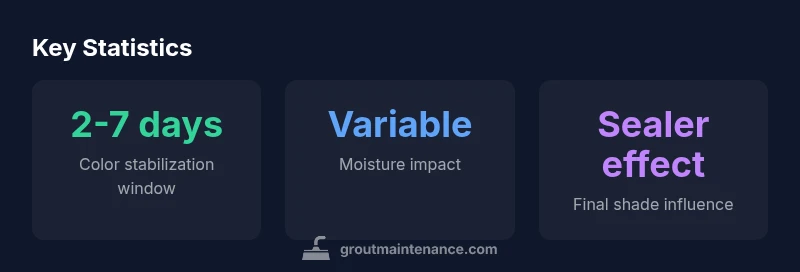
Color transition happens as curing proceeds and water evaporates. In typical installations, the grout darkens when wet and gradually lightens during the first week. The most dramatic changes usually occur in the first 48-72 hours, but complete stabilization can extend beyond a week depending on humidity and air flow. If you’re monitoring a large area, test a small patch first to gauge the rate of color change before committing to the entire project. Grout maintenance guidelines encourage patience because premature sealing or cleaning can lock in an uneven appearance.
Cement type, mix, and color consistency
Cementitious grout relies on cement chemistry to achieve color. A well-mixed batch with uniform pigment ensures more predictable shading, while batches with mineral variations can yield slight color differences between adjacent joints. If you’re regrouting or repairing, try to match new grout to the existing shade and maintain a consistent mixing ratio. When color consistency is critical for a design, consider requesting a sample from the grout manufacturer and testing it on a hidden patch before full installation.
The role of water content and evaporation
Water content at the time of installation directly influences how the grout will dry. Excess moisture slows the transition to the final shade and can leave a dull or hazy film if not rinsed and cured properly. Adequate ventilation accelerates moisture removal, helping the grout achieve its intended color faster. If a haze remains, a gentle wipe with clean water and a light scrub using an non-abrasive pad can help restore clarity before sealing.
Sealers, cleaners, and finishing products
Sealants can affect how the final shade appears by altering surface moisture and gloss. Some sealers deepen the color slightly, while others may neutralize sheen and make the grout look lighter. Cleaning products, especially those with harsh chemicals, can temporarily tint or dull grout color. Always follow manufacturer instructions and perform tests on a small area before applying to the entire installation. After sealing, allow the grout to cure fully per the product guidelines for accurate color assessment.
Practical tests you can run to verify color in your space
To confidently predict final color, perform a few simple checks:
- Create a test patch: Grout a small area with the same batch.
- Observe under different lighting: Daylight, tungsten, and fluorescent light can reveal color shifts.
- Let it cure: Wait at least 48 hours before evaluating; more time may be needed.
- Compare with adjacent joints: Ensure uniform lighting and cleanliness before deciding to seal.
Document results with photos, note any residues, and adjust expectations accordingly.
Common myths about grout color
A popular myth is that sealing always makes grout darker. In reality, sealers may darken some shades slightly, but others have minimal color impact. Another misconception is that cleaning alone will restore an even color; in many cases, proper curing and a neutral cleaning approach provide better results. Finally, some homeowners assume color will be perfect immediately; curing variability means patience pays off.
Case studies: typical homeowner scenarios
- Scenario A: A small bathroom with light gray cement grout shows a noticeable darkening after grouting, then gradually lightens over 3-5 days. The final shade is slightly lighter than the sample but matches the tile tone well after sealing.
- Scenario B: A kitchen backsplash with dark rectified tiles uses a dark gray grout; after sealing, the final shade appears slightly deeper due to the sealer’s sheen, but lighting adjustments minimize this effect.
- Scenario C: Outdoor paver grout experiences enhanced color variation due to sun exposure and humidity; a color-matching sealant and periodic cleaning stabilize appearance over several weeks.
Care after color settles: maintenance tips to preserve shade
Once the final color has stabilized, implement a maintenance routine to preserve shade consistency:
- Clean grout with
Color change during grout curing under different scenarios
| Scenario | Wet Color | Dry Color & Time |
|---|---|---|
| Standard cementitious grout in bathroom | Dark when wet | Lightens as moisture leaves; final shade may take several days |
| Sealed grout with penetrating sealant | May appear slightly darker initially | Final shade may be influenced by sealant and curing |
| Epoxy grout use | Typically less noticeable color shift | Color remains more stable |
Got Questions?
Why does grout look darker when wet?
Wet grout reads darker because water fills the pores of the cement, increasing light absorption. As it dries, moisture evaporates and the color typically becomes lighter. If the area remains unusually dark after curing, recheck cleaning residues and sealing.
Wet grout looks darker because water fills the pores, making it look deeper; as it dries, the color lightens. If it stays dark, check for cleaners or sealants that may affect color.
Will sealing grout affect its final color?
Yes, sealing can influence the perceived shade by reducing surface moisture and altering sheen. Some sealers darken the grout slightly, while others have minimal color impact. Always test on a small patch before full application.
Sealing can change color a bit—some sealers darken it, others don’t. Test first on a small area.
How long does it take for grout to finish changing color?
Final color typically develops over several days as moisture dissipates and curing completes. In humid spaces, this process may take longer, so plan accordingly when evaluating color before sealing.
Final color usually develops over a few days; in humid spaces, it can take longer.
Can cleaning products permanently alter grout color?
Harsh cleaners can temporarily tint grout, especially if they leave residues. Rinse thoroughly and use non-abrasive, pH-neutral cleaners to minimize lasting color changes.
Strong cleaners can tint grout temporarily; rinse well and use gentle cleaners.
What should I do if color is uneven after curing?
Identify whether the cause is moisture disparity, sealant application, or cleaning residue. Re-clean the area, allow additional curing time, and adjust sealing technique to improve uniformity.
If color is uneven, re-clean, let it cure longer, and reseal carefully.
Is whitening or bleaching grout safe for color?
Bleach and strong whiteners can damage grout and alter color unpredictably. Avoid aggressive whitening products unless recommended by the manufacturer and test on a hidden patch first.
Avoid strong bleaches on grout unless the manufacturer says it's safe.
“Color shifts during grout curing are expected; the final shade depends on moisture loss, cement shade, and sealers.”
The Essentials
- Test small areas before wide application
- Grout darkens when wet and lightens as it dries
- Sealants can cause slight color changes
- Allow several days for final color to develop
- Cleaning residues can cause temporary color shifts