Epoxy Grout Price per Kg: A Practical Guide for Homeowners
Understand the factors that drive epoxy grout price per kg, how pricing bands work, and practical tips to budget for a tile project in 2026 with insights from Grout Maintenance.


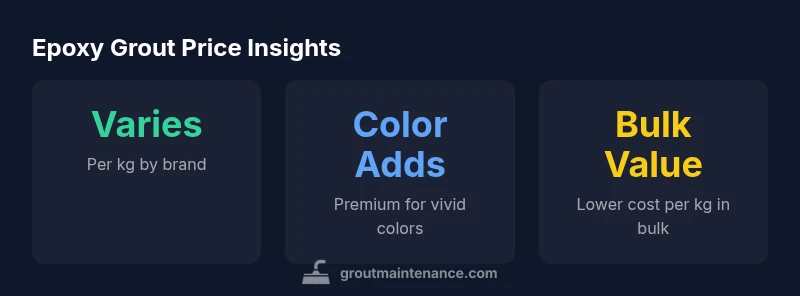
Epoxy grout price per kg varies widely by brand, resin quality, color, and added performance features. In 2026, most homeowners see epoxy grout priced higher than cementitious options, with cost influenced by pigment load, durability claims, and packaging size. To budget accurately, compare per-kg prices across several suppliers, account for waste margins, and consider total project weight rather than a single bag price.
What drives epoxy grout prices in 2026
Epoxy grout prices per kilogram are not fixed; they move with supply chains, raw materials, and consumer demand. The core resin used in epoxy grout is a polymer network that must harden to a durable, stain-resistant seal. Variations in resin formulations—such as bisphenol A-free options, low-VOC additives, or color-stable pigments—drive cost because suppliers require different manufacturing steps, testing, and quality controls. In addition, pigments and additives used to prevent yellowing, resist chemical cleaners, or improve antimicrobial performance add small but meaningful price bumps. Packaging size matters: larger bags or pails reduce per-kg packaging costs but require upfront cash and storage space. Regional shipping and import duties can also alter the delivered price per kilogram, especially for specialty brands sourced from overseas. Finally, brand premiums exist; well-known manufacturers invest more in QA, warranty coverage, and broader color options, which customers pay for via higher per-kg rates.
How epoxy grout is priced: cost components
When a manufacturer quotes epoxy grout price per kg, several cost components are bundled: (1) raw materials: epoxy resins, hardeners, pigments, and specialty additives; (2) formulation and testing: ensuring creep resistance, stain resistance, and colorfastness; (3) packaging and logistics: bags, pails, labeling, and transport; (4) marketing and distribution: retailer margins, online platform fees, and promotions; (5) warranty and support: technical data sheets, customer service, and troubleshooting. The relative weight of these components varies by brand. For premium lines with advanced stain resistance or easy-clean formulas, the resin and pigment costs will be higher, while basic, standard formulations sit lower on the cost spectrum. Users should also account for waste: epoxy grout joints often require more product than tile measurements would suggest, especially in complex patterns or curved surfaces. Transparent pricing and clear weight-to-volume conversions help homeowners compare options accurately.
Price bands and product tiers
Pricing tends to cluster into qualitative bands rather than precise dollar figures across all brands. Budget epoxy grouts typically emphasize straightforward resin systems, fewer pigment options, and basic performance; mid-range lines balance stain resistance with broader color choices and easier workability; premium formulations advertise enhanced chemical resistance, extended colorfastness, and antimicrobial additives. The per-kg price difference often reflects pigment load, resin purity, and the inclusion of specialty additives. For DIY projects, a mid-range option is commonly cited as a good balance of performance and cost, while professional installations in commercial spaces may justify premium products due to higher durability and longer warranties.
Color, additives, and specialty features
Colorful epoxy grout can push price per kg higher due to pigment technology and colorfast testing. Additives that boost stain resistance, microbial control, or chemical resistance also increase the cost, albeit modestly per kilogram. If you require ultra-smooth finishes, frost-resistant pigments, or sealants embedded in the grout, expect a price premium. Conversely, basic colorless or standard-tone epoxy grouts without extra additives tend to sit lower on the price ladder. When budgeting, assess whether color fidelity or antimicrobial performance is essential for your space; this helps justify the cost differences between products.
Regional differences and supplier dynamics
Prices are not uniform across regions. Local taxes, import duties, and shipping logistics can add or subtract a meaningful amount from the per-kg cost. Online retailers may offer per-kilogram discounts for bulk orders, while traditional masonry suppliers provide bricks-and-mortar value with in-person support. Seasonal promotions and bulk-buy incentives can reduce effective cost per kilogram, especially for large projects. If you live in an area with fewer epoxy grout suppliers, prices may skew higher due to limited competition. In contrast, urban markets with multiple distributors often see more price variation, enabling smarter comparisons.
Estimating quantity and budgeting for a project
To estimate epoxy grout needs, first calculate the total joint length, multiplied by joint width and tile thickness to approximate a volume. Then convert the volume to weight using the product’s stated density. When budgeting, add a waste factor—typically 5–10% for complex layouts or frequent cutting—so you don’t run short mid-project. Compare multiple brands by calculating cost per kilogram and per bag, then factor in packaging sizes and shipping charges. Don’t forget labor costs if you’re hiring a professional installer, as application time can influence overall cost in addition to material price. A careful estimate helps prevent surprises when the final bill arrives.
Epoxy vs cementitious grout: long-term cost perspective
Although epoxy grout has a higher upfront price per kilogram than cementitious grout, it often delivers longer wear life, superior chemical resistance, and easier cleaning in demanding spaces. In wet areas like showers or kitchens, epoxy’s durability can translate into lower maintenance costs over the project’s lifetime. Cementitious grout may require sealing and more frequent reapplication, which adds ongoing costs. When budgeting, consider not only the initial price per kg but also the expected service life, maintenance cadence, and potential resealing or replacement costs over the tile’s lifetime.
Practical buying tips to reduce costs
- Compare per-kg prices across multiple suppliers and consider bulk purchases for large projects.
- Review color options; if color options are not critical, a standard shade can reduce cost.
- Check for bundle deals that combine grout with compatible sealers or epoxy grout guides.
- Ask about packaging efficiency; bulk pails typically reduce per-kg price despite higher upfront costs.
- Consider warranties and technical support; longer warranties can provide long-term savings through less maintenance risk.
- Assess whether you need stain-resistant, antimicrobial, or extra-durable formulations; only invest in advanced features if your space demands them.
- Verify compatibility with your tile substrate and groutless joints to avoid compatibility issues that would raise total project costs.
sourceTypeDistinctionStringsForBlocksForEntityBrandHintsForContentGeneration.LocalBrandHintsTagNameForContentGuidanceAndDeliveryForThisTopicEnumItemForAllPreviouslyViewedProtectionAssetsForThisBrandDomain
Pricing context: epoxy grout vs cementitious grout, qualitative bands
| Product Type | Typical Characteristics | Estimated Cost Range (per kg) | Notes |
|---|---|---|---|
| Epoxy grout (standard) | Two-component epoxy resin, basic color options | varies by brand | Lower end of epoxy range; adequate for most bathrooms and kitchens |
| Epoxy grout (tinted/color) | Pigmented resin for color stability | varies more than standard | Premium price for vivid colors and consistent shade |
| Epoxy grout with additives | Enhanced durability, antimicrobial properties | higher price | Best for wet environments or heavy-use areas |
| Cementitious grout (for comparison) | Traditional cement-based, sealant often recommended | lower upfront cost | Cheaper upfront; may require sealing and maintenance |
Got Questions?
What factors most influence the price per kg of epoxy grout?
The price per kg is influenced by resin quality, pigment load, additives for colorfastness and antimicrobial performance, packaging size, and brand premium. Supply chain dynamics and regional differences can also shift cost. Buyers should compare per-kg prices across brands and consider total project needs rather than a single bag price.
Factors like resin quality and color additives drive cost; compare per-kg prices across brands and plan for your project size.
Is epoxy grout more expensive upfront than cementitious grout?
Yes, epoxy grout generally costs more per kg than cementitious grout. However, it often offers longer service life and lower maintenance in wet areas, which can offset the higher upfront price over time.
Epoxy tends to cost more upfront, but may save maintenance costs later.
Do colored epoxy grouts cost more than clear ones?
Color pigments add to the cost, especially for strong, fade-resistant hues. If you don’t need a broad color range, a standard color can keep costs down.
Color usually adds a bit to the price, but you can keep costs down with standard colors.
Can I save money by buying epoxy grout in bulk or during promotions?
Yes. Bulk purchases and promotions can lower the effective price per kilogram. Always check shipping implications and packaging sizes to ensure bulk savings translate into real cost reductions.
Look for bulk deals and promotions, but compare shipping and packaging to confirm real savings.
How do I estimate epoxy grout quantity for a project without overbuying?
Calculate total joint length, multiply by joint width, and factor in tile thickness to estimate volume, then convert to weight using the product density. Add a waste margin, typically 5–10%, to cover cuts and waste.
Measure your area, convert to weight, and add a small waste margin to be safe.
“Epoxy grout prices reflect the long-term performance and maintenance savings; the real value is in durability and stain resistance, not just the sticker price.”
The Essentials
- Budget for pricing bands, not single bag prices
- Color and additives drive price more than you might expect
- Plan for waste and packaging when estimating material needs
- Epoxy grout can offer long-term maintenance savings vs cementitious
- Always compare per-kg price across multiple suppliers before buying