Grouting Cement Price: What to Expect and How to Save
Understand the true drivers of grouting cement price, learn typical price ranges for cement-based and epoxy grout, and get practical steps to estimate, compare, and save on grout materials for home projects.


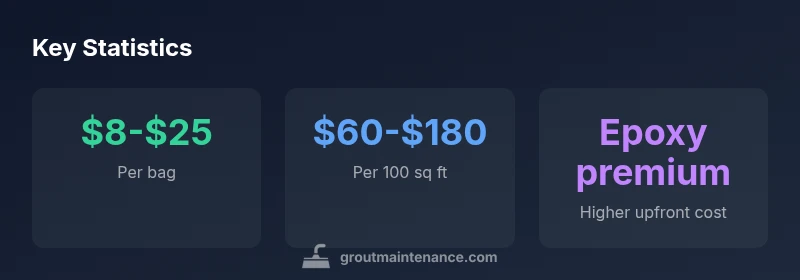
Grouting cement price varies by bag size, cement type (sand-cement vs epoxy), brand, and location. Cement-based grout typically ranges from $8-$25 per bag, while epoxy grout kits are higher at roughly $30-$60 per kit. For small bathrooms, material costs commonly run about $50-$200, excluding labor. Other cost factors include color choices, additives, and packaging size, which can push prices up or down. Regional pricing and supplier discounts also influence the final outlay.
Why grouting cement price matters for homeowners
Grouting cement price is more than a single sticker price. For homeowners, it affects budgeting, choice of grout type, and long-term outcomes like stain resistance and durability. When you understand the price drivers, you can plan for waste, color matching, and future repairs. According to Grout Maintenance, smart budgeting reduces waste and helps maintain color consistency, which lowers total project cost over time.
In practice, the price you pay often reflects the balance between initial material cost and the expected lifespan of the grout. Cheaper options might save money upfront but require more frequent replacement or resealing. Conversely, higher-priced cement-based or epoxy options can offer better stain resistance and longer life, reducing maintenance costs in the long run.
Key cost drivers behind grout prices
Multiple factors shape the final grouting cement price. Bag size and weight influence price per unit of grout material, while the type of grout (cement-based vs epoxy) drives the main difference in upfront cost. Colorants, latex additives, and premium sealers can add to the sticker price. Packaging and brand also play a role; cheaper, no-frills products may cost less but offer fewer shade options or gloss levels. Shipping and regional taxes can create noticeable price gaps between cities and suppliers. Understanding these drivers helps you estimate costs more accurately and prevent sticker shock when you shop.
Additionally, whether grout is pre-mixed or powder form affects price and storage. Pre-mixed grouts are convenient but often pricier per square foot and may limit color range. Powder grout allows more control over mixing ratios and can be more economical at scale, especially for larger projects.
Cement-based grout vs epoxy grout: price implications
Cement-based grout is generally the most cost-effective option for many DIY projects. It’s sold in bags and mixes easily with water, offering a broad range of colors. Epoxy grout, while more expensive upfront, provides superior chemical and stain resistance and longer-lasting color. For high-traffic areas or wet zones (showers, backsplashes), epoxy can reduce long-term maintenance costs despite higher initial cost. When comparing prices, calculate not just the per-bag price but the total material needed to cover the project and any potential waste from color matching.
Keep in mind that epoxy typically requires separate resin and hardener, sometimes sold as a kit, which can influence the price per project. Cement-based grout also comes in unsanded and sanded varieties—sanded grout is often necessary for wider joints and can influence price slightly depending on the bag and brand.
How price scales with project size and tile layout influence material needs
Project size and tile layout significantly affect material needs and price. A larger area clearly requires more bags or kits, but the joint width and tile size also change consumption. Narrow 1/16 inch joints use less grout per square foot than wider joints, while intricate tile patterns can increase waste. For DIYers, this means that two rooms with the same square footage may have different material costs based on joint width, tile type, and whether you choose cement-based or epoxy grout.
When planning, estimate grout quantities by measuring total tiled area and multiplying by an approximate grout depth per joint. Then convert this into bags or kits, adding a 5-10% waste buffer to account for color variations and mix consistency. Using a single brand and batch can help minimize color variance across the project.
Practical steps to estimate your material costs
- Measure the tiled area (length × width) for every room or space.
- Determine joint width and select grout type (cement-based vs epoxy).
- Check product coverage on the bag/kit label to estimate bags or kits needed.
- Add 10-15% extra for waste and color matching; factor in tax and shipping.
- Compare prices across local retailers and online suppliers; don’t forget potential bulk discounts.
- Consider future repairs: buying a small extra amount from the same batch helps ensure color consistency years later.
A simple worksheet can save you time when shopping. If you’re unsure about coverage, ask your supplier for a per-bag coverage estimate based on your joint width and tile size. This upfront check reduces surprises at checkout.
Ways to save on grout costs without compromising quality
- Buy in bulk and compare per-bag costs across retailers; bulk purchases often yield lower unit prices.
- Opt for cement-based grout when color options and durability meet your project requirements; epoxy is worth it only where stain resistance is essential.
- Avoid premium additives unless you need specific properties (e.g., extra stain resistance or faster cure times).
- Reuse leftover grout from a full batch for touch-ups; store unused grout correctly in a sealed container and label with batch information.
- Match grout color with tiles to minimize waste and rework; if you must mix batches, keep test swatches for consistency.
- Check for color-matching services or color-matching samples at your local supplier to reduce the risk of mismatches later.
Common grout products and price ranges
| Product Type | Estimated Price Range | Notes |
|---|---|---|
| Cement-based grout (unsanded) | $8-$25 per bag | Typical for small joints in walls or backsplashes |
| Cement-based grout (sand-filled) | $8-$30 per bag | More durable for floors with wider joints |
| Epoxy grout kits | $30-$60 per kit | Higher upfront cost but better stain resistance |
Got Questions?
What factors influence grouting cement price?
Key drivers are material type (cement-based vs epoxy), bag size, color options, and regional supplier pricing. Shipping, taxes, and store policies also play a role. Understanding these helps you compare offers accurately.
Factors include material type, bag size, color options, and local pricing.
Is epoxy grout always more expensive than cement-based grout?
Generally yes, epoxy grout costs more upfront due to resin content and specialized mixing. It offers better chemical resistance and longevity, which can offset costs in high-traffic or wet areas.
Epoxy is usually pricier upfront but lasts longer in tough zones.
How much grout will I need for a small bathroom?
Estimate by area (length × width) and joint width. Add a waste buffer (about 10%). Use product coverage guides on bags/kits to convert area into bags or kits.
Measure the area and add a bit extra for waste.
Should I buy extra grout for waste or color matching?
Yes. Extra grout helps with color matching and repairs. Store in a labeled, sealed container. Batch color can vary slightly between lots.
Keep a little extra on hand for fixes.
Do local suppliers offer bulk discounts on grout?
Some retailers offer bulk pricing or contractor discounts. Check multiple suppliers and ask about bulk rates and return policies.
Look for bulk pricing and contractor discounts.
What factors should I consider when comparing grout prices?
Compare price per bag/kit, coverage per bag, packaging, shipping, and batch consistency. Also consider color options and drying times that affect project duration.
Compare price per bag, coverage, and color options.
“Price variation in grout materials primarily stems from cement type, bag size, and regional supply. Planning around these factors helps homeowners budget accurately.”
The Essentials
- Estimate costs using a simple per-bag model to compare suppliers
- Cement-based grout is typically cheaper than epoxy options
- Order extra grout for waste and color matching
- Bulk purchases may reduce per-bag cost
- Test shade and batch differences to avoid mismatches