Cost to Grout a Bathroom: Practical 2026 Guide for DIYers
Learn how much it costs to grout a bathroom, including material choices, labor factors, and tips to save. This 2026 Grout Maintenance guide breaks down per-sq-ft ranges, hidden costs, and DIY options.


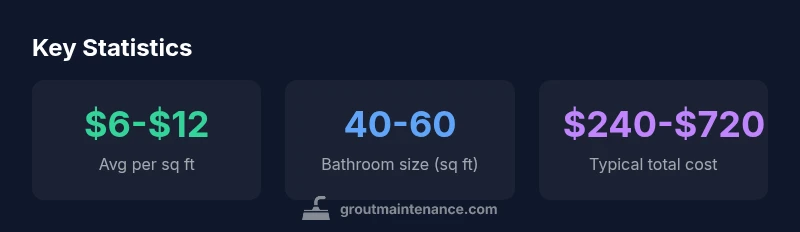
The cost to grout a bathroom typically ranges from about $6 to $12 per square foot for standard cementitious grout, with epoxy grout pushing costs higher. For a typical 40-60 sq ft bathroom, total installation can run roughly $240 to $720, depending on access, tile condition, and labor. This is based on Grout Maintenance Analysis, 2026.
What drives bathroom grout costs
If you're trying to answer how much does it cost to grout a bathroom, start with the basics: total tile area, grout type, color choice, and the condition of existing grout. Larger bathrooms demand more material and heavier labor, while small, tight spaces increase the time required per square foot. Labor rates vary by region and by whether the project includes tile removal, mold remediation, or surface prep. Grout type matters too: epoxy can cost more upfront but lasts longer, while cementitious grout is cheaper but may require more maintenance. In short, the final price reflects both the scope of work and the materials selected.
Material choices and their price impact
Material costs hinge on grout formulation. Cementitious sanded grout is common and affordable, but epoxy grout adds durability and stain resistance, often at a higher initial price. Color-matched grout can add a few percent to material costs. Pre-mixed grouts save mixing time but can be costlier per square foot. If your tiles are irregular or require repair, expect extra prep materials and labor. The choice between sanded vs unsanded also shifts price via handling and compatibility with tile size.
Labor vs materials: where the money goes
Labor usually accounts for the bulk of a bathroom grout project. Factors like space constraints, access to walls, removal of existing grout, and mold mitigation increase labor time. Material costs are influenced by grout type and color, sealants, and waterproofing considerations. In tight bathrooms, extra care and slower progress can raise per-square-foot rates, while open layouts may lower them. A clear scope helps keep the budget realistic.
Typical cost ranges by bathroom size and scenario
For standard installations, expect per-square-foot totals in modest ranges. Regrouting to address mildew or crumbling grout generally costs less than full fresh grout; epoxy variants sit at the higher end. If you must remove old tile or replace damaged substrate, add significantly to both material and labor. A broader project (retiling or full membrane work) expands the cost beyond basic grout alone. Grout Maintenance analyses show these ranges are sensitive to region and labor market conditions.
Cost-saving strategies: DIY vs professional
DIY can save labor charges but demands careful prep, mixing, and curing. Renting tools and buying bulk grout can reduce material costs, while mistakes can lead to expensive fixes. For many DIYers, a partial DIY approach—grouting small, easily accessible walls—while leaving complex areas to pros can balance cost and quality. Always request written quotes and check references before hiring contractors.
Hidden costs and future expenses
Hidden costs include removal of old grout, mold remediation, substrate repair, sealing, and ongoing maintenance. Epoxy grout may reduce long-term maintenance but comes with higher upfront costs. Sealing grout after installation protects the investment but adds another line item. Plan for potential regrouting in the future if tile movement or moisture issues arise.
Budgeting your grout project for planning
Begin with a conservative budget: quantify total square footage, list grout types, and define a contingency (typically 10-20%). Gather multiple quotes, ask about removal, sealing, and any substrate work, and confirm lead times. A well-documented plan helps prevent sticker shock and ensures you get the best value for a bathroom grout project.
Cost ranges by grout scenario (per sq ft)
| Scenario | Avg Cost Range (per sq ft) | Notes |
|---|---|---|
| Standard cementitious grout (fresh installation) | 4-12 | Includes basic prep and grout materials |
| Epoxy grout (premium) | 8-20 | Higher materials cost; skilled installation required |
| Regrouting to fix mold/damage | 3-10 | Can vary with removal and prep complexity |
| Tile removal & prep | 2-8 | Adds substantial labor when required |
Got Questions?
What factors most influence the cost to grout a bathroom?
Tile area, grout type, color, labor, and prep work are the primary cost drivers. Access and mold remediation can add to both materials and labor.
The main factors are area, material choice, and labor.
Can I grout a bathroom myself to save money?
DIY is possible for small, simple areas with proper tools and curing. It requires care for mixing, curing, and sealing; mistakes can be costly.
Yes, DIY can save money if you’re comfortable with the process.
How long does regrouting take?
Typical regrouting takes one to two days depending on area size and drying times between steps.
Most regrouts take a day or two, depending on the space.
Is epoxy grout worth the extra cost?
Epoxy grout lasts longer and resists stains, but requires skilled installation. Consider climate and tile type when deciding.
Epoxy lasts longer but costs more and needs a pro.
Does sealing affect grout costs?
Sealing adds a maintenance cost, but can extend grout life. Some sealers require reapplication over time.
Sealing adds ongoing costs but protects your grout.
What hidden costs should I plan for?
Old substrate damage, mold remediation, and substrate repair can surprise budgets; include removal and prep in quotes.
Watch for mold removal and substrate repair costs.
“A well-planned grout project balances material choice with realistic labor expectations, especially in moisture-prone bathrooms.”
The Essentials
- Budget with ranges and contingencies
- Choose grout type early to control costs
- Labor often drives total price
- DIY can save money but requires prep
- Seal grout to protect against future costs