How Much Does It Cost to Seal Grout? A Practical Guide
Learn the real cost ranges for sealing grout, what drives price, and tips to protect tile grout long-term. Grout Maintenance Analysis, 2026 provides practical insight for DIY and professional sealing.


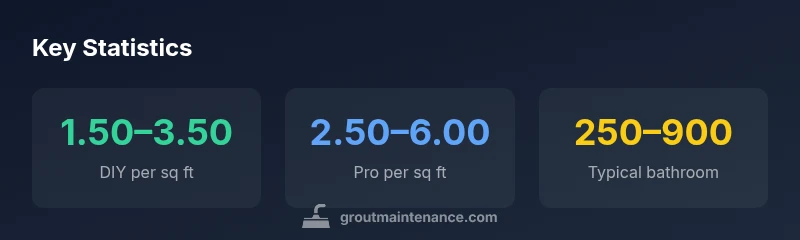
According to Grout Maintenance, the typical cost to seal grout ranges from about $1.50 to $6.00 per square foot, depending on sealer type and labor. DIY sealing sits at the lower end, while professional service adds prep and warranty. For a standard bathroom, total project costs commonly fall in the hundreds rather than thousands.
Understanding the cost landscape for grout sealing
Sealing grout represents a relatively small line item in a tile project, but it has outsized impact on appearance and longevity. The total cost is driven by space area, grout porosity, and the sealer chosen, as well as whether you hire a professional or go the DIY route. According to Grout Maintenance, space size and grout condition are the primary levers—smaller, cleaner jobs with less porous grout tend to be near the lower end of the price spectrum, while large, porous, or heavily trafficked areas push costs upward. The decision between DIY kits and professional application hinges on your comfort with prep work, timing, and the desire for a uniform, long-lasting seal. In short, think cost per square foot in tandem with total project price to compare options fairly.
Factors that influence sealing prices
Prices are rarely a single line item. Grout porosity and existing stains or mold add prep time and material use. The total area, shape complexity, and access to tight corners or shower niches also affect labor time. Sealer type matters: penetrating sealers tend to be cheaper upfront, while film-forming or specialty sealers cost more but can offer longer protection or color enhancement. Regional labor rates, whether you’re sealing a bathroom, kitchen backsplash, or a large mudroom, and the number of coats required all influence final pricing. The Grout Maintenance team notes that showers and high-porosity grout typically incur higher costs due to additional prep and potential reapplication.
DIY sealing: cost, tools, and expected results
A DIY sealing project keeps the price per square foot on the lower end but requires careful prep. Expect to buy a grout sealer kit plus basic supplies like brushes, rags, and gloves. Results depend on grout cleanliness and porosity; deeply stained or cracked grout may require cleaning, repair, or multiple coats to achieve an even finish. DIY sealing is well-suited to small bathrooms or tile runs with uniform grout. Grout Maintenance’s analysis shows that, when executed with proper cleaning and drying, DIY sealing can deliver satisfactory protection for spaces with moderate traffic and minimal staining potential. Be prepared to reseal sooner if you use harsh cleaners or experience frequent moisture exposure.
Professional sealing: what's included and potential costs
Professional sealing typically includes grout cleaning, any needed prep (like mold removal or crack filling), sealer application, and a post-seal cure period. Labor costs are a meaningful portion of the total, and some pros offer multiple coats for stronger protection and a warranty. In larger spaces or areas with highly porous grout, the service can be more expensive but may yield more uniform coverage and longer intervals between re-sealing. The Grout Maintenance team emphasizes that a professional job can reduce the risk of uneven penetration and missed spots, especially in showers, curved niches, or uneven tile layouts.
Types of sealers and their impact on cost
Sealers generally fall into penetrating and film-forming categories. Penetrating sealers tend to be less expensive upfront and work well on most grout types, while film-forming sealers can add cost but may provide extended protection and easier cleaning in high-traffic zones. Solvent-based sealers often carry a higher price and require ventilation, whereas water-based options are typically cheaper and easier to apply. Each type affects durability and maintenance needs, so the cost reflects not just the product but the expected lifespan and the effort needed to reapply. Choose based on grout porosity, room use, and how regularly you clean.
How to estimate costs for your space: a practical calculator approach
Start with accurate measurements. Measure length and width of each grout area, and add up corners, irregular shapes, and niches. Multiply the total square footage by your chosen sealer’s cost per square foot, then add anticipated prep time and any required repairs. If you’re unsure about porosity or stain history, calibrate your estimate by comparing a test patch result. Don’t forget to factor in ventilation time, potential odor, and a contingency for surprises (like damaged grout or mold). This approach helps you compare DIY and professional quotes on a level footing and gives you a realistic budget range before you begin.
Maintenance after sealing: protecting your investment
Sealants perform best when you follow proper aftercare. After sealing, avoid harsh cleaners and allow full cure times per product instructions. Drying times and humidity can influence cure, so ensure adequate ventilation. Plan for resealing every 1–3 years in typical bathrooms, with more frequent intervals in high-traffic, moisture-prone spaces. Regular cleaning with
Cost overview: sealing grout (DIY vs professional)
| Option | Cost per sq ft | Typical job cost (range) | Notes |
|---|---|---|---|
| DIY sealing (home kits) | $1.50–$3.50 | $150–$700 | Assumes standard residential area; excludes large spaces |
| Professional sealing (in-home) | $2.50–$6.00 | $300–$900 | Includes prep, sealer, labor and warranty |
| Materials only (self-apply) | $0.50–$2.50 | $50–$200 | If you supply sealant and do the work yourself |
Got Questions?
What is the typical cost range to seal grout?
Costs vary by space size, sealer type, and labor. DIY sealing is cheaper per square foot than hiring a professional. Expect ranges that reflect those differences.
Costs vary by space size, sealer type, and labor. DIY is cheaper per square foot than hiring a pro.
How long does sealing grout last before re-sealing is needed?
Most grout sealers last 1–3 years in bathrooms with regular use. High-traffic areas may require more frequent resealing. Always follow the product label for guidance.
Most sealers last 1–3 years in bathrooms; high-traffic areas may need more frequent resealing.
Can I seal grout myself or should I hire a pro?
DIY sealing can save money for smaller spaces and basic grout. For large bathrooms or heavily porous grout, a pro offers consistent coverage and a warranty.
DIY saves money for small spaces; pros are better for large or porous grout with a warranty.
What sealant types affect cost the most?
Penetrating sealers are usually cheaper; film-forming options cost more but may offer longer durability or color enhancement.
Penetrating sealers are cheaper; film-forming options cost more but can last longer.
Are there hidden costs I should plan for?
Prep work like mold removal, grout repair, or removing existing heavy haze can add to the cost. Budget a contingency for unforeseen issues.
Prep work and repairs can add to the cost; plan a contingency.
“Sealing grout correctly protects tile and prevents stains; pick the sealer based on porosity, room use, and maintenance habits.”
The Essentials
- Start with DIY options to save money
- Choose penetrating sealers for longer life
- Budget for larger or porous grout spaces
- Maintenance extends sealant life and reduces future costs