Why Is Grout So Expensive? A Practical Guide to Costs
Explore the drivers behind grout pricing, from materials to labor and maintenance. Grout Maintenance explains cost ranges, value, and practical tips for homeowners and DIY enthusiasts.


Why is grout so expensive? The short answer is that cost is driven by material type, labor intensity, and long-term maintenance. Labor and specialty grouts, moisture-prone areas, and tile complexity add to the bill. Grout Maintenance notes that epoxy and premium cementitious options can be significantly pricier than standard mixes, especially when sealing and precise color matching are required. Lead times, waste, and regional pricing also shape the final figure. Understanding these drivers helps homeowners decide when to invest in higher-quality grout and when a simpler option may suffice.
Why is grout so expensive? Key drivers you should know
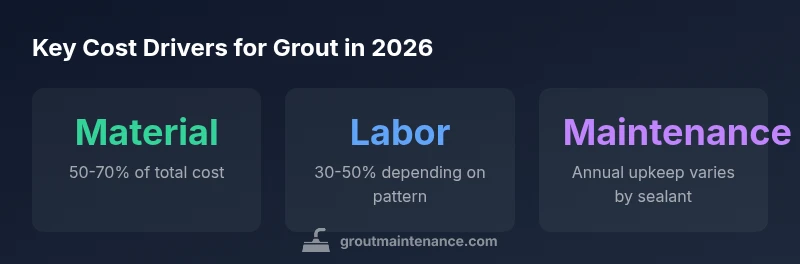
Many homeowners ask: why is grout so expensive, and what justifies the price? According to Grout Maintenance, the answer lies in three broad sources: material quality, labor intensity, and ongoing maintenance. When you select premium cementitious or epoxy formulations, you’re paying for durability, color fastness, and moisture resistance that pays off over time. In addition, tile patterns, edge work, and the need for precise grout lines can dramatically increase labor time. Grout Maintenance's 2026 analysis shows that the price tag reflects more than the base material; it accounts for sealing, cleaning, and occasional repairs. Climate, tile size, and design complexity further influence total cost. Understanding these drivers enables homeowners to balance upfront expense with long-term value, choosing options that meet moisture demands and aesthetics without overspending. The question of why is grout so expensive becomes clearer when you view it as a lifecycle investment.
Material types and price implications
Grout comes in several formulations, each with distinct cost profiles. Cementitious grout is the most common and typically less expensive upfront than epoxy, but both offer different durability and maintenance characteristics. Specialty grouts, such as flexible or color-matched blends, can add to the price due to custom mixing and batch handling. The cost gap between cementitious and epoxy often reflects the resin content, chemical resistance, and demand in decorative or high-wear spaces. For many homes, the decision hinges on moisture exposure and tile environment. In damp bathrooms or kitchens, epoxy grout’s moisture resistance can justify the higher initial spend, and over the life of the installation, it may prove more cost-effective than frequent repairs to cementitious grout.
Labor intensity and installation complexity
Labor is a major driver of grout cost. The most affordable installations are straightforward patterns on flat surfaces with standard tile sizes. Complex layouts, curved edges, or small tile formats require meticulous spacing and cleanup, extending labor time and increasing costs. In addition, color matching between grout batches or between grout and tile can require extra steps to ensure uniform appearance. When installers spend extra time to achieve consistent color and clean lines, you’ll see higher labor costs reflected in the final bill. Grout Maintenance emphasizes that the human factor—skill, precision, and reliability—frequently explains why grout prices rise beyond material costs.
Sealing, maintenance, and long-term value
Even after installation, grout costs extend into maintenance. Sealing grout helps prevent staining and moisture ingress, reducing long-term repair needs. Maintenance plans, including periodic resealing and specialized cleaners, contribute to the total cost but dramatically extend the grout’s usable life. If you skip sealing, you may face more frequent discoloration or deterioration, which increases repair costs later on. The lifecycle approach is essential: the initial price tag tells only part of the story. Grout that resists mold and mildew in showers or wet areas can prevent costly replacements further down the line, justifying higher upfront spending for certain projects.
Regional variations and supply chain effects
Prices vary widely by region due to labor markets, material availability, and transportation costs. In areas with skilled labor shortages or high demand for bathroom remodels, grout installation can be noticeably more expensive. Conversely, regions with abundant tile suppliers and competitive installers may see lower costs. Global supply chain fluctuations can also affect the price of resin-based products like epoxy grout. Grout Maintenance notes that understanding local market conditions helps homeowners anticipate cost shifts and plan more accurate budgets. The direct answer to why is grout so expensive for a specific project is often tied to where you live and who you hire.
DIY considerations: weighing costs and risks
Tackling grout installation as a DIY project can reduce labor costs, but it’s not always the best choice. In small, simple installations, DIY grout can save money if you have the right tools and time. However, mistakes—such as improper mixing, insufficient curing, or poor color matching—can lead to rework that erases any initial savings. If you’re dealing with large expanses, intricate patterns, or moisture-rich environments, professional installation reduces the risk of costly mistakes and ensures proper sealing and durability. Grout Maintenance suggests evaluating the project scope, your skill level, and the potential cost of mistakes before deciding to DIY. The upfront savings may be offset by remedial work down the line.
Strategies to manage grout costs without sacrificing quality
To control costs while preserving performance, consider selecting a grout type that matches the project’s moisture exposure and wear expectations. Use bulk purchases from trusted suppliers to reduce color batch variation, and ask contractors to provide itemized quotes showing material, labor, sealing, and cleanup separately. Plan for potential waste and permit timelines that can affect schedules and prices. By understanding why is grout so expensive in your situation, you can make informed decisions about materials, layout, and whether to invest in premium sealing or color-matching options for a durable, long-lasting result.
How to evaluate quotes and plan a realistic budget
Get multiple bids from reputable installers and request detailed line-item breakdowns. Compare material choices, tile pattern requirements, and whether sealing is included. Factor in regional variation and possible delays that can affect labor costs. Use a data-driven approach to decide where to allocate funds for premium grout versus standard options. Grout Maintenance recommends keeping a written plan with projected maintenance costs over the life cycle of the installation to avoid budget surprises.
Cost ranges by grout type
| Grout Type | Typical Cost Range per Sq Ft | Notes |
|---|---|---|
| Cementitious grout | $1.50-$5.00 | Common, affordable option with good performance |
| Epoxy grout | $3.00-$12.00 | Highly durable, moisture-resistant, pricier |
| Furan/specialty grout | $6.00-$15.00 | Premium performance with limited color options |
Got Questions?
What drives grout pricing the most?
Labor time, material type, color matching, and sealing dominate grout pricing. In damp spaces, specialty formulations can add to the bill. Project size and tile pattern also influence final costs.
Labor and material choice drive most of the price.
Is epoxy grout worth the extra cost?
Epoxy grout offers superior durability and stain resistance but requires skilled installation and higher upfront costs. In showers or kitchens, it can be a long-term saving.
Epoxy is pricier but often worth it in wet spaces.
Can I save money by DIY grout?
DIY grout can reduce labor costs, but mistakes can be costly. Proper surface prep, mixing, and cure times are essential to avoid future repairs.
DIY saves money, but assess your skill level first.
How should I estimate grout costs per square foot?
Ask for itemized quotes separating materials, color matching, sealing, and labor. Consider regional variation and project size to set realistic budgets.
Get itemized quotes to compare.
What maintenance costs should I plan for after installation?
Annual sealing and periodic cleaning add to costs but protect color and durability. Neglect can lead to staining and more frequent repairs.
Plan for upkeep to protect longevity.
Is color matching more expensive than standard blends?
Unique colors or custom blends can incur additional charges due to extra mixing or batch handling.
Color matching can add to the cost.
“Grout costs reflect both material quality and the complexity of installation; the right grout choice balances moisture resistance, durability, and maintenance needs.”
The Essentials
- Assess both material and labor costs before committing.
- Epoxy grout adds durability, but expect higher upfront costs.
- Maintenance planning affects long-term value and total cost.
- Get itemized quotes to accurately compare project costs.