Grout Turns Black in Shower: A Troubleshooting Guide
Learn fast, practical steps to diagnose and fix black grout in your shower. This Grout Maintenance guide covers causes, safe cleaning methods, sealing tips, and when to regrout to restore a clean, mold-free shower.


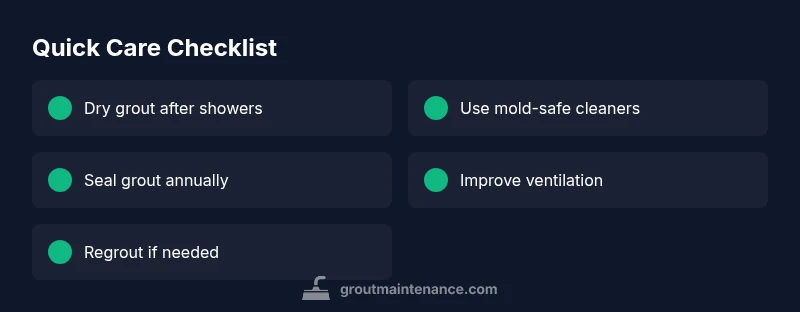
Black grout in a shower is typically mold growth caused by moisture. Clean thoroughly with a mold-safe cleaner or oxygen bleach, rinse, and dry completely. If staining persists after cleaning and resealing, regrout the affected area for a durable repair.
Why grout is black in shower
If you notice grout is black in shower, it is usually a sign that moisture has created an environment where mold or mildew can thrive. According to Grout Maintenance, moisture control is the core preventive measure, and proper ventilation is a frontline defense. In a typical home shower, damp air gets trapped in corners, behind curtain liners, and under floors, inviting organisms to take hold. The dark shade you see isn’t just a surface stain; it’s a biological growth that can penetrate grout pores, especially where the grout is older or damaged. Immediate action is critical to stop spread to nearby tiles and grout joints. Start by identifying all affected areas, including corners, expansion joints, and any porous or crumbling grout. Addressing moisture sources—fixing leaks, improving airflow, and using a moisture meter if needed—will reduce recurrence after cleaning.
Common culprits: Mold, mildew, and mineral buildup
The term mold vs mildew is often used interchangeably, but there are differences in appearance and persistence. Mold tends to appear as black, greenish, or dark gray specks that creep into grout lines, while mildew looks duller and may be easier to scrub away. Mineral buildup from hard water can darken grout temporarily and make cleaning more difficult, especially if cleaners fail to reach deep into the pores. In showers, soap scum traps oils and proteins that feed mold growth, creating a synergistic problem where the grout remains dark even after basic cleaning. Grout Maintenance analysis, 2026, shows that the combination of persistent moisture, poor ventilation, and mineral-rich water is a common recipe for long-lasting dark grout. If you’re unsure which culprit dominates, perform a two-step test: clean with a mold-safe cleaner, then rinse and recheck after drying; if stubborn staining remains, plan deeper cleaning or regrouting.
Safety and prep before you start
Before you tackle dark grout, gear up for safety and protect your living space. Put on nitrile gloves, eye protection, and a mask if you’re using strong cleaners. Open windows or run a bathroom fan to improve ventilation, and keep children and pets out of the area during cleaning. Test any cleaner on a small, inconspicuous section of grout first to ensure it doesn’t discolor colorfast grout. Never mix cleaners, especially bleach with ammonia or acids; this can create dangerous fumes. Remove easily damaged silicone sealant near the grout line and lay down plastic sheeting or towels to catch drips. Clear the shower niche, remove tiles if needed for deep cleaning, and read product labels for dwell time and flushing instructions. A well-prepped space minimizes splash into surrounding tiles and reduces the chance of accidental damage during scrubbing.
Quick fixes you can try today
Start with a fast, non-destructive approach. Use a tested mold-safe cleaner or oxygen bleach on white or color-fast grout; apply, allow to dwell per label, then scrub with a stiff nylon brush. Rinse thoroughly and dry with a clean towel or fan. For mineral buildup, a paste of baking soda and water can be applied to grout lines, scrubbed gently, and rinsed. If the grout is color-causing or stained beyond cleaning, you may attempt a diluted bleach solution only on non-colored grout types, followed by a thorough rinse and immediate drying. After you finish, seal any unsealed grout joints with a penetrating grout sealer once the surface is completely dry. If stain remains after these steps, treat the area as a candidate for regrouting. Safety note: always ventilate and never mix cleaners; test first in a small area to avoid color changes.
Deep cleaning techniques and products
For deeper cleaning, consider products designed for grout cleaning that contain sodium percarbonate or hydrogen peroxide. Use a dedicated grout brush or a short-handled microfiber pad for hard-to-reach joints. Steam cleaning can help release mineral deposits and loosen biofilm without harsh chemicals, but avoid excessive heat on ceramic glaze and epoxy grout. If you see crumbling grout or gaps wider than 1/8 inch, do not force more abrasive scrubbing; instead, plan a professional regrouting or DIY regrouting with proper epoxy or cementitious grout designed for showers. When choosing products, stick to low-odor, VOC-compliant formulas and avoid acidic cleaners on natural stone tiles. Document the area you’ve cleaned and monitor for 24-72 hours for any signs of regrowth, which would indicate moisture is still a problem or that deeper cleaning is necessary.
Sealing and maintenance for longer-term prevention
After cleaning and thorough drying, apply a penetrating grout sealer according to the manufacturer’s directions. Sealing helps repel moisture and soap scum, reducing future darkening. Reapply sealant every 6-12 months or as recommended for your grout type, and consider a color-tinted sealer if you want a uniform appearance. Maintain good ventilation by using an exhaust fan or opening a window during and after showers, and wipe down grout lines with a dry microfiber cloth after use. Regular cleaning using a soft brush and a mild cleaner will prevent the biofilm from re-establishing itself. Keep an eye on corners and edge joints where water tends to pool and promptly address any signs of cracking, spalling, or re-darkening.
When to regrout or replace grout
If cleaning and sealing fail to fully restore grout, or if the surface is crumbling or crumbling under the tile, regrouting is warranted. Replace defective grout with the same type (sanded vs. unsanded) and choose epoxy grout for higher resistance to staining in moisture-heavy environments. If you notice recurring dark patches after regrouting, investigate underlying moisture issues—leaks behind tiles, raised shower pan, or poor ventilation could be the culprit. Regrouting is a straightforward DIY task for experienced hobbyists, but if the grout lines are wide or the tiles are loose, consider hiring a pro to prevent further damage to tiles and substrate."],
diagnosticFlow:{
symptom
symptom
Steps
Estimated time: 60-90 minutes (plus drying time)
- 1
Assess affected areas
Walk through the shower and identify every grout line, corner and edge joint showing dark staining. Mark areas that look crumbly or cracked for closer inspection. Take photos for reference and note moisture sources such as leaks or poor ventilation.
Tip: Start with the worst-affected zone first to maximize impact. - 2
Protect yourself and the space
Put on gloves, eye protection, and a mask if using strong cleaners. Remove easily damaged silicone around grout joints and lay down protective plastic or towels to catch drips. Ventilate the bathroom to reduce inhalation hazards.
Tip: Ventilation is as important as the cleaner you choose. - 3
Initial cleaning and dwell time
Apply a mold-safe cleaner or oxygen bleach to the grout lines and let it dwell for the recommended time. Use a stiff nylon brush to scrub stubborn spots in a circular motion, paying attention to grout depth. Rinse thoroughly with warm water and dry with a clean towel.
Tip: Do not scrub too aggressively on older, cracked grout. - 4
Rinse, dry, and inspect
Rinse all cleaned areas again and dry completely with towels or a fan. Inspect the grout lines for any remaining stains or softening areas. If the grout still looks dark after cleaning, consider deeper cleaning or regrouting.
Tip: Prevention starts with dry, clean grout. - 5
Seal the grout
Once the surface is dry (preferably 24 hours), apply a penetrating grout sealer following the manufacturer’s directions. Apply evenly, ensure no pooling, and wipe off excess sealer from tile faces to avoid hazing.
Tip: Sealants work best on dry, clean grout. - 6
Evaluate results and plan next steps
Wait 24–48 hours for sealant to cure and re-evaluate the grout. If the grout remains dark in the same spots, plan regrouting for those lines or consider a full regrout if the tiles are loose or the substrate is compromised.
Tip: If in doubt, consult a professional before proceeding.
Diagnosis: Black or dark grout in shower
Possible Causes
- highMoisture buildup and poor ventilation
- highMold or mildew growth
- mediumSoap scum and mineral deposits accumulating
- lowWater leaks causing persistent dampness
Fixes
- easyImprove ventilation and reduce moisture (exhaust fan, open window, run a dehumidifier)
- easyScrub grout with a mold-safe cleaner or oxygen bleach and rinse thoroughly
- easyRe-seal grout after cleaning to prevent moisture intrusion
- hardIf damage is extensive or staining persists, regrout or replace affected sections
Got Questions?
Why does grout turn black in my shower?
Black grout in showers is most often mold or mildew thriving in damp environments. Water leaks, poor ventilation, and soap scum buildup create conditions for growth. A thorough cleaning, drying, and sealing usually stops recurrence, but persistent staining may require regrouting.
Black grout usually means mold growing in the damp shower. Clean, dry, and seal; if stains stay, regrout.
Can I clean black grout without regrouting?
In many cases, deep cleaning and sealing can restore appearance without a full regrout. If grout remains cracked or crumbling, or staining penetrates deeply, regrouting is the prudent option.
Often you can clean and seal. If the grout is damaged, regrouting is the better fix.
Is it safe to use bleach on colored grout?
Bleach can discolor colored grout. Use oxygen bleach or color-safe cleaners first, and always test in a small area. If colorfast grout shows staining after cleaner use, regrouting with color-matched grout may be necessary.
Bleach can fade colored grout; test first and consider color-safe options.
How long does grout sealing last in a shower?
Sealing typically lasts several months to a year in high-moisture areas. Reapply as recommended by the product you use, and maintain a cleaning routine to prevent buildup that undermines the seal.
Sealer generally lasts months to a year in showers; reapply as directed.
When should I call a professional?
Call a pro if grout is extensively cracked, tiles are loose, or there’s visible substrate damage. A professional can regrout or repair underlying waterproofing without risking further damage.
If you see loose tiles or crumbling substrate, it’s time to get a pro.
What tools help with cleaning grout effectively?
A stiff nylon brush, a dedicated grout cleaning solution, and, for stubborn stains, oxygen bleach or a safe mold cleaner are essential. A steam cleaner can help loosen grime, but test first on a small area to prevent damage.
Use a grout brush and safe cleaners; steam can help, but test first.
Watch Video
The Essentials
- Act quickly to limit mold spread.
- Dry and ventilate after each shower to reduce moisture.
- Seal grout after cleaning to prevent recurrence.
- Regrout when damage or deep staining persists.