Sanded vs Unsanded Grout: Practical Home Guide
An analytical, practical guide comparing grout sanded vs unsanded, covering joint width guidance, tile compatibility, maintenance, sealing needs, and real world installation scenarios for homeowners.


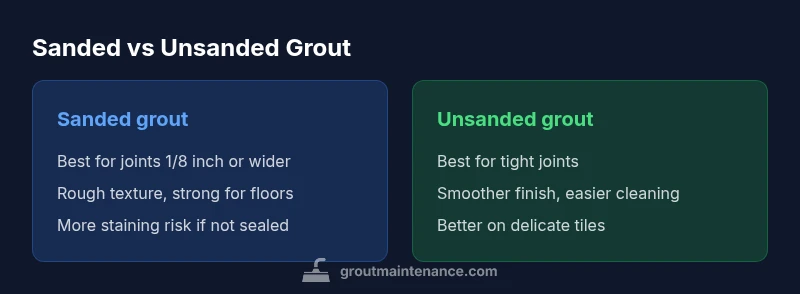
Sandeds are best for joints 1/8 inch (3 mm) or wider and high traffic floors, while unsanded works better for narrow joints and delicate surfaces like glass tiles. The choice influences durability, ease of cleaning, and long term maintenance. For most homes, matching grout type to joint width and tile profile yields the best balance of appearance and performance.
Overview of grout sanded vs unsanded in everyday tiling
The decision between grout sanded and unsanded is a fundamental one in any tiling project. For many homeowners, the choice hinges on joint width, tile type, and expected wear. When we talk about grout sanded vs unsanded, we are comparing a cementitious mix that includes sand particles with a smoother, finer mix designed for tight joints. This guide walks you through where each type shines, how surfaces influence performance, and how the right grout choice can affect long term durability, cleaning ease, and color uniformity. The goal is a durable, stain resistant joint with a clean, consistent appearance that remains attractive for years. According to Grout Maintenance, aligning tile edges and selecting the correct joint width from the outset saves time on cleanup and reduces the risk of rework. By understanding these basics, homeowners can plan confidently for kitchens, bathrooms, showers, and floors.
Material science and behavior of grout types
Cementitious grout blends rely on cement binders, water, and, in the case of sanded grout, inert sand aggregates. The presence or absence of sand changes how the mix compacts, cures, and resists cracking under load. Sand provides compressive strength for wider joints but can leave a rougher surface texture that may collect dust during cleaning. Unsanded grout has a smoother finish and is better suited to joints where tile edges are crisp and close together. According to Grout Maintenance, the microstructure of each mix influences how it behaves when wet, how easily it stains, and how forgiving it is to slight substrate movement. In practice, sanded grout tends to reveal the joint more clearly and may show texture, whereas unsanded yields a sleeker line that can appear blotchy if color batches differ. This material understanding helps you pick a grout type that aligns with tile selection and room function.
When sanded grout shines: floors, wide joints, and high traffic areas
Sanded grout is engineered to fill wider joints and resist cracking under foot traffic. In floors and exterior installations, the sand grains act as tiny reinforcing elements that help the grout hold its shape as the substrate expands and contracts with temperature changes. For ceramic and porcelain tiles with joints exceeding roughly 1/8 inch (3 mm), sanded grout tends to offer better resistance to abrasion and staining, provided you seal after cure. It also tends to be more resistant to color changes when cleaning agents are used properly. The trade off is that the joint surface can appear rougher, which some homeowners prefer for a rustic or industrial look. Grout Maintenance emphasizes that long term performance depends on proper curing, cleaning, and timely sealing to keep staining at bay and to preserve color uniformity across a large expanse. For busy family kitchens and entryways, sanded grout often delivers the most durable result.
When unsanded grout shines: walls, backsplashes, and tight joints
Unsanded grout excels where joints are narrow or tile edges are very close together. It yields a smooth, almost glassy finish that is easy to wipe down and less likely to abrade the tile glaze. For wall tiles, backsplashes, and vertical surfaces, unsanded reduces the risk of surface scratching and provides a crisp line that suits contemporary design. It can be forgiving on delicate tile patterns where precise tile alignment is feasible and color uniformity is achievable. Grout Maintenance notes that unsanded grout can be more prone to staining in damp environments unless a proper sealant and pH balanced cleaners are used. In practice, unsanded grout keeps color lines crisp on narrow joints and helps maintain a polished look on high visibility walls and backsplashes.
Joint width, tile type, and finish: a practical decision framework
The decision often boils down to joint width and tile type more than personal preference. If your project uses large format tiles on the floor or a wide hallway, sanded grout is a safer choice to prevent cracking. For delicate wall tiling, glass tiles, or ceramic mosaics with tight joints, unsanded grout prevents edge chipping and produces a cleaner line. The finish you want—textured versus smooth—also matters because the grout surface can influence how dust, soap scum, and mineral deposits accumulate. A textured sanded grout will hide minor staining better, while a smooth unsanded line makes cleaning easier but may reveal mineral halos if cleaning is neglected. Grout Maintenance recommends testing a small patch first to confirm color matching and texture under lighting conditions typical to the space.
Maintenance, sealing, and stain resistance differences
Both grout types benefit from sealing, especially in moisture-prone areas. Sanded grout benefits from sealing to minimize staining and improve water resistance, while unsanded grout can also benefit from penetrating sealers to reduce moisture uptake. The sealing interval depends on area usage, tile porosity, and water exposure. In bathrooms and kitchens, post cure sealers help guard against staining and moisture intrusion. For dry interior walls, sealing can be optional but still beneficial for color stability. Grout Maintenance emphasizes using a neutral cleaner and avoiding acidic products that can degrade cementitious grout over time. Regular cleaning and timely sealant reapplication extend grout life for both types, preserving color and texture consistency across surfaces.
Installation tips and common mistakes to avoid
Grouting succeeds best with planning and prep. Ensure joints are clean, dry, and to the recommended depth before applying grout. For sanded grout, avoid overfilling joints and minimize pressure that can push grout into adjacent areas, creating uneven lines. For unsanded grout, apply in thinner layers to reduce the risk of pulling glaze away from tile edges. Proper sponge technique matters for both types; excessive wiping or rough scrubbing can pull out grout or smear it across tiles. Temperature and humidity influence cure time, so follow manufacturer guidelines and allow extra cure in cooler environments. Masking edges near fixtures reduces grout haze and cleanup later. Testing a small area before full application helps verify color and texture under actual lighting. Consistency between batches is essential to prevent visible shade differences across large expanses.
Durability, staining, and long-term care in real homes
In real homes, the choice between sanded and unsanded has long term implications for maintenance and appearance. Sanded grout typically performs well on floors with wide joints and moderate moisture exposure, assuming proper sealing and cleaning. Unsanded grout tends to stay slicker and is easier to scrub on vertical surfaces, yet it may require more vigilant moisture control in damp zones. Both types degrade with neglect, so a routine cleaning schedule, occasional resealing, and avoidance of harsh cleaners can extend grout life. The Grout Maintenance team reminds homeowners that consistent care, including micro-scrub cleaning and color-safe products, helps preserve the grout color and integrity over years. If high moisture or heavy traffic is expected, consider grout color and sealing strategy designed for those conditions to minimize staining and sheen loss.
Practical install scenarios and examples to guide your choice
Kitchen floors with high traffic and wide joints typically benefit from sanded grout for durability and wear resistance. Kitchen backsplashes and living room walls with narrow joints favor unsanded for a crisp, modern line and easier maintenance. In showers and tub surrounds, grout selection should consider movement and moisture exposure; some projects benefit from matching grout type to surface profile to reduce maintenance and ensure consistent texture. The best approach is to plan ahead, test a small patch, and verify color stability under expected lighting and cleaning conditions. The Grout Maintenance team suggests asking questions about tile profiles, joint width, and expected wear to guide the final choice. In short, a well informed decision between sanded and unsanded reduces maintenance later and yields a more coherent finish across surfaces.
How to decide: a concise practical checklist
- Determine joint width and tile type for each surface in the project to guide grout selection.
- Consider movement and moisture exposure in bathrooms, kitchens, and outdoor areas where expansion may occur.
- Test color and texture in a small area with the actual grout mix you plan to use before committing to the full installation.
- Plan a sealing strategy and cleaning regimen tailored to the grout type and tile porosity.
- Match grout color with tile to achieve cohesive lines or intentional contrast for design effect.
- Consult your tile installer or grout manufacturer guidance to confirm compatibility with tile glaze and movement needs.
Comparison
| Feature | Sanded grout | Unsanded grout |
|---|---|---|
| Joint width suitability | Best for joints 1/8 inch (3 mm) or wider | Best for joints narrower than 1/8 inch (3 mm) |
| Ideal tile types | Flooring, large-format tiles, and high-traffic areas | Walls, backsplashes, and delicate tiles or tight joints |
| Texture and finish | Coarser texture with visible grains | Smoother, crisper line with minimal texture |
| Workability | Slightly harder to pack; requires careful trowel control | Easier to smear and wipe; faster cleanup |
| Stain resistance and cleaning | Strong when sealed; mixes can attract stains if not sealed | Lower porosity; easier to clean when sealed |
| Sealing needs | Often sealed after cure for best performance | Sealing recommended to maximize moisture resistance |
Pros
- Great for wide joints on floors and high-traffic areas
- Improved resistance to cracking in larger joints
- Durable in structural joint applications with proper sealing
- Color stability when mixed and cured properly
- Widely available and trusted by pros
What's Bad
- Harder to work into very narrow joints
- Rougher texture that may collect dust and require more cleaning
- Requires sealing to minimize staining in moist areas
- Patch color matching can be challenging after aging
Sanded grout is typically superior for wide joints and floors; unsanded is preferred for narrow joints and walls.
For most homes, sanded grout provides durability on floors and wide joints. Unsanded is the safer bet for tight joints and delicate surfaces. Your best choice depends on joint width, tile profile, and moisture exposure.
Got Questions?
What is the main difference between sanded and unsanded grout?
The main difference is the presence of sand; this affects joint width, texture, and durability. Sanded grout contains sand particles for strength in wider joints, while unsanded is smoother and better for narrow joints.
The key difference is sand content. Sanded grout includes sand for strength in bigger joints, while unsanded is smoother and ideal for tight joints.
When should I avoid using sanded grout?
Avoid using sanded grout on joints narrower than about 1/8 inch, and on very delicate tile edges where the rough texture could cause chipping or uneven lines. Also avoid in areas with frequent moisture exposure without proper sealing.
Avoid sanded grout for tight joints and delicate tiles unless you seal and cure properly.
Can unsanded grout be used on floors?
Unsanded grout can be used on floors in very specific cases, but it is not ideal for high traffic areas due to potential wear and staining. It is best suited to walls, backsplashes, and narrow joints.
Unsanded on floors is generally not preferred for high traffic; use on walls or narrow joints instead.
Does grout color affect how sanded vs unsanded looks in a room?
Color can affect how pronounced the grout lines appear. Sanded grout’s texture can slightly dull vibrant colors, while unsanded grout’s smooth lines make color variations more noticeable if not matched well. Lighting also plays a big role.
Color and lighting matter; texture from sanded grout can mute colors, while smooth unsanded lines show color differences more clearly.
Do I need to seal either type of grout?
Sealing is generally recommended for both types, especially in moisture-prone areas like showers and kitchens. Sealing helps resist stains and reduces moisture absorption over time.
Yes, sealing is usually a good idea for both types, especially in damp areas.
Can I convert existing grout from unsanded to sanded after installation?
You cannot convert installed grout from unsanded to sanded without removing and regrouting. If you anticipate future needs, plan the grout type before installation and test a small area first.
No, you can’t switch after installation without removal and regrouting.
The Essentials
- Assess joint width first to guide grout choice
- Choose sanded for wider joints and flooring durability
- Select unsanded for tight joints and walls for a cleaner finish
- Seal grout after curing to maximize stain resistance
- Test color and texture in a small area before full installation