Is grout better than cement? A practical guide for tile joints
An analytical comparison of grout vs cement for tile installations, covering uses, maintenance, cost, and real-world guidance to help homeowners decide which material fits their project.


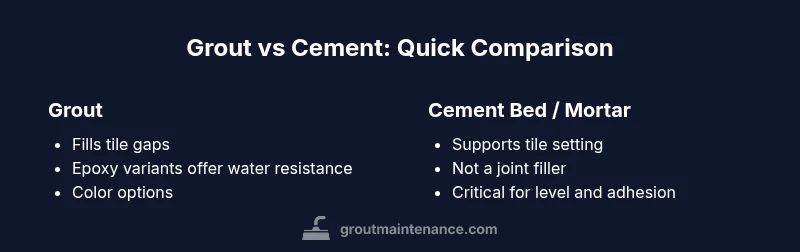
Is grout better than cement for tile joints? For most residential tile projects, grout is the finishing material that fills and seals joints, while cement-based mortar is the foundational setting material used during installation. The Grout Maintenance team notes that grout—especially epoxy varieties—offers superior water resistance, color versatility, and easier maintenance in typical homes; cement is essential for setting beds but not for finishing joints. In short, grout is usually the better choice for joints, with cement serving its critical role in adhesion and support.
Is grout better than cement for tile joints?
When homeowners ask, is grout better than cement for tile joints, the honest answer is: it depends on the role you need the material to play. Grout and cement-based products serve different functions in a tile installation. Grout is designed to fill the gaps between tiles and finish the joints, while cement-based mortar is used to set tiles to the substrate and to create the setting bed beneath. According to Grout Maintenance, for most residential projects the finishing joints should be grout rather than cement, and the choice should be driven by performance needs and maintenance expectations. The distinction matters for long-term durability, moisture resistance, and the overall appearance of your tilework. If you plan a kitchen backsplash or a bathroom shower, understanding this difference helps you choose a solution that reduces cracking, staining, and maintenance time. The goal is to balance aesthetics with durability without overpaying for features you won’t use.
Core differences at a glance
The core difference is function: grout finishes joints; cement-based mortar anchors tile to the substrate and creates the setting bed. Grout can be cementitious (typical) or epoxy-based; epoxy is more water resistant, stain resistant, and less prone to cracking but costs more and can be harder to install. Cement-based mortar is strong for setting but not used as a finish joint. Color and maintenance expectations diverge; grout offers a wide color palette and sealing options, while cement mortars are more neutral with limited color options. This contrast guides whether you should emphasize flexibility, color control, or foundational strength in your project.
When grout shines: ideal scenarios
Grout shines in most living spaces with standard ceramic and porcelain tile where joints are visible and aesthetics matter. Epoxy grout is particularly advantageous in wet areas such as showers and steam rooms, providing excellent water resistance and stain resistance. For floors with normal traffic and moderate movement, cementitious grout that is properly sealed also performs well. Additionally, where color consistency across a large area is desired, grout offers reliable shade stability and can help you achieve a precise, polished look that complements cabinetry and countertops. If you want low-maintenance joints in a busy kitchen or bathroom, epoxy grout is often worth the extra cost.
When cement is necessary: setting beds and exceptional loads
Cement-based mortar is essential for the setting bed and the bond between tile and substrate. In heavy-traffic floors, exterior applications, or installations involving natural stone with higher expansion rates, cement mortar provides the necessary rigidity and load-bearing capacity. This material is not used as a finish joint; its strength comes from its role in anchoring and leveling. For areas where tiles must resist substantial shear or substrate irregularities, a strong cementitious bed minimizes movement that could lead to tile cracking. In short, use cement mortar where structural support and tile adherence are paramount, not where you need a decorative joint.
Epoxy vs cementitious grout vs cement bed: performance snapshot
Epoxy grout offers superior chemical resistance, water resistance, and stain resistance, making it ideal for wet rooms and high-visibility installations. Cementitious grout is the most common and balances cost with performance, especially when properly sealed and maintained. Cement beds are the backbone of tile installations, providing adhesion and alignment for the tiles themselves. Each material serves a distinct purpose: grout fills joints, epoxy and cementitious grout finish joints with varying maintenance needs, and cement beds anchor tiles to the substrate. The choice should align with the room environment, expected wear, and your tolerance for maintenance.
Sealing, cleaning, and long-term upkeep
Sealing cementitious grout can significantly extend its life by reducing water uptake and staining risk, especially in kitchens and bathrooms. Epoxy grout, while resistant to water and stains, does not require sealing and is easier to keep clean in some households, albeit at a higher upfront cost. Cement mortar used for setting beds does not need sealing for aesthetic purposes, but it benefits from proper moisture management and occasional inspection to prevent substrate-related issues. Establish a routine cleaning plan, avoid harsh cleaners, and address any cracks promptly to preserve both the appearance and structural integrity of the tile installation.
Cost and long-term value
Cost is influenced by material choice, labor, and room size. Grout is generally affordable and quick to apply, but epoxy variants add to material costs and may require specialized tools or trained installers. Cementitious grout remains the most economical option for typical residential baths and kitchens, particularly when paired with a solid sealing plan. Cement beds contribute to a longer construction timeline and skilled labor requirements but deliver reliable adhesion for large-format tiles and natural stone. In the long run, grout performance and maintenance can offset initial costs if you select the right product for the area and use proper sealing.
Installation tips: getting it right
Preparation sets the tone for success. Clean and level the substrate, remove dust, and verify tile flatness before applying any mortar. When mixing cementitious grout, follow the manufacturer’s instructions for water ratio and mixing time to avoid cracking or uneven color. In wet areas, choose epoxy grout to minimize staining and moisture problems. Use a soft rubber float to ease grout application, and work in small sections to maintain joint integrity. Allow adequate curing time and protect the grout from moisture during early stages. Finally, seal cementitious grout after it cures if you choose a sealing-based maintenance plan.
Tile types and grout compatibility: porcelain, ceramic, natural stone
Not all grout is created equal for every tile type. Porcelain and ceramic tiles typically pair well with standard cementitious grout or epoxy grout depending on moisture exposure and color goals. Natural stone tiles require careful selection: some stones are prone to staining or etching, so epoxy grout or sealant-enhanced cementitious grout can help preserve appearance. Always check tile manufacturer recommendations and test a small area if you’re unsure. The correct grout choice supports both aesthetics and durability across different tile substrates.
DIY vs professional installation: time, skill, and risk
DIY grout work is feasible for small areas with careful preparation and the right tools. However, epoxy grout demands precise mixing and clean tooling to avoid haze and color inconsistency. Cementitious grout is the most forgiving for beginners but still benefits from practiced technique to minimize cracking and color variation. For complex patterns, large-format tiles, or wet areas like showers, professional installation reduces risk of failure and ensures a long-lasting result.
Scenario guidance by room type
Bathrooms and showers benefit from epoxy grout due to moisture exposure, while kitchens with moderate traffic can use cementitious grout with a strong seal. Living areas and bedrooms often favor color and aesthetic flexibility provided by grout. Exterior installations require materials with excellent weather resistance and appropriate curing. Tailor your choice to room conditions, maintenance expectations, and the tile type to maximize performance and longevity.
Final considerations and decision framework
To decide: identify the primary function (joint finishing vs setting bed), assess moisture exposure, consider maintenance willingness, and weigh upfront versus long-term costs. Use this framework to select grout type, sealing strategy, and whether a cement bed is needed. The goal is a durable, visually appealing tile installation that matches your home’s climate and your lifestyle.
Comparison
| Feature | Grout for tile joints | Cement/Mortar for setting beds |
|---|---|---|
| Primary purpose | Finish joints between tiles; seal gaps for aesthetics and moisture control | Set tiles; provide adhesion and leveling bed underneath tiles |
| Water resistance | Epoxy grout offers high water and stain resistance; cementitious grout requires sealing for moisture control | Mortar bed is not a joint finish and does not provide moisture resistance in joints |
| Flexibility and crack-bridging | Epoxy grout is highly resistant to shrinkage and cracks; cementitious grout offers some give when sealed properly | Setting mortar is rigid and designed for adhesion, not joint movement |
| Aesthetic options | Wide range of colors and finishes; grout lines can define or minimize visual lines | Color options are generally limited to mix and aggregate color; less emphasis on finish aesthetics |
| Maintenance | Sealing and periodic resealing extend life; epoxy requires little maintenance beyond cleaning | Requires sealing on many cementitious joints; repairs can be invasive if cracking occurs |
| Typical cost and install complexity | Lower upfront material cost; epoxy variants cost more but reduce maintenance | Higher skill and time for setting beds; more complex repairs if issues arise |
Pros
- Better water resistance with epoxy grout
- Easier maintenance with sealed or epoxy options
- Rich color options for design flexibility
- Suitable for typical residential joints and surfaces
- Epoxy variants minimize staining and cleanup
What's Bad
- Higher upfront material cost for epoxy grout
- Installation can be more complex and time-consuming
- Not suitable as a structural setting bed
- Cracking or color inconsistency can occur if not mixed or cured properly
Grout is generally better for tile joints; cement is essential for setting beds
For most home tile projects, grout provides the finish, moisture control, and aesthetics that consumers want. Cement mortar remains crucial for anchoring tiles and creating a level bed, but it does not fill or seal joints. Use epoxy grout in wet areas for superior durability.
Got Questions?
What is the main difference between grout and cement in tile work?
Grout is used to fill and seal joints between tiles, while cement-based mortar is used to set tiles and build the underlying setting bed. Cement beds provide adhesion and levelness, whereas grout provides a decorative and protective finish. The roles are distinct but complementary.
Grout fills joints and finishes the tile look, while cement sets the tiles; both are essential for a durable installation.
Can cement be used as a substitute for grout?
Cement is not designed to fill and seal joints like grout. It does not resist moisture in joints the way grout does. Using cement as a joint filler can lead to cracking and moisture problems and is generally not recommended for finished joints.
Cement isn’t a substitute for grout when finishing joints; grout finishes the gaps and resists moisture.
Which grout type is best for wet areas such as showers?
Epoxy grout is typically best for wet areas due to its superior water and stain resistance. It is more challenging to install but pays off in environments with high moisture exposure. For routine bathrooms, cementitious grout with proper sealing can also perform well.
Epoxy grout is usually the top choice in wet areas for durability and stain resistance.
Is sealing grout necessary?
Sealing cementitious grout is commonly recommended to reduce moisture absorption and staining. Epoxy grout does not require sealing and is easier to maintain in many homes. Your choice should align with the grout type and moisture exposure.
Sealing cementitious grout helps with moisture; epoxy grout generally doesn’t need sealing.
Can grout color change over time?
Grout color can fade or yellow with age if exposed to UV light or certain cleaners, particularly cementitious grout. Epoxy grout tends to retain color better but still requires proper cleaning to avoid staining.
Grout color can change over time, especially with cementitious varieties and certain cleaners.
What about DIY vs professional installation for grout?
DIY grout work is feasible for small areas with standard products, but epoxy grout and large-format tiles are best handled by professionals to ensure even color, proper haze removal, and correct sealing. Professional installation minimizes the risk of failure and reduces long-term maintenance.
For tricky jobs, like epoxy grout or large tiles, hire a pro to avoid common mistakes.
The Essentials
- Grout finishes joints; cement mortar sets tiles
- Epoxy grout offers best water resistance in wet areas
- Seal cementitious grout to extend life
- Use cement beds for structural support and alignment
- Choose based on moisture, wear, and maintenance preferences