Different Grout on Floor and Wall: A Practical Comparison
Explore how different grout on floor and wall affects durability, maintenance, and aesthetics. Compare cementitious vs epoxy, sealing needs, and practical tips to choose the right grout for each surface.


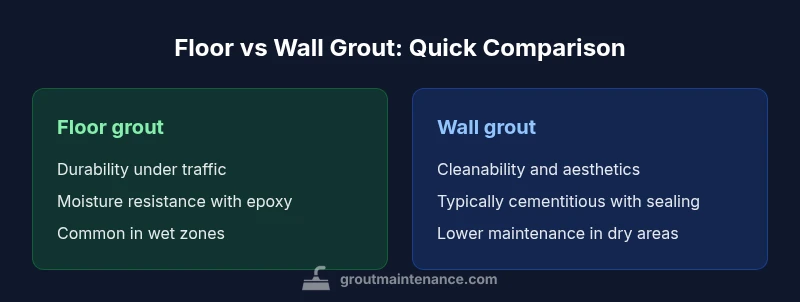
As a quick takeaway, the main difference between different grout on floor and wall is exposure and performance demands. Floors face moisture, traffic, and spills, requiring durable, moisture-resistant grout; walls prioritize cleanability and color stability, often using cementitious grout with sealing or epoxy in high-moisture zones. Choose based on tile type, substrate, and maintenance willingness.
Understanding the Core Differences Between Floor and Wall Grout
The phrase different grout on floor and wall highlights a practical reality: surfaces experience different conditions, and grout must respond accordingly. Floors endure foot traffic, impact from dropped objects, and higher moisture exposure, especially in kitchens, bathrooms, and mudrooms. Walls, by contrast, prioritize cleanability, color retention, and a smoother finish, often with less physical stress. The result is a set of design and material choices that optimize for durability on floors and aesthetics on walls.
From a material science perspective, grout is a cementitious blend or an epoxy resin system that fills the joints between tiles. Epoxy tends to be moisture-resistant and easier to clean, while cementitious grout offers a softer finish and broader color range when sealed properly. The key question is how to balance wear resistance, stain resistance, sealing requirements, and ease of installation. Grout on floor surfaces must tolerate abrasion as well as cleaning chemicals; grout on walls should resist staining and be visually uniform across the entire surface. In practice, homeowners should evaluate the tile type, substrate stability, and expected moisture exposure to decide between cementitious and epoxy options. Grout maintenance habits then follow, shaping the long-term look and performance of the tiled area.
According to Grout Maintenance, the most reliable approach is to tailor grout type to the surface environment rather than applying a one-size-fits-all solution. This mindset reduces cracking risk, staining, and color fading while preserving the tile job's appearance over years of use. The remainder of this guide breaks down the practical differences, helping you select the right grout for each surface and plan a maintenance routine that matches your home's needs.
Common Materials: Cementitious vs Epoxy
Common Materials: Cementitious vs Epoxy
When deciding between cementitious and epoxy grout for different grout on floor and wall, you’re weighing durability, maintenance, and application complexity. Cementitious grout is the traditional choice, easy to work with for DIY projects, and accepts a wide range of color options when properly sealed. Epoxy grout, by contrast, forms a resin-based matrix that resists moisture, staining, and chemical exposure more aggressively, making it a popular option for floors in kitchens, bathrooms, and wet rooms. The trade-off is a tougher mixing process, slower cure times, and more meticulous clean-up. Walls can benefit from cementitious grout for its softer texture and cost efficiency, but if the wall is frequently splashed or likely to encounter soap scum or cleaning agents, epoxy on walls in wet zones can reduce maintenance. The choice should align with tile type, surface location, and your willingness to seal and maintain the grout over time. Grout on floor versus wall will often diverge in material selection due to the environmental demands and aesthetic goals of each surface.
Sanded vs Unsanded: When to Use Which on Floors and Walls
Porosity and Sealing: Impact on Longevity
Color and Aesthetics: Matching Grout on Floor vs Wall
Application Techniques: Installing Floor vs Wall Grout
Maintenance Practices for Different Grout on Floors and Walls
Common Mistakes and How to Avoid Them
Quick-start Guidelines: Quick Reference Checklist
Comparison
| Feature | Floor grout | Wall grout |
|---|---|---|
| Durability in moisture-prone areas | Epoxy grout or high-grade cementitious with sealing | Cementitious with sealing; epoxy acceptable in dry walls depending on exposure |
| Ease of application | Epoxy requires careful mixing and tooling; cleanup is rigorous | Cementitious generally easier for walls; vertical application improves with technique |
| Sealing needs | Epoxy typically requires no sealing | Cementitious usually needs sealing to prevent staining |
| Maintenance and cleaning | High stain resistance; cleaning is straightforward with mild cleaners | Sealing extends life but needs periodic reapplication and re-sealing |
| Cost trend | Higher upfront cost with epoxy | Lower upfront cost with cementitious grout |
| Best for | Wet floors, high-traffic areas, showers | Vertical surfaces and dry walls with regular cleaning |
Pros
- Better moisture resistance on floors with epoxy
- Longer-lasting stain resistance when using epoxy in wet areas
- Cost-effective options exist with cementitious grout on walls
- Wide color and texture choices with cementitious options when sealed
What's Bad
- Epoxy grout is harder to work with for DIY beginners
- Cementitious grout on floors requires sealing and maintenance
- Repairs on floors can be disruptive; walls are easier to access in some cases
- Color matching can be challenging when combining brands or products
Epoxy grout on floors in wet areas; cementitious grout with sealing on walls for balance
Choose epoxy for floors in moisture-prone zones to maximize durability, and use cementitious grout with sealing on walls for cost efficiency and color flexibility. Consider maintenance expectations and tile compatibility when selecting grout types.
Got Questions?
What is the main difference between grout for floors and walls?
The main difference is exposure and performance demands. Floor grout must tolerate traffic and moisture, whereas wall grout emphasizes ease of cleaning and aesthetics. Both should be chosen with tile type and substrate in mind.
Floor grout handles traffic and moisture; wall grout focuses on cleaning and look.
Should I use epoxy grout on floors and walls?
Epoxy grout is often recommended for floors and showers because of moisture resistance. Walls in dry areas may use cementitious grout with sealing. Always consider tile type and your comfort with mixing and cleanup.
Epoxy works well in moisture-prone areas; cementitious can work on walls with sealing.
Do I need to seal cementitious grout on walls?
Yes, sealing cementitious grout on walls helps prevent staining and moisture ingress. Some modern cementitious grouts offer better stain resistance, but sealing remains a common practice.
Yes—seal cementitious grout to protect walls.
How do joint widths affect floor vs wall grout?
Walls typically use finer joints for a smooth look, while floors tolerate broader joints to accommodate movement and cleaning. Always follow tile manufacturer guidelines.
Walls use smaller joints; floors can use larger ones depending on tile.
Can I switch grout type during a renovation?
Yes, but switching grout types usually requires removal of old grout and proper surface preparation. It’s a bigger job, so plan it during a full remodel if possible.
You can switch, but it’s a bigger job that may need regrouting.
How often should I reseal cementitious grout on walls?
Follow the manufacturer's guidance; in typical settings it’s advisable to reseal every few years depending on exposure and cleaning frequency.
Follow the product's guidance; reseal every few years if used often.
Is epoxy grout suitable for all tile types?
Epoxy grout is compatible with many tile types, including ceramic and porcelain. It can be harder to work with on large, intricate layouts, so plan accordingly.
Epoxy works with most tiles, but it can be trickier to install.
What maintenance practices extend grout life on floors and walls?
Use pH-neutral cleaners, avoid harsh chemicals, and clean spills promptly. For cementitious grout, reseal periodically and inspect for cracks or wear.
Clean gently and reseal when needed to extend grout life.
The Essentials
- Assess surface exposure to decide grout type
- Choose epoxy for floors and wet zones when possible
- Seal cementitious grout on walls to prevent staining
- Match grout color to tile style for cohesive look
- Plan maintenance and resealing schedule from day one