Grout vs Plaster: An In-Depth Analytical Home Guide
An analytical comparison of grout vs plaster for home tile projects and wall finishes, covering durability, moisture handling, aesthetics, and practical maintenance guidance.


Grout and plaster serve different roles in tile and masonry work. For most residential projects, grout is preferred for tile joints due to durability and water resistance, while plaster is better for wall finishes and decorative surfaces where a smooth, paintable finish is needed. When deciding between grout vs plaster, consider substrate, moisture exposure, and finish requirements.
What grout vs plaster mean in practice
Grout is a cementitious or epoxy-based filler used to seal joints between tiles. Plaster, by contrast, is a lime- or gypsum-based finish used on walls. The difference is not just chemical: grout resists moisture and provides structural separation between tiles, while plaster provides a continuous surface suitable for paint and texture. According to Grout Maintenance, grout vs plaster choices hinge on moisture exposure, substrate, and finish needs. The section below expands on how these materials behave in common home settings.
Structural roles and moisture considerations
In most homes, grout and plaster come into play in different zones. Grout, when properly mixed and sealed, forms a durable barrier in tile installations and showers, kitchens, and backsplashes. Plaster acts as a surface finish on interior walls and ceilings, offering a smooth base for paints and textures. Grout Maintenance analysis shows that moisture-prone areas benefit from grout's sealing properties, while plaster performs best where humidity is controlled and the substrate is sound. For grout vs plaster decisions, evaluate whether you need a movable surface (texture, expansion) or a stable plane (wall finish).
Aesthetics and finish expectations
Grout vs plaster outcomes also hinge on appearance. Grout joints can be colored to complement or contrast tile patterns, and sealants help prevent staining from mineral deposits. Plaster offers a seamless canvas for paint, texture, and decorative finishes, which makes it popular for feature walls and traditional interiors. In spaces like bathrooms and kitchens, choosing grout vs plaster involves balancing visible lines against a clean, uniform surface. The Grout Maintenance approach emphasizes testing pigment compatibility and testing patches before full application to ensure the final look aligns with project goals.
Durability, repair, and maintenance
Durability for grout vs plaster depends on exposure, movement, and maintenance. Grout is highly durable in joints when properly sealed and maintained, but it can crack if substrates shift or if movement joints aren’t provided. Plaster can resist minor impacts on smooth walls but is more vulnerable to moisture-related damage in wet areas unless the base is well prepared and sealed. Regular maintenance for grout includes cleaning and resealing on a recommended schedule, while plaster requires crack repairs and occasional repainting to preserve the finish. The balance between maintenance effort and expected life should drive your grout vs plaster choice.
Installation considerations: substrate, prep, and tools
Choosing between grout vs plaster starts with substrate assessment. Tile installations require stable substrates, appropriate tile backer boards, and proper grout joints sized to accommodate movement. Plaster walls demand sound substrate preparation, lath or mesh, and controlled plaster coats to avoid cracking. Tools differ significantly: tile pros use trowels and grout floats for grout, while plaster work relies on hawks, scratch coats, and finishing trowels. Understanding these requirements helps prevent issues that could compromise long-term performance for grout vs plaster projects.
Cost considerations and lifespan
Cost factors for grout vs plaster include material type, preparation, and labor time. Grout materials and sealants fall into a mid-range category for many residential projects, with longer maintenance horizons when properly sealed. Plaster costs depend on substrate prep, breadth of finish, and required coats; plaster can be labor-intensive, raising upfront costs but potentially reducing midterm maintenance if applied well. Longevity, when considering grout vs plaster, hinges on environmental conditions, how well joints or surfaces are protected from moisture, and the quality of workmanship.
When to choose grout vs plaster: decision guide
A practical decision framework helps homeowners decide between grout vs plaster. If moisture exposure is frequent (showers, steam-rich kitchens), grout with a durable sealant is typically preferred. For walls in drier rooms or decorative interiors, plaster offers a superior smooth finish and paintability. When both aesthetics and function matter, a hybrid approach can be used: tile installations with grout joints and plastered walls in adjacent spaces. Always match the choice to substrate integrity, movement plans, and maintenance expectations, referencing the Grout Maintenance guidance for consistency.
Best-practice scenarios by room
- Bathrooms and showers: grout with a high-quality sealant and epoxy grout options for maximum water resistance.
- Kitchens: grout remains strong for backsplashes and floor transitions, with plaster on non-wet walls where you want a seamless finish.
- Living areas: plaster provides a premium texture and paint-ready surface; consider grout if you need durable, easily cleaned wall edges near tile features.
- Hallways and utility rooms: grout is advantageous near tiles; plaster is suitable on larger uninterrupted wall planes. A clear plan for moisture management helps ensure grout vs plaster choices deliver long-term satisfaction.
Comparison
| Feature | Grout | Plaster |
|---|---|---|
| Best Use | Tile joints in wet areas and floors | Wall finishes and decorative surfaces |
| Moisture Handling | Excellent when sealed; non-porous in joints | More moisture-sensitive; relies on proper substrate and sealing |
| Finish Versatility | Can color-match joints; durable texture options | Smooth, paint-ready surface; texture achievable with skim coats |
| Repair & Maintenance | Re-grouting or re-sealing as joints age | Patch repairs possible; may require repainting over time |
| Installation Complexity | Tile work with precise grout gaps | Skilled plastering; requires sound substrate |
| Cost Range | Mid-range materials and sealants | Labor-intensive; cost varies with substrate and finish |
Pros
- Grout offers strong moisture resistance when sealed
- Plaster provides a smooth, paint-ready wall surface
- Grout helps maintain tile stability and joint integrity
- Both materials can be pigmented or finished to fit design goals
What's Bad
- Grout can crack with substrate movement and needs periodic sealing
- Plaster is vulnerable to moisture damage in wet zones without proper prep
- Maintenance for grout (cleaning and sealing) is ongoing
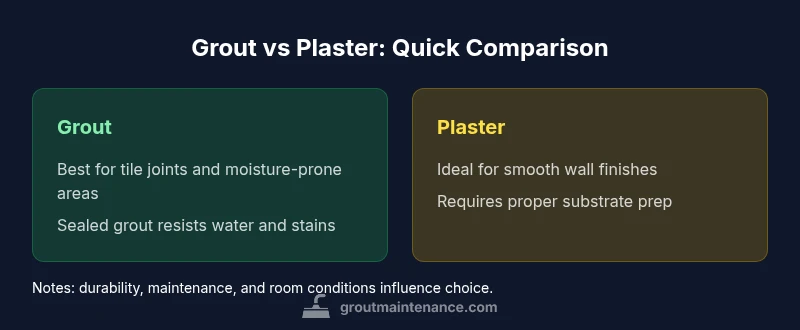
Grout is generally the more durable choice for joints and moisture-prone areas; plaster excels on smooth wall surfaces where humidity is controlled.
For tile installations and wet spaces, grout wins on durability. For living areas with painted walls, plaster shines with a clean, finished look. The Grout Maintenance team emphasizes matching material choice to function, substrate quality, and maintenance expectations.
Got Questions?
What is the main difference between grout and plaster?
Grout fills joints between tiles and provides a moisture-resistant barrier, while plaster creates a continuous wall surface that is paint-ready. The choice depends on location, moisture, and finish needs.
Grout fills tile joints and resists moisture; plaster covers walls for a smooth finish.
Is grout preferable in bathrooms or kitchens?
Yes, grout is generally preferred in bathrooms and kitchens due to its moisture resistance when sealed. Plaster is less suitable for these spaces unless used on non-wet walls.
In bathrooms, grout is usually the better choice, especially with good sealing.
Can plaster be used with ceramic tiles?
Plaster is not typically used as a tile substrate; tiles are installed over suitable substrates with grout joints. Plaster is used on walls, not as a tile backing.
Tiles sit on proper substrates with grout; plaster is for walls, not tile backing.
How do I maintain grout vs plaster over time?
Maintain grout with routine cleaning and periodic resealing to prevent moisture penetration. Plaster requires crack repairs and occasional repainting to maintain a pristine finish.
Keep grout sealed and clean; plaster may need crack repairs and repainting.
What are common signs I should regrout?
Cracked or loose grout, persistent staining, or missing sealant are common signs you may need to regrout to restore moisture protection and appearance.
If grout cracks or stains persist, it may be time to regrout.
Are epoxy grouts different from cement-based grouts?
Yes. Epoxy grouts are more chemical-resistant and stain-proof but cost more and can be harder to install. Cement-based grouts are common, easier to work with, and seal differently depending on product.
Epoxy grout lasts longer and resists stains, but can be pricier and trickier to install.
The Essentials
- Assess moisture exposure before choosing grout vs plaster
- Choose grout for joints in wet areas and tile installations
- Choose plaster for walls where a smooth, paint-ready finish is required
- Plan for maintenance: grout sealing and plaster crack repair