Fine Aggregate Grout vs Sanded Grout: A Practical Comparison
Explore the practical differences between fine aggregate grout and sanded grout, including installation tips, maintenance, and ideal tile applications. This guide helps homeowners choose based on joint width, tile type, and long-term upkeep, with insights from Grout Maintenance.


Here’s the bottom line on fine aggregate grout vs sanded grout: sanded grout is best for larger joints and high-traffic areas, resisting shrinkage and chipping, while fine aggregate grout suits narrow joints and delicate tile where scratching must be avoided. The choice hinges on joint width, tile type, and maintenance needs. For most homes, start with joint width and tile finish, then consider color, sealing, and cleaning requirements.
Understanding the choice landscape for grout types
When you encounter the decision between fine aggregate grout vs sanded grout, the key drivers are joint width, tile finish, and expected movement in the substrate. The Grout Maintenance approach emphasizes assessing where you’ll install the grout (floor, wall, shower, or backsplash) and the conditions it will face (wet, high traffic, or outdoor exposure). By framing the decision around joint width and tile type, homeowners can avoid common missteps and select a grout that performs well over time. According to Grout Maintenance, many projects succeed when the grout choice aligns with joint size and tile finish, then complemented by a proper sealing plan to protect color and stain resistance.
In this article, you’ll see a practical breakdown of both grout families, with real-world considerations, installation tips, and maintenance routines designed for DIYers and homeowners who want durable results without surprising costs or repairs later. The discussion uses the phrase fine aggregate grout vs sanded grout to highlight the concrete differences and guides you toward a decision that matches your tile strategy.
What is fine aggregate grout?
Fine aggregate grout, often referred to as unsanded grout, is composed of very small particles that produce a smooth, bumpy-free surface when cured. This type generally omits sand to avoid scratching delicate tile surfaces, making it a popular choice for narrow joints. For backsplashs with glass or polished stone, fine aggregate grout minimizes the risk of micro-scratches that can compromise your tile’s gloss and reflectivity. In terms of performance, this grout is less prone to abrasion on gentle tile finishes but may require more meticulous sealing and cleaning to maintain stain resistance over time. Grout Maintenance emphasizes using a suitable sealer and reducing moisture exposure in joints to preserve color integrity.
From a care perspective, fine aggregate grout is easier to apply in tight joints when you’re grouting a small tile or reflective surface. It tends to set smoother, which helps create a uniform joint profile and minimizes grout pitting on polished or high-gloss tiles. However, its lack of sand can mean slightly higher susceptibility to cracking if joints experience significant movement, which makes structural considerations and proper substrate preparation essential for long-term durability.
What is sanded grout?
Sanded grout includes larger particles (sand) to provide strength and rigidity in wider joints. This composition reduces shrinkage and cracking under tile movement, making it a go-to option for high-traffic floors, walls with substantial expansion, and outdoor installations where joints may experience more weather- and load-related stress. Sanded grout is typically the preferred choice for joints wider than 2–3 mm, and it helps resist abrasion and chipping at the grout line where tile edges are prone to contact with foot traffic or cleaning tools. Grout Maintenance notes that sanded grout can be less forgiving on very delicate tile surfaces, as the sand can cause micro-scratching if the tile surface is soft or highly polished. For most homes, it’s essential to test a small area before committing to a full application to ensure your tile’s glaze or surface isn’t marred by the sanded mixture.
In practice, homeowner projects often lean toward sanded grout for floor installations and bathrooms with substantial movement or moisture, while reserving fine aggregate grout for narrow joints in walls or backsplashes where tile surface protection is paramount. This dual perspective aligns with real-world outcomes and helps prevent regretful misapplications later in the project.
When to choose fine aggregate grout vs sanded grout in practice
Choosing between fine aggregate grout vs sanded grout should hinge on joint width, tile type, and anticipated wear. If your joints are 1–2 mm and your tiles are polished, glass, or very soft natural stone, fine aggregate grout is typically the safer option to avoid surface scratching and maintain a seamless look. Conversely, for joints larger than about 2–3 mm or foottraffic-heavy floors, sanded grout offers improved durability and resistance to shrinkage or hairline cracking. When the tile surface is textured or rough, the extra texture from sand can enhance the visual surface and reduce grout crowding, leading to easier maintenance in some configurations. The decision also informs sealer choice and cleaning approach since the porous nature of some unsanded formulations can influence stain resistance. Grout Maintenance recommends evaluating your tile’s surface hardness and color reaction to sealers to determine the best grout partner for your specific project.
In daily use, the bond between grout and tile depends on substrate stability and proper mixing, but the end result should be a uniform joint profile with predictable wear. The nuanced differences between fine aggregate grout vs sanded grout become most evident in how you’ll seal, clean, and refill joints over time. By aligning the grout choice with joint geometry and tile surface, homeowners can maximize longevity and minimize resealing or replacement needs. This approach reduces long-term maintenance costs and helps you achieve a consistent aesthetic across kitchens, showers, and outdoor patios.
Joint width, tile finish, and movement considerations
The joint width you choose powers the entire decision. Fine aggregate grout shines in very narrow joints, typically 1–2 mm, where the absence of sand avoids tile edge abrasion. For such joints, the grout’s smooth finish enhances the tile edges and reduces visible grout texture, creating a sleek, modern look on walls and backsplashes. However, narrow joints are more sensitive to movement; if your installation lacks perfect substrate rigidity, you may see microcracking over time. In those cases, even a good sealer may not fully prevent cracking without addressing movement at the substrate level.
Sanded grout, on the other hand, handles wider joints more effectively. If your tile layout includes 3 mm or wider joints, or if the floor experiences heavy foot traffic or temperature variation, sanded grout resists crumbling and maintains color consistency better under stress. Its granular texture also helps blur minor irregularities at the joint, offering a forgiving appearance on floors and showers where grout lines are visible from several angles. The trade-off is that sanded grout can be more abrasive to delicate tile finishes and may require more careful cleaning to prevent micro-scratches on soft tiles. Grout Maintenance advises testing both options in a small, inconspicuous area before full-scale installation to confirm compatibility with your tile surface and glaze stability.
Informationally, homeowners should consider joint mobility; if movement is anticipated, a flexible grout formulation paired with a proper substrate may help. The choice between fine aggregate grout vs sanded grout should also align with your cleaning routines and sealing plans, because sealing can enhance stain resistance for the unsanded option while helping to keep sanded joints looking uniform during cleaning. A thoughtful pairing of grout type and sealant can extend grout life and reduce overall maintenance effort over the life of the installation.
Practical installation tips for both grout types
Grouting is as much about technique as choice. For fine aggregate grout, ensure the mix is slightly drier and fill joints with minimal water exposure to prevent washout in narrow gaps. Use a rubber grout float with a careful angle to avoid pushing fines into tile edges, then clean promptly with a damp sponge to prevent smear. The absence of sand means less abrasive risk to delicate tile surfaces, but it still benefits from a controlled, steady application and thorough curing. Seal after the grout has fully cured, following the sealer’s recommended dwell time to maximize color consistency and mold resistance. Grout Maintenance emphasizes testing sealer compatibility on a small area to verify lightfastness and color retention, especially on white or light tones that show staining more readily.
For sanded grout, prep and fill with slightly wetter consistency to ensure the sand settles evenly into the joints. Work in small sections to prevent grout from drying too quickly. Clean up with a microfiber cloth or sponge that won’t abrade tile edges, particularly on polished surfaces. Allow adequate curing time before exposure to moisture, and recoat with grout sealer as recommended for your tile color and grout depth. In both cases, avoid using acidic cleaners that can degrade grout sealant and cause efflorescence or color loss over time. Regular maintenance using neutral pH cleaners will help preserve both your grout color and the structural integrity of the joint.
Color matching and appearance considerations
Color matching is a key factor in the perceived quality of any grout installation. Fine aggregate grout often delivers a smoother appearance with very uniform color, especially when joints are narrow. It can make grout lines appear more delicate, which is desirable on high-end tile installations where the grout should recede visually. Sanded grout generally has more texture, and this texture can influence color perception, making it appear slightly lighter or darker depending on lighting and the angle of view. If you’re choosing between finishes, consider your room’s lighting conditions. The Grout Maintenance approach suggests testing color swatches in both natural and artificial lighting before final sealing to verify how your selected grout looks across different times of day.
Texture and finish influence overall aesthetics and maintenance. In busy kitchens or bathrooms, sanded grout can help camouflage minor staining or footprints, but it may require more frequent cleaning to prevent surface abrasion from cleaning tools. Fine aggregate grout, with its smoother surface, can show stains more readily but cleans more easily with non-abrasive cleaners. Planning color tests and sealing strategies early in the project reduces post-installation surprises and ensures your final look matches your design intent.
Maintenance and sealing: staying ahead of wear
Maintenance planning is essential for both grout types. Sealing unsanded grout improves stain resistance and water repellency in moist environments, while sealer on sanded grout helps prevent staining in high-traffic areas. The sealing schedule depends on porosity, color, and exposure. Light-colored unsanded grout tends to show stains more quickly and may require more frequent resealing than darker shades or sanded varieties with denser textures. Grout Maintenance notes that consistency is key: seal after full curing, re-seal as needed, and use pH-neutral cleaners to minimize etching and color loss over time. Regular inspections, especially in showers and tubs, identify early signs of wear, enabling timely maintenance before grout failure occurs.
Daily upkeep involves wiping down surfaces to remove moisture and mineral buildup, followed by a gentle cleaning routine designed for grout. If you notice discoloration or staining, address it promptly with a grout-specific cleaner that’s compatible with your grout type and color. Avoid harsh chemicals that can degrade sealers or degrade the grout matrix over time. A proactive maintenance plan reduces the likelihood of expensive repairs and keeps your tiles looking vibrant for years to come.
Case-based guidance: quick decision scenarios
To translate theory into practice, consider a few practical scenarios where the choice between fine aggregate grout vs sanded grout matters. A narrow 2 mm kitchen backsplash in glazed ceramic tiles benefits from fine aggregate grout for a clean line and minimal risk of scratching. A 4 mm bathroom floor with porcelain tiles and frequent foot traffic benefits from sanded grout for durability and crack resistance. For a natural stone shower, you may lean toward fine aggregate grout with a careful sealer strategy to avoid etching, provided movement is minimal. If you face outdoor placement, where joint widths vary and temperature swings are common, sanded grout in wider joints can handle movement better, but ensure the tile surface can tolerate the texture. These examples illustrate how the debate between fine aggregate grout vs sanded grout translates into real-world results and long-term performance.
Troubleshooting common grout issues
Grout issues often boil down to joint width, tile type, and cure conditions. Hairline cracking typically signals movement or insufficient substrate prep, potentially requiring resealing or re-grouting. For delicate tiles, scratched or worn edges indicate a need to switch from sanded to unsanded grout or to modify the sealing strategy. Staining in light-colored grout is commonly related to improper sealing, cleaning with abrasive products, or moisture intrusion. In high-moisture areas, ensure joints are adequately sealed and that the sealant choice aligns with your grout type and color. When in doubt, consult a professional or reference Grout Maintenance resources for recommended sealers and cleaners that are proven compatible with fine aggregate grout vs sanded grout.
Comparison
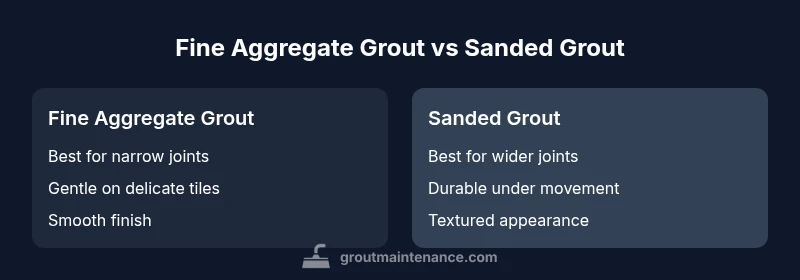
| Feature | Fine aggregate grout | Sanded grout |
|---|---|---|
| Particle size and texture | Fine, smooth texture | Coarser texture with visible sand grains |
| Joint width suitability | Best for narrow joints (1–2 mm) | Best for wider joints (3 mm and above) |
| Tile compatibility and finish | Gentle on delicate surfaces; may require sealing for stain resistance | Durable on rough or textured tile; can be abrasive to soft finishes |
| Crack resistance under movement | Lower inherent movement resistance | Higher resistance to movement and shrinkage |
| Maintenance and cleaning | More precise sealing; smooth surface cleans easily but stain risk if porous | Sealing essential; easier stain hiding due to texture, but needs careful cleaning to avoid scratching |
Pros
- Excellent for narrow joints and delicate tile surfaces
- Low abrasion risk to polished or soft tiles
- Smooth, consistent finish ideal for modern designs
- Greater control over grout color in tight spaces
What's Bad
- Increased risk of cracking if joints experience movement
- More sealing and maintenance required for stain resistance
- Potential staining on lighter colors if not sealed promptly
- Limited suitability for wide joints or heavy-traffic areas
Sanded grout generally wins for wider joints and high-traffic areas; fine aggregate grout excels in narrow joints and delicate tile surfaces
Choose sanded grout when joints are wide or floors see heavy use and movement. Opt for fine aggregate grout when joints are narrow or tiles are polished or delicate. Pair with appropriate sealing and cleaning to maximize longevity.
Got Questions?
What is the key difference between fine aggregate grout vs sanded grout?
The main difference is particle size: fine aggregate grout is unsanded and smoother, ideal for narrow joints and delicate tiles, while sanded grout contains sand that strengthens wider joints and resists cracking under movement.
The key difference is texture and joint width, with unsanded for narrow joints and sanded for wider joints.
Which grout type should I use for a glass tile backsplash?
For glass tiles, fine aggregate grout is usually preferred because it minimizes surface scratching and preserves the glossy finish. Ensure proper sealing to prevent staining in the light.
Unsanded grout is usually best with glass tiles to avoid scratches.
Can I use unsanded grout outdoors?
Unsanded grout can be used outdoors but is generally recommended for narrow joints and surfaces with low movement. In outdoor settings, evaluate movement, exposure to moisture, and sealing needs.
Outdoor use depends on movement and moisture; sealing is important.
How soon after grouting should I seal?
Seal after the grout has fully cured as recommended by the sealer manufacturer. Proper curing prevents staining and prolongs color beneath the surface.
Seal after curing, following product directions.
Is color matching easier with fine aggregate grout or sanded grout?
Color matching tends to be slightly easier with fine aggregate grout due to its smoother texture, but both require testing swatches in the intended lighting.
Both can match well; test swatches in lighting conditions.
The Essentials
- Prioritize joint width when choosing grout type
- Fine aggregate grout suits narrow joints and delicate tiles
- Sanded grout is better for wide joints and heavy-use areas
- Seal properly and use pH-neutral cleaners for longevity
- Test color and sealer compatibility on a small area first