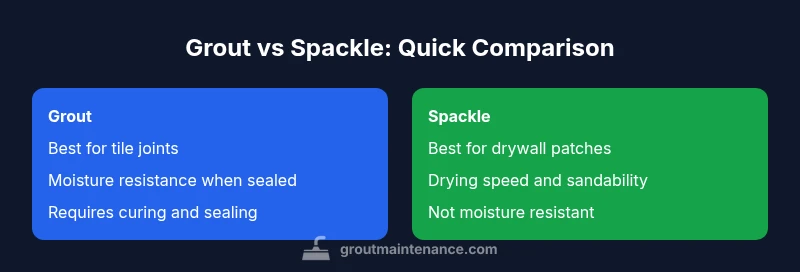
Grout vs Spackle: An Analytical Comparison for Home DIY
A thorough, analytical comparison of grout vs spackle, covering composition, use cases, sealing, maintenance, costs, and practical recommendations for homeowners and DIY enthusiasts.


In the realm of home patchwork, grout is the preferred choice for tile joints and moisture-prone areas, while spackle is best reserved for drywall patches. The grout vs spackle distinction centers on substrate, durability, and moisture exposure—grout provides a sealed, durable joint when properly mixed and sealed; spackle excels for interior wall repairs that won’t contact water. Using the right material minimizes cracking, moisture risk, and long-term repairs.
Understanding grout vs spackle: core roles and definitions
Grout and spackle are two common patching materials, but they serve very different purposes in home projects. In the context of grout vs spackle, grout is a cementitious substance designed to fill joints between tile and seal against moisture, while spackle (often called joint compound) is gypsum-based filler used to repair small holes, cracks, and imperfections in drywall and plaster. According to Grout Maintenance, grout is intended for tile work and should be sealed to maximize durability, whereas spackle is intended for interior wall patches and is not inherently water resistant. This distinction matters because using the wrong material can lead to cracking, moisture intrusion, and costly repairs over time. Homeowners and DIY enthusiasts should assess the substrate and exposure before choosing. The comparison grout vs spackle is most relevant for kitchens, bathrooms, and entryways where moisture and movement are factors.
Material properties and curing behavior
Grout is a cementitious mix that cures through hydration, creating a hard, rigid matrix in tile joints. It requires proper mixing, application, and sealing to prevent water ingress and color shifting over time. Spackle is gypsum-based; it dries by evaporation, sands smoothly, and creates a seamless wall surface when painted. While spackle dries quickly, it is not designed to withstand moisture and can degrade or absorb stains if used in damp spaces. The grout vs spackle decision hinges on substrate, exposure, and movement. When grout is sealed and maintained, it resists micro-movements better than unsealed materials, which reduces the risk of hairline cracks on tiled surfaces. In dry interior walls, spackle can be an efficient, low-odor solution for patching holes, nail pops, or seam tweaks, but its durability in high-humidity rooms is limited.
Performance in typical spaces: kitchens, bathrooms, living areas
In kitchens and bathrooms, the grout vs spackle choice should favor grout for joints and corners that are exposed to water, steam, or frequent cleaning. Tile joints benefit from grout’s rigidity and water resistance when sealed. Spackle finds its niche in living rooms, bedrooms, and hallways where patches are behind paint and not exposed to moisture or heavy abrasion. Color matching is easier with wall patching compounds, but grout color must be selected to harmonize with tile or be hidden by grout sealer. For high-traffic floor mosaics or shower walls, grout’s durability and moisture resilience outperform spackle, which would quickly degrade under damp conditions. A balanced approach uses spackle only for interior drywall repair and grout for tile-based surfaces, in line with the grout vs spackle guidelines recommended by the Grout Maintenance team.
Application methods and common mistakes
Proper application dramatically affects performance in the grout vs spackle scenario. When applying grout, clean substrate, remove excess grout from joints promptly, and seal after curing. Use a rubber float to press grout into joints at a 45-degree angle, then wipe excess with a damp sponge before final cure. Spackle should be applied in thin layers, allowed to dry, then sand smooth; apply primer and paint for a seamless finish. Common mistakes include applying grout in damp conditions without sealing, over-wetting wall patches, or using spackle in moisture-prone areas. The grout vs spackle decision must consider environmental exposure, substrate compatibility, and finish requirements to avoid repeat repairs.
Sealing, maintenance, and longevity
Most modern grout requires sealing after cure to resist moisture and staining, particularly in bathrooms and kitchens. Sealing helps maintain color, prevents efflorescence, and extends service life. Spackle does not require sealing for wall patches, but paint or wallpaper may offer moisture protection in dry spaces. For longevity, routine maintenance should include cleaning without abrasive scrubbers on grout lines and addressing any hairline cracks early. The grout vs spackle approach emphasizes using grout in wet areas with regular resealing and using spackle solely for interior drywall patching that remains dry.
Cost, availability, and time considerations
In the grout vs spackle landscape, grout generally entails higher upfront cost due to material complexity and sealing needs, plus longer cure times. Spackle is typically cheaper and dries quickly, offering faster fix for small drywall repairs. Availability is wide for both, but grout requires careful color matching and sealing products to achieve a durable finish. When planning a project, factor in substrate preparation, curing time, and maintenance to estimate overall labor and time costs in the grout vs spackle decision.
Alternatives and variants: epoxy grout, polymer-modified options, and patching compounds
Epoxy grout and polymer-modified grouts offer enhanced stain resistance and durability but require different mixing ratios and longer curing times. For patches, there are premixed patching compounds and fiberglass-reinforced spackles that improve crack resistance. In the grout vs spackle comparison, professionals may choose epoxy grout for high-traffic areas or commercial spaces, while regular cementitious grout suffices for typical residential tile projects. Spackle substitutes, including patching plasters with added binders, can improve adhesion and finish on interior walls. Understanding these variants helps homeowners and DIYers select the most appropriate product for the job.
Practical decision guide for homeowners: quick rules of thumb
- Use grout for all tile joints, backsplashes, and shower walls where moisture and cleaning are concerns; reserve sealing as a routine maintenance step.
- Use spackle for drywall holes, nail pops, and interior wall repairs that will not be exposed to water or heavy abrasion; finishing should include paint or wallpaper.
- When there is any risk of moisture exposure near patches, choose grout instead and seal thoroughly.
- If you anticipate future tile removal or color-match challenges, plan for resealing and potential grout color changes ahead of time.
- In mixed spaces (tiles on one plane, walls on another), apply grout to joints and patch walls independently, then finish with proper coatings to maintain consistency.
Quick pointers for choosing grout vs spackle in real-world projects
When faced with a grout vs spackle decision, start with substrate and exposure. If the area will see water, splashes, or frequent cleaning, grout is the safer long-term option. For dry interior walls with holes or cosmetic imperfections, spackle offers speed and ease. Always follow manufacturer instructions for cure times, mixes, and application temperatures. The right choice reduces repairs and helps DIY projects achieve lasting results without frequent callbacks.
Comparison
| Feature | Grout | Spackle |
|---|---|---|
| Best use | Tile joints and wet areas | Drywall patches and interior repairs |
| Water exposure tolerance | High when sealed (moisture resistance) | Low; not designed for moisture |
| Durability after cure | Very durable in joints with proper sealing | Moderate; designed for patching and repainting |
| Preparation/installation time | Longer; requires mixing, grouting, sealing | Shorter; quick patching and sanding |
| Repair reversibility | Permanent with grout maintenance | Removable/repairable with sanding and repainting |
| Sealing requirement | Typically sealed after curing | Not required for patching; depends on paint/primer |
Pros
- Grout provides a durable, moisture-resistant seal for tile joints
- Spackle patches drywall quickly and sands smooth
- Sealing grout extends its life in bathrooms and kitchens
- Spackle allows easy repainting and wall maintenance
What's Bad
- Grout requires sealing and periodic maintenance; can crack with substrate movement
- Spackle is not moisture resistant and is not suitable for tile joints
- Grout color matching can be challenging over time
- Spackle may shrink or crack in high-traffic or humid areas
Grout is preferred for tile joints; spackle remains best for drywall patches
Choose grout for tile installations exposed to water or cleaning. Choose spackle for interior wall repairs that won’t be exposed to moisture. The right choice minimizes future repairs and delivers a longer-lasting finish.
Got Questions?
What is the fundamental difference between grout and spackle?
Grout is a cementitious material designed to fill tile joints and resist moisture when sealed. Spackle is a gypsum-based patching compound meant for interior wall repairs that aren’t exposed to water. The grout vs spackle distinction rests on substrate and exposure, which dictates durability and finish.
Grout fills tile joints and seals against moisture; spackle patches walls and dries fast but isn’t water-resistant.
Can I substitute grout for spackle in drywall repairs?
No. Grout is not designed for drywall repair and can crack or fail if used on walls. Spackle is intended for drywall and plaster surfaces. If you must patch a hole, start with spackle and protect it with primer and paint.
Grout isn’t for drywall patches; use spackle for walls and grout for tile joints.
Is spackle waterproof?
Spackle is not inherently waterproof. It should not be used in areas with moisture exposure. For damp spaces, grout with a proper sealant is a better choice.
Spackle isn’t water-resistant; use grout in moist areas.
Should grout be sealed after installation?
Yes. Sealing grout after it cures helps prevent water penetration, staining, and color fading. Re-sealing periodically maintains durability in kitchens and bathrooms.
Yes—seal grout to protect against moisture and stains.
Can epoxy grout replace cementitious grout in a typical home project?
Epoxy grout offers superior stain resistance and durability but requires different mixing, curing times, and cleanup. It’s often used in high-traffic areas or areas with heavy staining, whereas cementitious grout is more common for standard residential use.
Epoxy grout lasts longer but is trickier to work with; consider it for tough spaces.
What are common mistakes when choosing between grout vs spackle?
Common mistakes include using grout in drywall patches, skipping sealing on grout lines, and patching wet surfaces. Always match the material to the substrate and exposure to avoid future repairs.
Don’t use grout on walls; seal grout; patch with spackle on drywall.
The Essentials
- Prioritize grout for tile joints in moisture-prone areas
- Reserve spackle for drywall patches and interior repairs
- Seal grout after curing to maximize longevity
- Match texture and color to avoid obvious repairs
- Avoid substituting grout for walls or spackle for joints