Indoor vs Outdoor Grout: A Practical Comparison for Homeowners
An analytical comparison of indoor vs outdoor grout, detailing moisture exposure, materials, sealing, cleaning, and maintenance to help homeowners choose the right grout for every project.


Indoor vs outdoor grout presents distinct performance expectations driven by exposure, substrate, and maintenance needs. This comparison highlights how moisture, weather, and cleaning demands shape grout choices for spaces like kitchens and bathrooms versus patios and exterior surfaces. By understanding these differences, homeowners can select the right grout type and a maintenance plan that suits each environment.
Core Distinctions Between Indoor and Outdoor Grout
The topic of indoor vs outdoor grout centers on how different environments stress grout joints. Indoor spaces typically feature controlled humidity, steady foot traffic, and predictable staining scenarios, while outdoor areas face rain, sun exposure, temperature fluctuations, and debris. Because of these conditions, the performance criteria shift: indoor grout emphasizes stain resistance, cleanability, and ease of maintenance, whereas outdoor grout prioritizes weather resistance, durability against freeze-thaw cycles, and long-term color stability. According to Grout Maintenance, the indoor vs outdoor grout conversation should always start with exposure profile and substrate stability. When you map these factors to grout choices, you’ll see that cementitious grouts with proper sealing are common indoors, while epoxy or specially formulated cementitious mixes are favored outdoors for their resilience. Understanding this distinction helps homeowners decide whether to invest in premium outdoor-grade grout or optimize indoor options for longevity and simplicity of upkeep.
Material Choices and How They Impact Durability
Material selection drives how well grout withstands the challenges of indoor vs outdoor grout scenarios. Indoor applications typically rely on cementitious grout with sealing to resist stains from spills and daily use. In living spaces and kitchens, the emphasis is on color retention, resistance to household cleaners, and ease of repair. Outdoor environments, by contrast, demand grout that can tolerate moisture, temperature shifts, and weathered surfaces. Epoxy grout is often highlighted for outdoor installations due to its chemical resistance and reduced permeability, though it can be costlier and harder to repair. For many homeowners, a hybrid approach works: epoxy or advanced cementitious blends outdoors, standard cementitious grout indoors, with appropriate sealers chosen for the specific environment. This approach minimizes maintenance while maximizing performance across indoor vs outdoor grout applications.
Moisture and Weather: Why Exposure Matters
Moisture management is a defining factor in the indoor vs outdoor grout decision. Indoor grout must withstand occasional spills and humidity, especially in bathrooms and kitchens, without delaminating or allowing staining. Outdoor grout faces constant moisture exposure from rain, irrigation, and dew, plus potential freeze-thaw cycles that can crack joints. These conditions influence porosity and sealing strategies: indoor grout often tolerates a sealer that protects against stains, while outdoor grout requires a more robust barrier to prevent water ingress and efflorescence. If you live in a coastal or temperate climate, the moisture profile changes again, making exterior grout choices even more critical. In all cases, proper curing, substrate preparation, and joint width contribute to long-term success in indoor vs outdoor grout installations.
Cleaning Strategies for Indoor vs Outdoor Grout
Cleaning approaches vary significantly between indoor vs outdoor grout. Indoor grout benefits from gentle, non-abrasive cleaners and regular maintenance routines that keep joints free of grime without dulling color. For kitchens and bathrooms, consider pH-balanced cleaners and routine scrubbing with a grout brush to prevent staining. Outdoor grout, exposed to dirt, algae, and mineral deposits, requires periodic deep cleaning and a strategy for preventing organic growth. Avoid harsh chemicals that can degrade grout or cause color changes, and opt for cleaners compatible with the specific grout type (epoxy vs cementitious). Regular inspection helps catch early signs of wear, cracks, or moisture intrusion so you can intervene before problems escalate in indoor vs outdoor grout installations.
Sealing and Maintenance: When and Why
Sealing strategies differ for indoor vs outdoor grout because permeability and exposure drive maintenance needs. Indoor grout often benefits from a penetrating sealer that repels spills while preserving color and texture, with reapplication based on wear rather than a strict timetable. Outdoor grout, facing constant moisture and potential salt exposure near coastal areas, may require more frequent resealing or even the use of non-porous grout systems to minimize water absorption. The choice of sealer also influences cleaning ease and color retention over time. In short, sealing decisions should align with how much moisture the environment exposes the grout to in indoor vs outdoor contexts, and how easy you want maintenance to be for your specific project.
Color, Texture, and Aesthetics Across Environments
Color and texture choices for indoor vs outdoor grout influence perceived cleanliness and style. Indoors, lighter colors can show stains more easily but provide a brighter, airier look, which is often desirable in kitchens and baths; darker shades hide grime better but may require more frequent cleaning to avoid visible wear. Outdoors, color stability and texture are often more important than a pristine appearance, since weathering and UV exposure can alter looks over time. The texture contributes to slip resistance in exterior areas, while indoor grout may focus on a smoother finish for ease of cleaning. Across environments, the right grout color and texture enhance tile performance and visual cohesion in the space.
Installation Considerations: Substrates and Joints
The substrate and joining system significantly influence the indoor vs outdoor grout decision. Indoor installations typically involve stable substrates like concrete or backer boards with controlled ventilation, enabling standard joint widths and curing conditions. Outdoor installations demand careful substrate preparation to resist movement and moisture intrusion, with wider joints and, often, enhanced sealing. Joint width, substrate moisture management, and proper slope for outdoor surfaces determine durability and ease of maintenance. Choosing the right grout mix for the environment helps avoid cracking, staining, and early failure in indoor vs outdoor grout projects.
Repair and Longevity: Common Problems and Solutions
Repair strategies differ for indoor vs outdoor grout because of exposure and substrate behavior. Indoor joints are susceptible to staining and cracking from temperature fluctuations in kitchens and bathrooms, requiring timely cleaning, resealing, and occasional regrouting. Outdoor joints face more severe challenges from weathering, algae growth, and moisture-related cracking, which may necessitate more extensive repairs or regrouting. Effective longevity relies on selecting appropriate grout types for the environment, performing substrate preparation correctly, and scheduling maintenance before minor issues become major problems. Proactive care reduces long-term costs and preserves appearance in both indoor vs outdoor grout scenarios.
Case Scenarios: Kitchen Backsplash vs Exterior Patio
Consider a kitchen backsplash as an indoor grout project where stain resistance and ease of cleaning take priority, favoring a sealant compatible with food-safe cleaners and regular wipe-downs. Compare this to an exterior patio where weather resistance, UV stability, and moisture management define success, often favoring epoxy grout or a cementitious mix with robust sealing. The indoor vs outdoor grout decision framework should weigh exposure, maintenance capacity, and cost implications. By mapping your space to these criteria, you can choose grout that maintains color and integrity across years of use in both environments.
Best Practices for Longevity: Cleaning, Sealing and Replacement Timeline
Maintaining grout longevity requires consistent attention to cleaning, sealing, and timely replacement. For indoor vs outdoor grout, follow a routine that aligns with the environment: regular gentle cleaning indoors and periodic thorough cleaning outdoors, with sealing adjusted to exposure levels. Replacement timelines depend on wear and environmental stressors rather than a fixed schedule, so monitor grout integrity and plan regrouting when joints show cracks or deep staining. Implementing a proactive maintenance plan helps extend the life of your grout, whether you are dealing with indoor vs outdoor grout in high-traffic areas or exterior surfaces.
Decision Framework for Homeowners
To close the loop on indoor vs outdoor grout, use a simple decision framework: assess exposure (weather, humidity, foot traffic), decide on a grout system that offers appropriate permeability and resilience, plan sealing based on actual moisture exposure, and establish a maintenance calendar aligned with the environment. This framework helps homeowners choose the right grout type, sealing strategy, and cleaning regimen for each space, ensuring a durable, attractive result across indoor vs outdoor grout projects.
Comparison
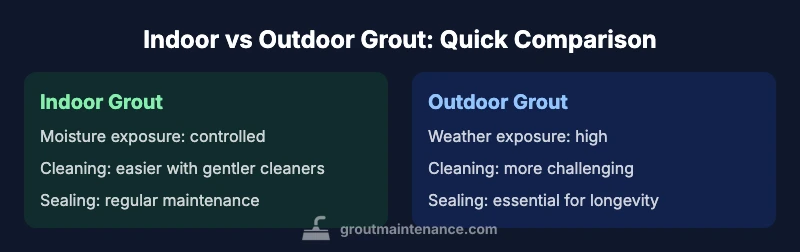
| Feature | Indoor grout | Outdoor grout |
|---|---|---|
| Moisture Exposure | Indoor grout: controlled humidity and spills | Outdoor grout: weather-driven moisture exposure |
| Weather Resistance | Indoor grout: moderate resistance to routine use | Outdoor grout: high resistance to rain, sun, and temperature changes |
| Cleaning Difficulty | Indoor grout: easier to clean with gentle cleaners | Outdoor grout: more challenging due to dirt and growth |
| Sealing Needs | Indoor grout: sealers for stain prevention and maintenance | Outdoor grout: robust sealing to minimize water ingress |
| Common Materials | Indoor grout: standard cementitious or epoxy blends indoors | Outdoor grout: epoxy or specialized cementitious formulations |
| Repair & Longevity | Indoor grout: easier to repair and reseal | Outdoor grout: more challenging; may require regrouting sooner |
Pros
- Clarifies optimal environments for each grout type
- Helps prevent moisture-related failures indoors vs outdoors
- Guides sealing and cleaning strategies tailored to exposure
What's Bad
- Outdoor grout may require higher upfront material costs
- Indoor grout can still wear from heavy staining if not sealed
- Some grout types that work indoors may be unsuitable outdoors
Choose indoor vs outdoor grout based on exposure, maintenance capacity, and substrate readiness
Indoor environments favor stain resistance and ease of cleaning, while outdoor spaces demand weather resistance and durable sealing. Align grout type with exposure and maintenance willingness for best results.
Got Questions?
What is the main difference between indoor grout and outdoor grout?
Indoor grout emphasizes stain resistance and easy cleaning, while outdoor grout is formulated to resist weather, moisture, and UV exposure. The choice hinges on the environment and expected use.
Indoor grout is designed for staining resistance and easy cleaning, whereas outdoor grout is built to handle weather and moisture. Pick based on where you’ll install it.
Is epoxy grout suitable for outdoor use?
Epoxy grout can perform well outdoors due to its chemical resistance and lower porosity, but it may be harder to install and repair. Evaluate climate, sun exposure, and maintenance willingness before choosing.
Epoxy grout outdoors lasts longer and resists moisture, but installation can be trickier; consider climate and upkeep.
Do I need to seal outdoor grout?
Outdoor grout typically benefits from sealing to reduce water absorption and staining, though some epoxy formulations may not require sealing. Follow manufacturer guidance for your specific grout.
Outdoor grout often needs sealing to cut down on absorption and staining. Check your grout type for exact guidance.
Can I use indoor grout in a shower?
A traditional indoor cementitious grout may be acceptable in showers if it is properly sealed and maintained, but many experts recommend a grout designed for wet environments or epoxy grout for best performance.
Indoor grout can work in showers with good sealing, but for wet areas, choose a grout made for moisture resistance.
How often should I clean outdoor grout compared to indoor?
Outdoor grout typically requires more frequent cleaning and maintenance due to algae, dirt, and weather exposure. Indoor grout maintenance depends on usage and stain risk, and often centers on regular cleaning and timely resealing.
Outdoors you’ll clean more often because of weather and algae; indoors it depends on traffic and spills.
The Essentials
- Assess exposure first: moisture indoors, weather outdoors
- Prefer epoxy or robust cementitious blends for outdoors
- Seal appropriately to balance moisture control and cleanliness
- Plan maintenance around environmental demands
- Choose grout color and texture with longevity in mind