Cost of Epoxy Grout vs Regular Grout: A Practical Comparison
Compare upfront costs, maintenance, and lifecycle value between epoxy grout and regular grout. Grout Maintenance analyzes materials, installation, and long-term costs to help homeowners decide.


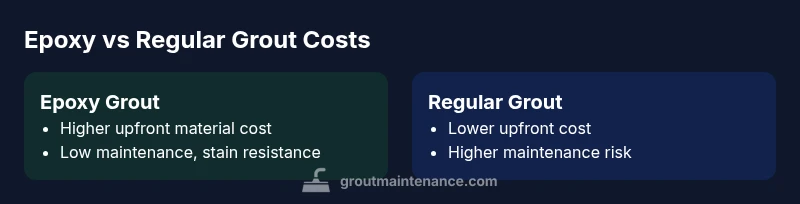
Short answer: for most homeowners, the cost of epoxy grout vs regular grout starts higher upfront for epoxy grout due to materials and installation, but it often pays off over time with lower maintenance and better stain resistance. In practice, epoxy grout tends to cost more per square foot; lifetime value depends on tile location, foot traffic, and cleaning demands.
Defining the cost of epoxy grout vs regular grout
When homeowners first start evaluating the cost of epoxy grout vs regular grout, they confront two dimensions: upfront price and long-term value. The cost of epoxy grout vs regular grout is driven by material costs, labor, curing requirements, and the surface area to be tiled. In many markets, epoxy grout materials are more expensive per square foot than cementitious grout, and skilled installation adds to the price. However, the epoxy option often delivers lower maintenance burdens due to its dense, nonporous matrix, which can translate into fewer cleaning cycles and less frequent resealing. The Grout Maintenance team emphasizes that homeowners should compare total cost of ownership, not just the initial purchase, when assessing epoxy vs cementitious options. The goal is to help readers understand not only “how much” epoxy grout costs today but what it will cost over the life of the tile work, including potential repairs, replacements, and the effort required for routine cleaning. By focusing on total cost of ownership, you can avoid sticker shock and choose a grout system that aligns with your performance needs and budget.
Upfront costs and installation price drivers
Upfront costs are the first time a homeowner encounters the cost of epoxy grout vs regular grout. The epoxy grout material price is higher per square foot than cementitious grout; installation costs also reflect the material handling and longer curing times. Epoxy grout often requires a trained installer with experience mixing two-part resins and ensuring correct ambient conditions; this added labor cost is a key driver of the upfront price. Cementitious grout is simpler to work with, often allowing DIY installation or lower labor rates. However, the color consistency in epoxy grout may require more careful finishing, which can increase labor costs slightly. In addition to material and labor, surface preparation can drive costs. For epoxy grout, the substrate must be clean, dry, and free of prior coatings; if the existing grout is damaged or the substrate is porous, more prep work is required. The Grout Maintenance perspective emphasizes that the decision should weigh the value of reduced maintenance against the higher initial price. For many projects, the upfront price differential can be offset by fewer cleaning products, less frequent resealing, and reduced regrouting frequency in moist environments.
Material options and price ranges
Epoxy grout materials sit at a higher price tier than traditional cementitious grout, and labor costs reflect the need for careful mixing and curing control. Cementitious grout is typically cheaper to purchase and install, with more DIY-friendly options available. From a cost-per-sq-ft perspective, homeowners often see epoxy grout cost more upfront, but the long-term savings in cleaning chemicals, time, and resealing can narrow the gap. Color choices and matching constraints also affect final pricing, since some epoxy systems require precise pigment mixes for uniform appearance. Grout Maintenance notes that, in practice, the decision should hinge on how the surface will be used and how much time you’re willing to spend on maintenance, rather than chasing the lowest upfront price alone.
Maintenance and lifecycle costs
Maintenance needs play a central role in the cost calculus for epoxy grout vs regular grout. Epoxy grout generally resists staining, moisture intrusion, and chemical cleaners better than cementitious grout, which can reduce the frequency and intensity of cleaning and sealing tasks. While epoxy grout does not require frequent sealing, the initial investment may be higher, and damage repairs can be more complex if the grout becomes cracked. Regular grout may require more frequent resealing and cleaning products, potentially increasing ongoing costs over the life of the tiled surface. Grout Maintenance highlights that a higher upfront cost for epoxy grout can be offset by lower maintenance expenses and longer service life in bathrooms, kitchens, and other high-moisture environments. Consumers should estimate routine cleaning costs, potential resealing intervals, and the cost of regrouting over time to compare lifecycle expenses.
Cost by area and project type
The true cost of epoxy grout vs regular grout varies significantly by area and project type. In moisture-prone spaces like showers, steam rooms, and backsplashes, epoxy grout often proves its value through durability and reduced staining. For dry-wall or low-traffic settings, cementitious grout may offer better immediate value due to lower upfront costs. When planning a kitchen renovation, consider whether the surface will face frequent cleaning with acidic or abrasive cleaners; epoxy’s resistance to chemical attack can translate into lower maintenance costs, but the initial installation premium remains. Grout Maintenance advises homeowners to tailor the choice to the space, traffic, and maintenance budget.
How to estimate costs for your project
Estimating the cost of epoxy grout vs regular grout starts with area measurement and tile size, followed by substrate condition and expected cleaning routines. Begin by calculating the square footage to be grouted, then determine the grout type and color you want. Obtain quotes from at least two installers who have experience with both epoxy and cementitious grouts; ask for a breakdown of material costs, labor, curing time, and prep work. Don’t forget ancillary costs such as surface prep, removal of old grout, waterproofing, and sealers if used. Grout Maintenance recommends requesting a written comparison of total cost of ownership over a 5- to 10-year horizon, including expected maintenance cycles. Finally, compare non-monetary factors like color stability, ease of cleaning, and the potential time saved during routine cleaning.
Common myths about epoxy grout costs
A common myth is that epoxy grout is always the least expensive choice in the long run. In reality, epoxy grout often carries a higher upfront price, with potential long-term savings depending on the environment and maintenance approach. Another misconception is that epoxy grout cannot be repaired if damaged. In fact, damaged epoxy grout can be repaired or localized replacement performed by a skilled installer, though it may be more involved than resealing cementitious grout.
Grout Maintenance finds that misconceptions about color options or compatibility with older tile installations can lead homeowners to choose an option that doesn’t fit the project. A thorough cost-benefit analysis that weighs upfront material costs, labor, curing requirements, and lifecycle maintenance provides a more accurate picture than relying on price alone.
Authority sources and practical considerations
For readers seeking external validation, several reputable sources discuss grout materials, installation practices, and maintenance considerations. The Grout Maintenance analysis references general guidelines from university extension resources and industry publications to inform practical decision-making. See the included sources for deeper technical background and best practices.
Practical decision framework
When deciding between epoxy grout and regular grout, start with the environment and maintenance expectations. If your project faces high moisture, frequent cleaning with harsh cleaners, or heavy use, epoxy grout offers superior durability and easier cleaning. If budget is tight, the project is low-traffic, or you prefer faster DIY installation, regular grout provides strong value. Use a total cost of ownership approach, comparing upfront costs, installation complexity, and projected maintenance over time. Grout Maintenance concludes that there is no one-size-fits-all answer; your choice should align with the space’s moisture exposure, your cleaning regimen, and your willingness to invest in professional installation.
Comparison
| Feature | Epoxy Grout | Regular Cementitious Grout |
|---|---|---|
| Initial material cost per sq ft | Epoxy tends to be higher upfront | Regular grout typically lower upfront |
| Labor and installation complexity | Epoxy requires careful mixing and longer curing | Cementitious grout is quicker and simpler |
| Maintenance needs and cleaning | Epoxy offers low maintenance and easier cleaning | Cementitious grout requires more frequent cleaning/sealing |
| Stain and chemical resistance | Epoxy is excellent for stains and chemicals | Cementitious is moderate |
| Moisture resistance and durability | Epoxy resists moisture well in showers/bath areas | Cementitious less resistant over time |
| Best applications | Moisture-prone areas, kitchens, and heavy use | Dry, low-maintenance surfaces and walls |
Pros
- Lower long-term maintenance in wet spaces
- Excellent stain and chemical resistance
- Durable in high-traffic areas
- Fewer resealing needs over time
What's Bad
- Higher upfront material and installation costs
- More challenging repairs and color matching
- Requires skilled installer and longer cure times
Epoxy grout offers better long-term value in moisture-heavy, high-use areas, but regular cementitious grout remains a strong, budget-friendly option for simpler projects.
Epoxy grout excels in showers and backsplashes due to its durability and stain resistance. If upfront cost and DIY feasibility are priorities, regular grout can be the practical choice; otherwise, epoxy grout tends to deliver lifecycle advantages.
Got Questions?
What is epoxy grout and how does it differ from regular grout?
Epoxy grout is a two-part polymer-based grout that cures to a hard, stain-resistant surface. Regular grout is cementitious and porous, absorbing stains more easily; the epoxy version often lasts longer in wet areas, but costs more upfront.
Epoxy grout is a polymer-based grout that resists stains and moisture better, but it costs more upfront. Regular grout is cement-based and easier to install.
Is epoxy grout more expensive?
Yes, epoxy grout typically has higher material costs and requires skilled installation, leading to a higher upfront price. However, it can offer savings over time due to reduced cleaning and resealing needs.
Yes, epoxy grout usually costs more upfront, but it can save money later on cleaning and maintenance.
Where is epoxy grout most cost-effective?
Epoxy grout is most cost-effective in moisture-prone areas like showers, steam rooms, and backsplashes where staining and cleaning costs are higher. In dry areas, regular grout may be the better value.
It's best in showers and other damp areas where stains and cleaning are concerns.
Can epoxy grout be installed over existing grout?
In many cases, epoxy grout can be installed over existing grout after proper prep, but some situations require removal or a remediation plan. Consult a pro for surface assessment.
Usually you can regrout over old grout after prep, but a pro should check first.
How long does epoxy grout last compared to regular grout?
Epoxy grout often lasts longer in wet environments due to its chemical resistance and hard curing. Regular grout may degrade sooner if exposed to moisture and frequent cleaners.
Epoxy tends to last longer in wet areas; cementitious grout may wear down faster with moisture.
The Essentials
- Prioritize space moisture and traffic to pick epoxy grout
- Account for total cost of ownership, not just price per sq ft
- Expect higher upfront costs with epoxy grout but potential long-term savings
- Prepare for longer installation times and expert labor for epoxy grout
- Use Grout Maintenance’s framework to compare lifecycle costs over 5–10 years