Powder grout vs epoxy grout: A Comprehensive Comparison
Analytical comparison of powder grout vs epoxy grout, covering durability, maintenance, installation, and cost to help homeowners decide which grout to use in kitchens, baths, and showers.


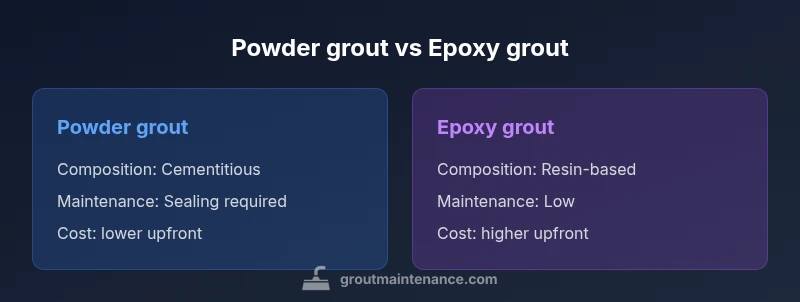
Powder grout and epoxy grout serve different needs in tile projects. Powder grout is cementitious, cheaper upfront, and more forgiving for DIY installs but requires sealing and more maintenance. Epoxy grout is resin-based, highly resistant to stains and moisture, but harder to install and pricier. For many homes, epoxy grout offers long-term value in showers and kitchens, while powder grout fits dry areas and budget projects.
Powder grout vs epoxy grout: The essential distinction
When weighing powder grout vs epoxy grout, homeowners must consider exposure to moisture, maintenance requirements, and budget. According to Grout Maintenance, the decision hinges on how and where the tile will be used and how much upkeep you're willing to perform over time. Powder grout is cementitious and cures slowly, requiring sealing and periodic maintenance to keep stains at bay. Epoxy grout, by contrast, uses a resin-based matrix that resists stain and moisture much more effectively, though it demands careful mixing and a steadier hand during installation. For many homes, epoxy grout offers long-term value in showers, backsplashes, and countertops where spills and cleaners interact with grout. Powder grout shines in traditional tile installations, floors with low moisture, and projects on a tighter budget. Grout Maintenance's team notes that choosing the right grout type is less about one universal winner and more about aligning material properties with the room's realities.
Material basics: what are powder grout and epoxy grout?
Powder grout is a cementitious mix that becomes a firm matrix after water is added and the mix cures. It tends to be forgiving for DIYers and widely available in a broad color range. Epoxy grout uses a two-component resin system that, once cured, forms a dense, non-porous layer that resists moisture and stains. Epoxy grout is more resistant to chemical cleaners but can be trickier to apply evenly and requires careful surface preparation. The key difference is chemistry: cementitious versus resin-based, which drives performance in moisture management, durability, and maintenance. The Grout Maintenance Team emphasizes testing grout in a small area when in doubt and following manufacturer guidelines to maximize success.
Performance: durability, stain resistance, and porosity
In the real world, epoxy grout typically outperforms cementitious powder grout in stain resistance and moisture handling. The resin matrix fills the pores of the tile joints, creating a sealed surface that resists mold and mildew better in wet environments. Powder grout absorbs more water and can stain if not properly sealed, especially in high-traffic areas or damp bathrooms. However, color consistency and repairability are advantages of powder grout, making it easier to touch up small areas without regrouting large sections. For homes with light foot traffic and dry interiors, powder grout can be a sensible choice when paired with a quality sealer and regular maintenance.
Installation and maintenance differences
Powder grout is generally simpler to mix and apply, with a faster cleanup and straightforward tooling. It tolerates minor imperfections in tile substrates and is easier to repair by regrouting small sections. Epoxy grout demands precise mixing ratios, careful application, and thorough cleaning during the working window; mistakes are harder to correct post-cure. Maintenance-wise, epoxy grout requires less routine sealing and is easier to wipe clean, reducing cleaning time over the life of the installation. The Grout Maintenance team recommends practice in a test area and following the product's instructions for mixing and curing to reduce errors.
Moisture exposure and tile environments
Wet zones like showers, tub surrounds, and kitchen backsplashes experience higher moisture, making epoxy grout a more robust choice thanks to its non-porous, moisture-resistant matrix. Powder grout can perform well in dry areas or interiors with low splash zones if sealed and maintained properly. In floors with significant movement or thermal cycling, both types can work, but epoxy may resist expansion and contraction stresses better. The key is to assess the room's humidity and potential for chemical exposure from cleaners, dyes, and cosmetics, and to choose a grout that can handle those conditions without frequent rework.
Application scenarios: where each shines
Powder grout shines in traditional ceramic tile installations on walls and ceilings where moisture is moderate and the substrate is stable. It also appears in older homes where retrofitting with epoxy grout would be costly. Epoxy grout excels in showers, kitchen countertops, and heavily used areas that see spills or aggressive cleaners, where its chemical resistance and stain resistance hold up over time. For large-format tiles in wet zones, epoxy grout reduces maintenance and keeps grout lines looking fresh longer. Grout Maintenance emphasizes considering both the room usage and the preferred maintenance schedule when deciding.
Cleaning, sealing, and long-term upkeep
Powder grout typically requires sealing after curing and periodic resealing to prevent staining and moisture intrusion. Routine cleaning with non-abrasive products helps prevent grime buildup, but sealing is a recurring task that adds to life-cycle costs. Epoxy grout does not require sealing in most cases, and its non-porous surface cleans up with standard cleaners. However, harsh solvents or strong acids can still damage epoxy grout if used improperly. The goal is to choose a grout that aligns with your cleaning routine and willingness to re-seal or re-grout when needed.
Cost and value over the life of a project
Powder grout generally has a lower upfront cost than epoxy grout, which makes it attractive for large-area installations or budget projects. The long-term value of epoxy grout comes from reduced maintenance needs, superior stain resistance, and a longer service life in wet areas. While epoxy grout may require professional installation in some cases, its durability can offset higher initial costs in showers and backsplashes. Grout Maintenance's cost considerations emphasize comparing total lifecycle costs rather than just purchase price when evaluating options.
Common pitfalls and how to avoid them
Avoid common mistakes like mixing ratios that are off or failing to properly prepare the tile surface, which can lead to weak bonding or color issues in either grout type. Under-mixing epoxy grout can produce a crumbly, inconsistently cured joint, while over-watering cementitious grout can weaken the matrix and create efflorescence. Always read the manufacturer directions and perform a test panel. By planning ahead and working in small sections, you reduce waste and ensure a consistent finish across large areas.
How to choose: a practical decision framework
To decide between powder grout vs epoxy grout, create a simple matrix based on moisture exposure, expected maintenance, and budget. If you anticipate heavy cleaning, high moisture, and long-term durability, epoxy grout is often worth the investment. If your project is dry, low maintenance, and budget-constrained, powder grout with a quality sealer can yield solid results. Finally, consult with a grout professional or reference the Grout Maintenance guidelines to tailor recommendations to your specific tiles, substrate, and climate. The final decision should balance performance, maintenance, and lifecycle cost.
Comparison
| Feature | Powder grout | Epoxy grout |
|---|---|---|
| Composition | Cementitious powder grout | Resin-based epoxy grout |
| Cure/Set | Requires moisture curing and sealing preparation | Forms non-porous matrix with faster cleaning |
| Stain resistance | Moderate to low without sealers | High stain and chemical resistance |
| Porosity | Porous; can absorb moisture | Non-porous after cure |
| Maintenance | Often needs sealing and periodic resealing | Low maintenance; easier to clean |
| Installation difficulty | More forgiving for DIYers | More challenging; exact mixing and timing required |
| Ideal environments | Dry areas; budget projects | Wet areas (showers) and high-traffic kitchens |
| Cost/value | Lower upfront cost; longer life-cycle costs depend on maintenance | Higher upfront cost; longer lifecycle durability |
Pros
- Lower upfront cost for traditional tile projects
- Easier to repair small areas without regrouting large sections
- Better for DIY installations in dry spaces
What's Bad
- Lower stain resistance without sealing in moist areas
- Requires sealing and maintenance for longevity
- Epoxy-like performance not available in cementitious powders (for certain tasks)
Epoxy grout generally provides better performance in moisture-prone areas; powder grout remains viable for dry, budget-conscious projects
Choose epoxy grout for showers and damp kitchens due to stain and water resistance. For dry spaces, powder grout remains a cost-effective option, especially when sealed and maintained properly.
Got Questions?
What is the key difference between powder grout and epoxy grout?
Powder grout is cementitious and mixes with water, while epoxy grout is resin-based and cures into a non-porous matrix. The epoxy option offers superior stain resistance and moisture resistance, at a higher installation cost and complexity.
Powder grout is cement-based and needs sealing; epoxy grout is resin-based and resists stains and moisture better. But it's harder to install.
Can epoxy grout be used with all tile types?
Epoxy grout is compatible with most ceramic and porcelain tiles but can be less suitable for certain natural stones or flexible substrates. Always test compatibility with your tile and grout system.
Epoxy works well for most ceramic and porcelain tiles; test with stone first.
Is epoxy grout more durable in bathrooms and showers?
Yes, epoxy grout generally offers superior durability and stain resistance in bathrooms and showers. However, proper installation is crucial to achieve those benefits.
Epoxy is more durable in wet areas, but install it correctly.
Can I seal epoxy grout after installation?
Epoxy grout usually does not require sealing because it is non-porous after curing. There are rare cases where sealers are applied for extra protection, but it's not standard.
Epoxy grout typically doesn't need sealing after curing.
How long does powder grout take to cure?
Powder grout cures through moisture exposure and can take longer to reach full hardness, especially if setting conditions are suboptimal. Plan for a longer cure and follow sealer recommendations.
Powder grout cures with moisture over time; plan for a longer cure and proper sealing.
The Essentials
- Prioritize moisture exposure when choosing grout type
- Epoxy grout excels in wet areas with high stain risks
- Powder grout is more budget-friendly for dry installations
- Maintenance plans should factor lifecycle costs beyond upfront price