Sanded vs Epoxy Grout: A Thorough Comparison for Tile Projects
A detailed, data-backed comparison of sanded grout vs epoxy grout, covering durability, maintenance, installation, costs, and best-use scenarios for homeowners and DIYers.


Epoxy grout generally outperforms sanded grout in durability, stain resistance, and cleanability, making it a strong choice for wet areas. Sanded grout remains traditional, cheaper, and easier to repair, with better performance in larger joints and high-porosity tiles. The best pick depends on location, tile type, and maintenance willingness.
What are sanded grout and epoxy grout?
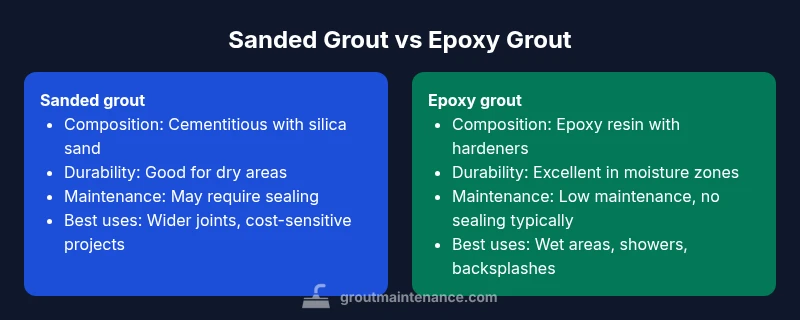
Sanded grout and epoxy grout are two popular options for tile joints, but they behave very differently in practice. Sanded grout is a cementitious mix with silica or quartz sand that gives a rough texture ideal for wider joints. Epoxy grout blends epoxy resin with hardeners to form a highly durable, non-porous joint. According to Grout Maintenance, the choice between the two is less about one universal winner and more about matching joint size, tile porosity, and the expected maintenance. The Grout Maintenance team found that for joints wider than about 1/8 inch, sanded grout is the traditional default, while epoxy grout excels in wet areas and where stain resistance matters most. When homeowners ask for long-term performance, the immediate cost and the repair path often determine the best fit. In short: sanded grout trades hardness for texture and repairability, whereas epoxy grout trades a steeper upfront cost for strong durability and low porosity. The rest of this article digs into specifics so you can decide with confidence.
Composition, texture, and key performance drivers
The fundamental difference between sanded and epoxy grout starts with composition. Sanded grout is cementitious and includes coarse sand, which creates a gritty texture that helps resist cracking in wider joints. Epoxy grout uses a polymer-based resin that cures into a hard, non-porous joint. This chemistry yields distinct performance outcomes: sanded grout tolerates traditional ceramic tiles and natural stone with wider joints, while epoxy grout shines in kitchens and bathrooms where moisture and staining are ongoing concerns. For tile installations that use delicate, polished stone or very small joints, epoxy grout may be too hard and could scratch on some materials. Grout Maintenance notes that choosing the right grout type hinges on tile porosity, joint width, and how aggressively you expect to clean and maintain the joints.
Durability under wear and cleaning agents
Durability is a central differentiator. Epoxy grout resists abrasion, household chemicals, and mold growth more effectively than sanded grout. In high-traffic areas or wet zones like showers, epoxy grout maintains its color and integrity with less frequent resealing or cleaning. Sanded grout, while robust for regular wear, can wear down faster in damp environments and may require periodic sealing to slow water absorption and staining. The Grout Maintenance team emphasizes that long-term durability is not just about the grout itself but how the tile substrate, joint width, and movement joints interact with the grout over time. Regular maintenance routines will differ depending on which grout you select, particularly if you have natural stone tiles or a high-porosity substrate.
Stain resistance and color stability
Stain resistance is a strong argument in favor of epoxy grout. A well-mixed epoxy grout forms a non-porous barrier that resists coffee, wine, and typical bathroom cleaners better than cementitious mixes. Color stability is another advantage—epoxy grout tends to retain its hue with less risk of efflorescence and discoloration over time. Sanded grout can color-shift with improper cleaning or improper sealing, especially on porous substrates or in kitchens with frequent splashes. Grout Maintenance highlights that color consistency matters in large tile runs, and epoxy grout’s non-porous nature reduces the likelihood of staining and color migration across joints.
Installation workflow and complexity
Installation is where the two differ most in practice. Sanded grout is relatively forgiving for DIYers: mix with water, pack into joints, wipe off excess, and seal if necessary. It cures gradually and can be reworked within a window, which is helpful for beginners but demands attention to joint width and tile spacing. Epoxy grout requires careful mixing of resin and hardener, precise timing for working the grout into joints, and a fast, thorough cleanup before curing. The working time is shorter, and the cleaning step is more demanding because epoxy remains tacky longer and can stain surfaces if not wiped promptly. For small projects or irregular tile patterns, the added complexity of epoxy grout may demand a professional install. Grout Maintenance notes that the best results come from clean joints and properly prepared surfaces regardless of which grout you choose.
Maintenance, sealing, and cleaning routines
Maintenance expectations differ between grout types. Sanded grout often benefits from a sealant after curing to reduce porosity and surface staining, followed by periodic re-sealing as needed. Cleaning sanded grout typically requires gentler cleaners and preventative maintenance to avoid dulling the texture. Epoxy grout, being non-porous, usually does not require sealing and cleans with simple, non-abrasive cleaners. However, it benefits from routine inspection for hairline cracks or joint gaps that can develop over time. Grout Maintenance reminds homeowners to follow manufacturer recommendations for cleaners and to avoid harsh solvents that can degrade epoxy resin. Choosing the right cleaning approach helps preserve color and texture over the life of the installation.
Longevity and lifecycle costs: upfront vs. long-term value
A common question is whether the higher upfront cost of epoxy grout is worth it over the life of the project. Epoxy grout’s durability and stain resistance often translate into lower maintenance costs and fewer resealing events, especially in busy kitchens or bathrooms. Sanded grout’s lower upfront price makes it attractive for large-area installs or budget-conscious projects, but the potential need for sealing and more frequent cleaning can increase life-cycle costs. Grout Maintenance analysis shows that the total cost of ownership often depends on usage patterns and maintenance discipline. If your goal is minimal upkeep in a high-moisture space, epoxy grout tends to offer better long-term value, even if the initial outlay is higher.
Best use cases by tile type and room
For ceramic tiles with wider joints, sanded grout remains a reliable choice, particularly in dry rooms or exterior-facing installations where UV exposure is limited. In contrast, epoxy grout is typically preferred in showers, backsplashes, and wet rooms where water exposure, cleaning frequency, and potential staining are higher concerns. If you’re working with natural stone or highly porous tiles, test a small area to determine whether sanded grout accepts your sealant and whether epoxy grout’s resin chemistry could risk scratching the stone. Grout Maintenance notes that joint width, tile porosity, and expected maintenance level should guide your final decision.
Common pitfalls and mistakes to avoid
Avoid choosing a grout type based solely on upfront cost. A project’s long-term maintenance, moisture exposure, and tile material all matter. Common mistakes include selecting epoxy grout for very wide joints where it may crack due to substrate movement, or choosing sanded grout for non-porous tiles that would benefit from a non-porous, low-maintenance option. Another frequent error is underestimating cure times and sealant needs, which can compromise color and texture. Always follow tile manufacturer guidelines and consult a grout professional if your job involves large porcelain slabs or natural stone. Grout Maintenance emphasizes planning ahead for joint width, tile porosity, and expected maintenance load to minimize surprises down the line.
Budgeting and long-term value considerations
From a budgeting perspective, sanded grout usually requires less upfront investment and is simpler to repair. Epoxy grout’s higher material and labor costs are offset by lower maintenance needs and greater resistance to staining and moisture. When evaluating projects, consider the joint width, tile type, and the level of DIY involvement you’re comfortable with. A larger project in a damp room may justify epoxy grout for its superior life-cycle performance. Grout Maintenance’s guidance suggests conducting a quick cost-of-ownership estimate that includes cleaning supplies, sealants (if applicable), and potential resealing or replacement intervals to inform your final choice.
Environmental considerations and climate impact on grout choice
Environmental conditions can subtly influence grout performance. In regions with high humidity or frequent temperature fluctuations, epoxy grout’s non-porous nature helps resist moisture-related issues, including mildew and staining. In dry climates or outdoor applications with wide joints, sanded grout can be more forgiving and cost-effective. Always verify that the selected grout is compatible with your tile type and substrate and consider local humidity and cleaning habits when making a final decision. Grout Maintenance notes that environmental factors should align with joint design, tile porosity, and the expected maintenance routine to optimize outcomes.
Quick decision checklist to help you choose today
- Joint width: wider joints favor sanded grout; very wide joints may be better with epoxy in certain cases
- Tile porosity: porous tiles benefit from epoxy’s non-porous barrier
- Wet area exposure: epoxy grout generally performs better in showers and backsplashes
- Maintenance willingness: sealant and regular cleaning affect sanded grout longevity
- Budget constraints: weigh upfront cost against long-term maintenance and lifecycle value
Comparison
| Feature | sanded grout | epoxy grout |
|---|---|---|
| Composition/materials | Cementitious grout with silica/aggregate; textured finish | Epoxy resin with hardeners; non-porous, glossy finish |
| Durability and wear resistance | Good for dry areas with normal wear | Excellent resistance to abrasion and chemicals; ideal for wet areas |
| Stain resistance | Moderate; porous if not sealed | Excellent; resistant to staining and color migration |
| Water resistance | Porous until sealed; water absorption possible | Highly water-resistant; minimal water absorption |
| Color stability | Susceptible to color changes with improper cleaning/sealing | Very stable color; less prone to efflorescence |
| Installation ease | More forgiving; longer cure room for adjustments | Requires precise mixing and faster working time |
| Typical cost (upfront/lifecycle) | Lower upfront; potential higher long-term maintenance | Higher upfront cost; typically lower maintenance |
| Best applications | Dry areas, wider joints, cost-conscious projects | Wet areas, showers, backsplashes, high-traffic zones |
Pros
- Epoxy grout offers superior durability and stain resistance for wet areas
- Sanded grout is cheaper upfront and easier to repair
- Sanded grout provides traditional textured joints that hide minor substrate imperfections
- Epoxy grout cleans with less scrubbing and resists discoloration
What's Bad
- Epoxy grout has higher material and labor costs
- Sanded grout is more prone to staining and may require sealing
- Epoxy grout can be difficult to install in very wide joints or with certain natural stones
Epoxy grout is the preferred option for durability and stain resistance in most wet areas; the Grout Maintenance team recommends epoxy for showers and splash zones, while sanded grout remains viable where cost and repair ease matter.
Epoxy grout excels in moisture-prone rooms and high-traffic areas due to its non-porous nature. Sanded grout remains a solid option for cost-sensitive projects or where wider joints and a textured look are desired. Weigh your tile type, joint width, and maintenance willingness when choosing.
Got Questions?
What is the main difference between sanded grout and epoxy grout?
Sanded grout is cement-based with abrasive sand that creates texture, suited to wider joints. Epoxy grout is resin-based, non-porous, and highly durable, especially in moisture-prone areas. The best choice depends on joint width, tile type, and maintenance expectations.
Sanded grout is the textured, cement-based option; epoxy grout is the durable, non-porous choice. Pick based on joint size and moisture exposure.
Is epoxy grout better for showers?
Yes, epoxy grout performs better in showers due to its non-porous surface, resisting stains and mold growth more effectively than cementitious grout. It also cleans easier, though installation is trickier for DIYers.
Epoxy grout is a strong choice for showers because it resists moisture and staining well.
Can epoxy grout crack or deteriorate over time?
Epoxy grout is durable, but it can crack if the substrate moves or joints are overly wide. Proper substrate preparation and appropriate joint design help minimize this risk.
Even epoxy grout can crack if the substrate moves; ensure proper surface prep.
Is sanded grout waterproof?
No grout is completely waterproof. Sanded grout is cementitious and can absorb moisture if not properly sealed in porous substrates. Sealing improves moisture resistance but is not a seal for water itself.
Sanded grout isn’t waterproof—seal it and maintain joints to limit moisture penetration.
How do I clean epoxy grout?
Use non-abrasive cleaners and avoid acidic or highly abrasive products. Rinse well and dry to prevent streaking. Regular cleaning helps preserve color and sheen.
Clean epoxy grout with mild cleaners and a soft cloth for best results.
Do I need to seal epoxy grout?
No sealing is typically required for epoxy grout because it’s non-porous. Some installations may still benefit from a protective sealer to maintain sheen, but it’s usually optional.
Epoxy grout usually doesn’t need sealing, but check your product guidelines.
The Essentials
- Choose epoxy grout for wet areas and color stability
- Sanded grout offers lower upfront cost and easier repair
- Match joint width and tile porosity to grout type
- Epoxy grout generally reduces long-term maintenance in busy spaces
- Plan your cleaning and sealing strategy around your grout choice