Grout or Caulk Around Toilet: A Practical Comparison
Compare grout and caulk around the toilet to choose the best seal. Learn installation steps, maintenance tips, and expert guidance for durable bathroom sealing.


Across most toilet installations, silicone caulk around the base delivers a flexible, water-resistant seal that accommodates minor movement. Grout is better for tile joints but can crack with settlement and may trap moisture near the base. For a durable, low-maintenance seal, choose caulk around the toilet and reserve grout for tile joints only.
What does each option offer for a bathroom seal?
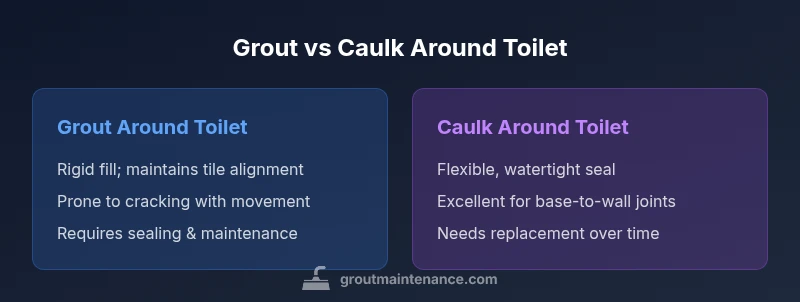
When evaluating grout or caulk around toilet, homeowners weigh movement, moisture exposure, and how the seal interacts with adjacent tile. According to Grout Maintenance, the base seal around a toilet should tolerate small floor movements while resisting water splash from cleaning and daily use. This is where the distinction between grout and caulk becomes crucial. Grout, a cementitious filler used between tile joints, provides a rigid barrier that helps maintain tile alignment; however, in the toilet zone it is prone to cracking if the floor settles or the toilet shifts. Caulk, typically silicone or polyurethane-based, remains elastic and forms a watertight seal that accommodates movement and minor shifts. For a durable bathroom seal, many homeowners lean toward caulk around the toilet and reserve grout for the actual tile joints, not the toilet base. The Grout Maintenance team has observed that using a hybrid approach—caulk at the base and grout in the tile joints—often yields longer-lasting results in busy bathrooms. The question you should answer is: what is the most reliable method for your bathroom layout and moisture profile? (grout or caulk around toilet)
Movement, moisture, and the toilet base
To understand why the seal around the toilet matters, it helps to picture how a bathroom floor and fixture interact. Floors settle over time, and the toilet can rock slightly when people sit or stand. Grout, being rigid, does not bend with those movements; any stress causes hairline cracks that allow water to seep into the subfloor or under the tile. Caulk, especially pure silicone caulk, is designed to stretch and rebound, reducing the chance of cracking and forming a continuous barrier against splash and humidity. This is why many bathroom professionals advise using caulk around the toilet base where it meets the floor and where the base meets the wall. The Grout Maintenance analysis indicates that maintaining a tight bead of caulk at these junctions dramatically reduces the risk of water intrusion, mildew growth, and damage to subfloor materials. In short, movement and moisture are the key drivers behind the decision.
Material options and why they matter near fixtures
Caulk Types: 100% silicone is standard for bathrooms; silicone-acrylate hybrids offer mold resistance with easier removal; polyurethane caulk is durable but harder to work with. Grout Types: cementitious grout comes in sanded and unsanded varieties; epoxy grout offers superior stain resistance but requires more rigorous cleaning and expansion joints. When the topic is grout or caulk around toilet, the near-base area benefits from silicone caulk due to flexibility and water resistance. If you choose grout for any reason in this zone, epoxy grout is preferred for its moisture resistance, yet it remains a rigid seal that may crack under substantial movement. For tile joints surrounding the toilet, standard cement grout with proper sealing is appropriate; this helps keep tiles aligned and reduces maintenance. Consider your bathroom usage, humidity, and cleaning frequency when deciding.
Step-by-step: sealing around the toilet with caulk
Preparation is critical. Gather 100% silicone bathroom caulk, a caulk gun, painter’s tape, a sharp utility knife, and isopropyl alcohol for surface cleaning. Remove any old sealant from the base and wall joint with care, avoiding damage to tile edges. Clean and dry the area thoroughly; moisture here defeats a good seal. Apply painter’s tape along the line to keep a neat bead. Cut the nozzle to control bead size, then run a continuous bead around the base where the toilet meets the floor and to the wall junctions. Smooth the bead with a caulk finishing tool or damp finger, then pull away the tape while the seal is still pliable. Allow the caulk to cure as directed by the manufacturer, usually several hours to a day, before exposing to water. This approach minimizes leaks and makes maintenance straightforward.
Step-by-step: regrouting near a toilet base
If you opt to grout around the toilet in areas that border tile, remove old grout with care, using a grout removal tool. Protect the toilet flange and neighboring ceramic edges. Clean and dry the joint before applying new grout; choose epoxy grout if moisture resistance is critical, or cementitious grout for standard tile joints. Press the grout firmly into joints with a rubber float, then wipe away excess with a damp sponge. Allow the grout to cure fully, then seal the joints if using standard cement grout. This approach is more invasive than sealing, but it can be warranted where tile joints are degraded or where water wicking through joints is a concern.
Choosing between grout and caulk: a decision matrix
Use caulk around the toilet base when movement, moisture, and ease of maintenance are your priority. Use grout in the tile joints away from the base, especially when you want a rigid, color-matched seam with tile performance. If you must grout near the base, opt for epoxy grout and consider a flexible expansion joint to accommodate movement. For bathrooms with heavy humidity or frequent cleaning, silicone-based caulk provides durable resistance and simple replacement in a pinch. In sum, reserve caulk for the base and walls, and use grout for tile joints where movement is minimal and water exposure is controlled.
Aesthetic considerations: color, texture, and tile integration
Color matching matters as much as function. Silicone caulk comes in many colors to blend with tile or offer a contrasting border for a crisp ceramic look. Grout color around tile joints should match or slightly contrast the tile to minimize visual interruption. For a bathroom with bright white subway tile and a dark grout line, the visual effect changes the perceived depth of the space. Choose a grout sealant if you rely on cement grout in other joints, but avoid letting color choices clash with fixtures like the toilet. Balance maintenance needs, moisture exposure, and visual goals to keep the space cohesive.
Maintenance and replacement schedules
Plan routine checks every few months to inspect the base seal around the toilet. Look for cracks in grout near the base or discoloration and shrinkage in caulk beads. Replace caulk when you notice cracking, peeling, or mold growth; this is typically every few years depending on use and humidity. For grout, watch for hairline cracks and efflorescence, especially around floor-to-wall transitions. Address these early to reduce water intrusion and substrate damage. The goal is to maintain a continuous, watertight barrier at the base while ensuring tile integrity in surrounding joints.
Common mistakes to avoid
Avoid mixing materials in a single joint, such as applying caulk over a former grout bead without removing the old material. Do not skip cleaning and drying completely before sealing; moisture undermines adhesion. Using the wrong type of caulk—non-bathroom grade or non-silicone character—will shorten seal life. Never rely on grout alone to seal the base; grout cannot handle repeated movement like caulk can. Finally, avoid over-sealing; excess caulk can trap moisture and become a magnet for mold.
Tools and materials checklist
Gather: caulk gun, 100% silicone caulk rated for bathrooms, painter’s tape, utility knife, alcohol or vinegar cleaner, rubber float (for grout), sponge, damp cloth, and cleaning brushes. For tile joints: epoxy grout if moisture resistance is a priority, or standard cementitious grout with a compatible sealant. For maintenance: replacement caulk, a caulk finishing tool, and a moisture- and mold-resistant cleaner. Keeping a small kit ready helps homeowner maintenance stay on schedule.
Comparison
| Feature | grout around toilet | caulk around toilet |
|---|---|---|
| Flexibility to accommodate movement | Low (rigid) | High (flexible) |
| Water resistance at base | Moderate (depends on grout sealing) | Excellent (silicone caulk forms a watertight seal) |
| Crack resistance over time | Prone to cracking with settlement | Resists cracking due to elasticity |
| Installation complexity | More labor with grout removal and sealing | Quicker with bead application and smoothing |
| Repair/maintenance effort | Invasive repairs if cracks appear | Easier to replace or re-seal |
| Best for | Tile joints adjacent to the base | Flexible seals around base and walls |
Pros
- Caulk provides a flexible, watertight seal around the base
- Easier to replace or re-seal without removing tiles
- Fast installation with minimal tools
- Reduces risk of water damage at the base
What's Bad
- Caulk can degrade in wet areas and requires periodic replacement
- Grout near the base is prone to cracking with movement
- Using grout near the toilet base can trap moisture if cracks occur
- Color matching grout around a base joint can be challenging
Caulk around the toilet is generally the better choice for the base; reserve grout for tile joints.
In typical bathroom setups, flexible silicone caulk around the base handles movement and moisture better than grout. Grout is best kept in tile joints away from the base. This approach minimizes leaks and maintenance while keeping tile integrity intact.
Got Questions?
Can I use grout around the toilet base?
Relying on grout around the toilet base is generally not recommended due to movement and moisture. Caulk provides a better seal that accommodates shifting without cracking. If you must grout near the base, consider epoxy grout and a proper expansion joint.
Grout around the base is risky; use caulk for the base seal and reserve grout for tile joints.
What type of caulk is best for bathrooms?
Use 100% silicone caulk labeled for bathrooms for the base. Silicone-acrylate hybrids offer mold resistance and easier removal, while polyurethane caulk is durable but harder to work with in tight spaces.
Choose bathroom-grade silicone caulk for a durable, mold-resistant seal.
How do I remove old grout around a toilet safely?
Carefully use a grout removal tool to avoid scratching tiles or the toilet flange. After removing old grout, clean, dry, and regrout or seal as appropriate, depending on the area.
Use a grout remover tool and take care not to damage tiles or the base.
Can epoxy grout be used around toilets?
Epoxy grout is moisture-resistant and durable but very rigid. It can work near toilets if joint movement is limited, but caulk is usually preferred at the base for flexibility.
Epoxy grout is strong but stiff; caulk is usually better at the base.
How long does bathroom caulk typically last?
Bathroom silicone caulk typically lasts several years with proper cleaning and ventilation. Replace when you notice cracking, discoloration, or gaps.
Caulk lasts years if you keep it clean and dry; look for cracks or mold and replace as needed.
Should I seal grout around the toilet?
If grout is used near the base, sealing can help reduce water penetration, but it does not replace the need for a flexible base seal with caulk. Always prioritize caulk at the base and reserve grout for tile joints.
Sealing helps, but don’t rely on it alone near the base; caulk is the key.
The Essentials
- Prioritize flexible caulk for base seals
- Use grout for tile joints away from the base
- Inspect seals regularly and replace worn caulk promptly
- Epoxy grout can improve moisture resistance when grout is necessary near fixtures
- Color-match caulk or grout to maintain a cohesive look