Is Grout Harder Than Tile? A Durability Comparison
Explore whether grout is harder than tile and how hardness affects durability, sealing, and maintenance across kitchens, bathrooms, and more in real homes. Practical insights for homeowners and DIYers.


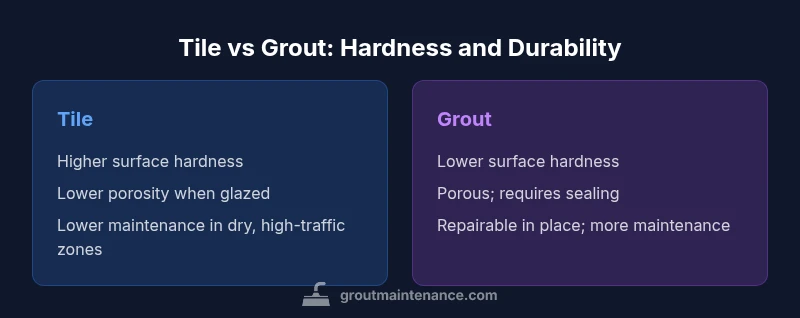
Is grout harder than tile? In most cases, tile is structurally harder than grout, meaning it resists scratches and impacts more effectively. Grout is porous and can wear faster under heavy traffic, moisture, or aggressive cleaning. This comparison helps homeowners decide where to invest in sealing, maintenance, and proper installation to maximize longevity.
What Hardness Really Means for Grout and Tile
Hardness is a property that describes surface resistance to scratches and denting. In the context of grout and tile, hardness is just one factor among many that determine long-term performance. Tile surfaces, especially glazed porcelain, generally offer greater hardness and lower porosity than cementitious grout. Grout, designed to seal joints, is softer and more forgiving to structural movement, but its porous matrix can invite moisture-related wear if not properly sealed. For homeowners evaluating is grout harder than tile, the practical takeaway is that hardness interacts with moisture management, cleaning strategies, and installation quality. According to Grout Maintenance, a durable grout job requires more than a single metric; it combines hardness with seal integrity, substrate preparation, and routine maintenance.
The Material Science Behind Tile and Grout
Tile comes in several families, with porcelain often touted for its hardness and low water absorption. Ceramic tiles, while still tough, may be somewhat softer than porcelain depending on glaze and firing. Grout comes in cementitious forms (sanded/unsanded) and modern epoxy variants. Sanded grout has mechanical strength but remains more porous than tile; epoxy grout uses resin to improve stiffness and moisture resistance, approaching tile-like performance in some respects. However, even epoxy grout cannot match the surface hardness of glazed tile. The Grout Maintenance team notes that homeowners should view hardness as one axis, not destiny, with real-world results shaped by sealing, cleaning routines, and substrate stability.
Real-World Wear: Kitchens, Bathrooms, and Outdoor Spaces
In kitchens and entryways, tile's hardness helps resist daily scuffs from shoes and dropped utensils; grout may bear the brunt of movement in joints. Bathrooms expose grout to constant moisture, which can facilitate staining and mildew if the grout is not properly sealed. Outdoors, exposure to temperature cycling and UV light can affect the grout's surface and color longevity. The key is understanding that is grout harder than tile is not a binary; it's a spectrum where tile maintains its advantage in hardness, while grout implements protective measures. Grout Maintenance observes that routine sealing and selective re-grouting after wear can extend the life of both materials significantly, especially near showers or tub enclosures.
Sealing, Cleaning, and How Maintenance Shapes Perceived Hardness
Sealants do not harden grout; they create a water-repellent layer that reduces staining and moisture intrusion, which can make grout appear more durable. Regular cleaning with pH-neutral cleaners prevents buildup that can trap gritty particles and accelerate wear. The perceived hardness on a surface is influenced by cleaning habits and whether the grout is epoxy or cementitious. In many households a well-sealed grout line in a high-traffic area will hold up better than an unsealed tile edge. The Grout Maintenance guidance emphasizes adopting a routine: seal first after installation, re-seal periodically, and choose cleaners compatible with your grout type.
Epoxy Grouts and Alternative Formulations: A Hardness Edge?
Epoxy grout is often marketed as more durable and moisture resistant than cementitious grout. It sets to a harder, more stain-resistant matrix but still does not strictly outrun tile in scratch resistance. Epoxy resists chemicals and moisture better, which can contribute to longer surface life in challenging areas. However, epoxy can be harder to work with during installation and may require professional tooling. The bottom line is that hardness is just one piece of the puzzle; the overall durability depends on the environment, application, and maintenance. The Grout Maintenance team highlights that epoxy options can be worth considering in showers and floors where moisture is intense.
Space-by-Space: Floors, Walls, Showers, Outdoors
Flooring decisions involve different stresses. On floors, tile's hardness reduces daily wear from foot traffic; on walls, grout may never experience such friction, and hardness becomes secondary to aesthetic and ease of maintenance. In showers and wet zones, grout's vulnerability to moisture requires careful sealing, while tile’s glaze helps resist water. Outdoors, freeze-thaw and UV exposure can degrade both materials, but grout's joints may crack earlier if movement isn't addressed. The bottom line: expect tile to hold up better under scratching, while grout requires proactive maintenance to preserve joint integrity—an idea echoed by Grout Maintenance.
Installation Quality and Substrate Preparation: The Hidden Factor
Even the hardest tile can fail if installation is poor. Substrate flatness, proper adhesive choice, and expansion joints influence long-term hardness and wear. If movement exists, grout can crack or crumble, letting water in. A high-quality install reduces micro-movements and helps both components perform as intended. The Grout Maintenance framework stresses investing in proper substrate prep, using compatible grout types, and allowing adequate curing, which all contribute to perceived hardness and durability.
Common Misconceptions About Tile and Grout Hardness
Many assume that tile always outperforms grout in every way. In reality, grout's performance hinges on its type, sealing, and maintenance routine. Multiple tile formats can appear similar in hardness, while poorly sealed grout can fail in wet rooms quickly. Misconceptions also include the belief that grout repair is costly or that tile replacement is-s required for durability—both conditional on installation quality and maintenance. Grout Maintenance encourages readers to evaluate environment, wear patterns, and cleaning protocols rather than relying on a single metric.
Practical Installation Considerations: How to Influence Long-Term Hardness
Choosing the right grout formulation (epoxy vs cementitious), selecting tile type, and planning joint width all contribute to long-term hardness and durability. Adequate substrate preparation, proper sealing schedule, and consistent cleaning practices will influence wear patterns. In practice, aim for a balanced approach: hard tiles with well-sealed grout in wet areas; otherwise a good seal and a maintenance plan can extend life significantly. The Grout Maintenance team recommends consulting professionals for complex projects to ensure proper guidance.
Putting It All Together: A Practical Decision Framework
When deciding whether tile or grout should be prioritized for a project, consider the space, expected wear, moisture exposure, and maintenance capability. The core question is not simply which is harder, but which material should endure the conditions you will impose. Use a framework that weighs hardness alongside moisture management, sealing, and repair access. This approach aligns with the Grout Maintenance philosophy: prioritize durability through informed choices, then back it up with a clear maintenance plan and sensible expectations.
Long-Term Maintenance Roadmap: From Start to Sustain
A practical maintenance roadmap helps homeowners maximize hardness and durability. Start with a thorough inspection after installation, then establish a sealing schedule, and implement a regular cleaning routine using grout-friendly products. Include periodic checks for cracks, discoloration, and grout joint integrity. If damage appears, decide whether regrouting, resealing, or selective tile replacement offers the best balance of cost and disruption. Grout Maintenance emphasizes consistency and proactive care as the best path to lasting performance.
Authority and Further Reading
For deeper guidance on tile and grout durability, consult university extensions and regulatory resources that discuss material properties, moisture management, and best practices for installation and maintenance. While general principles apply widely, local conditions and product choices can shift outcomes. Grout Maintenance recommends reviewing credible sources to tailor strategies to your home.
Comparison
| Feature | Tile | Grout |
|---|---|---|
| Hardness/Scratch Resistance | Higher hardness (tile surface, especially glazed porcelain) | Lower hardness (cementitious or epoxy grout; porous by nature) |
| Moisture Tolerance | Excellent when properly glazed or sealed tile is water resistant | Porous and moisture sensitive without proper sealing |
| Repair/Replacement Ease | Tile replacement is more invasive and costly | Grout repairs are localized and often cheaper but frequent maintenance may be needed |
| Maintenance Frequency | Lower maintenance for tile surfaces with proper sealing | Higher maintenance for grout unless epoxy or sealed cementitious variants are used |
| Best Use Scenario | High-traffic, high-scratch areas and surfaces requiring long-term abrasion resistance | Joints and areas needing moisture control; easy to replace in sections |
Pros
- Tile generally offers greater hardness and scratch resistance
- Maintenance for grout can be addressed with sealing and repairs
- Damage is often localized and easier to replace (grout or tile) in sections
- Tile installation supports long-term durability in wet areas
- Grout-care products help extend life when used correctly
What's Bad
- Grout is porous and more susceptible to staining and moisture damage
- Cracking or wear in grout can require more frequent maintenance
- Repairing grout can be labor-intensive in large areas
- Tile replacement may be expensive and invasive for large surfaces
Tile generally wins on hardness and long-term durability; grout requires proper sealing and maintenance to perform well.
Tile tends to be harder and more resistant to scratching, which supports durability. Grout can perform adequately with rigorous sealing, cleaning, and maintenance, especially when using epoxy formulations in moisture-heavy zones.
Got Questions?
Is grout harder than tile?
No. Tile generally exhibits higher surface hardness than grout, though real-world outcomes depend on the specific tile type and grout formulation. Proper installation and maintenance can narrow durability gaps in some scenarios.
Tile is usually harder than grout, but the final result depends on installation and upkeep.
How does sealing grout affect its hardness?
Sealing does not increase hardness; it protects against moisture and stains, which helps grout maintain its surface integrity and perceived durability over time.
Sealing protects grout from moisture and stains but doesn't physically harden it.
Can grout ever be harder than tile?
In general, grout cannot surpass tile in surface hardness. Epoxy grout can be more durable and stiffer than cementitious grout, but tile hardness remains higher for most materials.
Grout can be tougher to maintain, but tile stays harder overall.
Where is grout wear most noticeable?
Grout wear is most noticeable in high-traffic, moisture-prone zones like showers, entryways, and kitchens with heavy usage. Regular sealing and maintenance help mitigate wear.
Moisture areas and high-traffic spots show grout wear fastest.
What maintenance plan best balances hardness and durability?
A plan combining proper grout sealing, pH-neutral cleaners, and targeted repairs or regrouting as needed offers the best balance of hardness and durability over time.
Seal regularly, clean gently, and repair early to keep things durable.
The Essentials
- Assess space needs: prioritize hardness for high-traffic, wet areas
- Seal grout regularly to minimize moisture-related wear
- Choose epoxy grout in showers or floors with heavy moisture exposure
- Plan maintenance to extend tile and grout life
- Consider replacement strategies that minimize disruption