White Grout vs White Cement: Practical Tile Guide
Compare white grout and white cement to understand their composition, porosity, stain resistance, and maintenance. Practical guidance helps homeowners choose the right material for tile joints and mortar, with maintenance tips and real-use scenarios.


White grout vs white cement affects installation, maintenance, and long-term appearance. White grout is the pigmented joint material used between tiles, while white cement is a high-purity binder used in mortars and some grout blends. For homeowners, the choice shapes durability, stain resistance, moisture handling, and cleaning routines.
What white grout vs white cement mean in practice
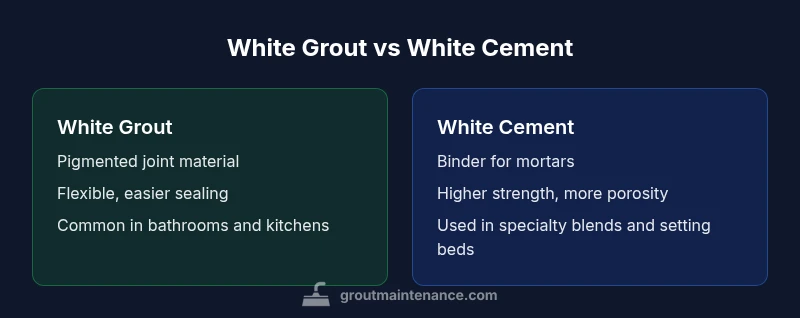
White grout and white cement perform different roles in tile work, and recognizing those roles helps set expectations for color, durability, and upkeep. According to Grout Maintenance, white grout typically refers to a cementitious joint material that is heavily pigmented to achieve a bright, pure white look. White cement, by contrast, is a high-purity binder used in mortars and some specialty grout blends; it provides a very white, strong matrix but behaves differently in moisture-rich environments. The choice influences installation technique, sealing needs, and long-term cleanliness. The Grout Maintenance team found that homeowners benefit from a clear plan that accounts for moisture exposure, traffic, and restoration goals. In practice, most homeowners use white grout for joints and reserve white cement for the setting bed or specialized blends where high whiteness and strength are required. This distinction matters most in bathrooms, kitchens, and showers where moisture and staining risk are high.
Key takeaway: knowing which material goes where reduces maintenance surprises and helps you pick compatible sealers and cleaners from the start.
wordCountInBlock":null},
Comparison
| Feature | White grout | White cement |
|---|---|---|
| Definition / Role | Pigmented joint material for tile joints | High-purity binder used in mortars and some grout blends |
| Primary Use | Joint filling between tiles | Setting and finishing joints with color control |
| Porosity / Absorption | Typically higher porosity when not sealed | Generally high porosity in mortars; sealing is often essential |
| Stain Resistance (unsealed) | Prone to staining; color fades without sealing | Lower surface staining risk when properly cured, but sealing is still important |
| Strength and Durability | Good enough for joints under normal wear | Higher matrix strength for setting mortars; less forgiving if used as grout |
| Maintenance | Sealing needed; color maintenance is common | Sealing and maintenance more intensive; color stability improves with proper sealing |
| Best Environment | Moist areas with regular cleaning, bathrooms | Areas needing extra strength for mortar beds or specialty blends |
Pros
- Easier color matching with pigments and sealers
- Generally easier to clean when sealed properly
- More forgiving for typical household movement and settling
- Wider product availability and standard installation protocols
What's Bad
- Prone to staining without proper sealing and maintenance
- White cement-based mortars can be more porous and require sealing
- Color consistency can drift with moisture and wear
- Repairing joint color matching can be challenging
White grout is typically the better default choice for residential tile joints; white cement-based mortars excel where higher strength and specific setting scenarios are required.
For most homes, white grout offers easier maintenance and reliable color retention when sealed. White cement-based mortars are valuable in specialty installations, but they demand careful sealing and more precise installation. Your choice should align with moisture exposure, load, and your maintenance plan.
Got Questions?
What is white grout and how does it differ from white cement?
White grout is a cementitious, pigment-tinted joint material used to fill the gaps between tiles. White cement, on the other hand, is a high-purity binder used in mortars and some specialty grouts. The two serve different roles and require different sealing and maintenance approaches.
White grout fills joints with pigment; white cement binds tiles in mortars. They’re used differently and need different care.
Can white grout be sealed to resist stains effectively?
Yes. Sealing white grout significantly reduces stain uptake and makes cleaning easier in damp areas. Use a penetrating grout sealer compatible with cementitious mixes and re-seal per the product directions to maintain whiteness over time.
Yes, sealing helps a lot; sealers are key for keeping white grout looking bright.
Is white cement better for showers than white grout?
White cement can be advantageous in specific mortar beds or specialty blends in showers, where additional strength is beneficial. However, it often requires more rigorous sealing and maintenance to prevent staining and moisture issues compared to standard white grout.
In showers, cement-based blends can be stronger, but they need extra sealing and upkeep.
How should I clean white grout and white cement joints without damaging them?
Use pH-neutral cleaners and avoid harsh acids that can break down cementitious materials. For white grout, a gentle scrub with a soft brush and appropriate grout cleaner helps; for cement-based joints, follow sealer and cleaner recommendations to protect the binder.
Use gentle, pH-neutral cleaners and soft brushes to protect the joints.
What factors influence the cost of these materials?
Costs depend on the product type, brand, and whether you’re choosing standard cementitious grout or special white cement blends. Labor time can also vary based on joint width and tile layout. Plan for potential sealing expenses as well.
Costs vary by product type and installation details; sealing can add to the budget.
Are there safer, low-maintenance options to keep joints white?
Epoxy grout is one option that resists staining better than traditional cementitious grout, but it can be harder to install and maintain. For many DIY projects, high-quality cementitious grout with a penetrating sealer strikes a balance between whiteness, maintenance, and cost.
Epoxy grout resists stains but is trickier to install; cementitious grout with a good sealer is usually a good balance.
The Essentials
- Define where color and maintenance matter most
- Choose grout for joints; reserve cement-based mortars for setting or special blends
- Seal and maintain whiteness to prevent staining and efflorescence
- Match material to moisture exposure and tile movement
- Plan for long-term upkeep and color consistency