Is Grout the Same as Filler? A Practical Comparison
Is grout the same as filler? This analytical guide explains definitions, uses, composition, sealing, and maintenance to help homeowners choose the right material for tile projects.


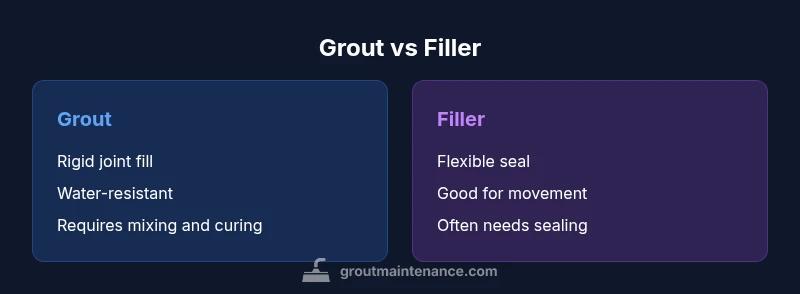
Is grout the same as filler? Generally no. Grout is a cementitious or epoxy material used to fill tile joints and create a rigid, water-resistant seal. Filler—often caulk or acrylic compounds—is flexible and seals gaps with movement. In tile work, use grout for joints and filler where movement or waterproof sealing is needed. For most bathrooms, grout provides durability while filler accommodates expansion.
What grout is — and why the question matters
In home tile work, one common question is: is grout the same as filler? Not exactly. Grout is a cementitious (or epoxy) mixture designed to fill tile joints and create a rigid, water-resistant seal that helps keep tiles aligned. Filler, by contrast, is a broader term that covers a range of compounds used to fill gaps in various substrates, often with more flexibility. For a DIY homeowner, distinguishing these roles is essential because choosing the wrong material can lead to cracking, staining, or ongoing maintenance headaches.
Grout is mixed to a specific consistency and then troweled into joint cavities before curing. Cementitious grout relies on a cement binder, sand, and water (or a latex admixture) to achieve strength. Epoxy grout uses resin and hardener for superior stain resistance and chemical durability but demands precise mixing and longer cure times. Filler products, including caulks, acrylics, and silicone-based compounds, are formulated to seal and accommodate movement. They remain flexible, which helps when substrates expand and contract with temperature or moisture changes. In wet rooms or exterior projects, this flexibility can be decisive, but it comes at the expense of some rigidity and load-bearing capacity. The question “is grout the same as filler?” appears frequently in online discussions, but the practical takeaway is straightforward: apply grout where joints need rigidity and a sealed surface, and use filler where movement or flexible sealing is required. This distinction underpins durable tile installations and easier maintenance in the long run. According to Grout Maintenance, clarity on material roles saves time and reduces costly mistakes.
altText_for_image_key_1_for_accessibility_and_seo_is_grout_the_same_as_filler
Comparison
| Feature | grout | joint filler (caulk) |
|---|---|---|
| Material composition | cementitious or epoxy grout (cement/sand base or resin-based) | silicone, acrylic, or latex-based filler (caulk) |
| Primary function | fills joints, provides rigidity and a sealed grout line | seals gaps with flexibility, often around movement-prone substrates |
| Water resistance | high with cementitious or epoxy grout; depends on proper sealing | good with silicone/caulk in wet areas; not a rigid tile-joint substitute |
| Adhesion to substrate | strong bond to tile surface when installed correctly | adhesion depends on substrate prep; not a structural bond |
| Movement accommodation | limited; designed for rigidity | excellent; designed to absorb movement and expansion |
| Maintenance needs | periodic cleaning and occasional regrouting for wear | replacement or re-sealing over time in damp environments |
| Ease of installation | more involved; mixing, curing, and scraping | generally easier; flexible tooling and cure times |
| Longevity | longer lifespan with proper installation (epoxy longer than cementitious) | depends on exposure; often shorter lifespan in high-movement areas |
| Typical cost considerations | varies with material (cementitious vs epoxy); epoxy generally higher | usually lower upfront; silicone/caulk costs depend on brands |
Pros
- Grout provides a rigid, durable joint which supports tile stability
- Epoxy grout offers excellent stain resistance and chemical durability
- Filler (caulk or silicone) handles movement and provides flexible sealing in wet areas
- Using the right material reduces maintenance and future repairs
What's Bad
- Grout can crack with substrate movement if not installed properly
- Some fillers require regular resealing or replacement in humid environments
- Caulk and flexible fillers can degrade under heavy abrasion or UV exposure
- Epoxy grout can be harder to install and more expensive than cementitious options
Grout and filler are not interchangeable; grout is for rigid tile joints, while filler provides flexible sealing where movement occurs.
For most tile projects, grout is the preferred choice for joint rigidity and water resistance. Fillers are best in areas with movement or where flexible sealing is needed. Use a combination to ensure long-term durability and low maintenance.
Got Questions?
What is grout and how does it differ from filler?
Grout is a cementitious or epoxy mixture used to fill tile joints, creating rigidity and a water-resistant seal. Filler is a broader term for compounds used to fill gaps, often flexible, such as caulk or silicone. They serve different structural and sealing roles in tiling projects.
Grout fills joints and stays stiff; filler like caulk seals gaps with flexibility.
Is grout the same as caulk?
No. Grout fills joints between tiles and cures hard, while caulk (a common filler) stays flexible to accommodate movement and moisture. In wet areas, many pros use both: grout for joints and caulk at perimeter edges or where boards move.
Grout is stiff; caulk is flexible.
When should I use grout versus filler in a bathroom?
Use grout for the main tile joints to ensure a solid, water-resistant seal. Apply filler around fixtures, transitions, and any areas prone to movement or differential expansion where a flexible seal is needed.
Grout for the joints, filler for flexible seals.
Can grout be used as a filler for large gaps?
Grout is not ideal for large gaps where movement occurs. Large gaps benefit from flexible fillers or backing materials that can absorb movement and prevent cracking.
Don’t rely on grout for large, moving gaps.
How long does grout typically last?
Durability depends on product type and installation quality. Cementitious grout lasts well in stable conditions; epoxy grout can last longer but requires careful installation. Regular maintenance influences longevity.
Longevity varies by product and care.
Do I need to seal grout?
Most cementitious grouts benefit from sealing to reduce staining and moisture uptake. Epoxy grout is inherently stain-resistant and often doesn’t require sealing.
Seal cementitious grout to protect it.
The Essentials
- Know grout vs filler definitions for tile joints
- Choose grout for rigidity and water sealing in standard joints
- Use filler/caulk where movement, expansion, or waterproof flexibility is needed
- Plan sealing and maintenance to extend tile life
- Epoxy grout offers superior durability but higher cost and complexity